Kaiseki Part 1: Washoku

Cultural submersion is one of the great delights of traveling.  Of course, we often just skim the surface because we run from one ‘must see site’ to another in a rapid blur.

However, a meal is an opportunity to pause, and to allow ourselves the opportunity to effortlessly sink a little deeper into the soul of a place.

It, of course, does not need to pillage the pocket-book.  Indeed, it often does not.

I swear– I do stay and eat much more cheaply than what I have implied by the posts I have done so far.

But of Kaiseki, it is $$$$ so to speak.

However, it is well worth the price.

Much of what I write here of course is gleaned from the web.  However I do wish to point out 3 resources that are easy to access as they are available on Kindle and are truly wonderful.  The first is The Foolproof Table Manner in Japanese Cuisine I  by Takumi Kawano.  Another is The Taste of Kyoto: A Guide to Dining and Sightseeing in the Old Capital by Richard Opheim.  Finally, Washoku, written by Elizabeth Andoh, focuses on home Japanese cooking.

There are 3 genres, if you will, of Japanese cuisine.  First, Chuka Ryori:
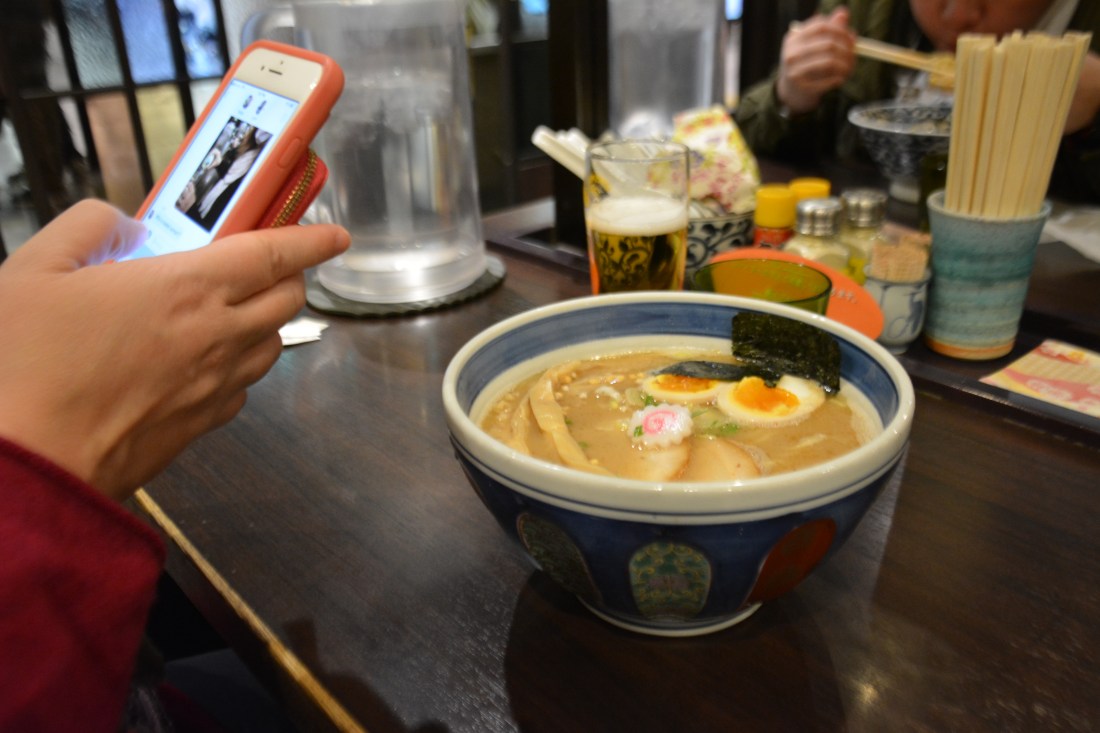
DSC_0753

Above: Ramen at a restaurant in Ramen Alley in Tokyo
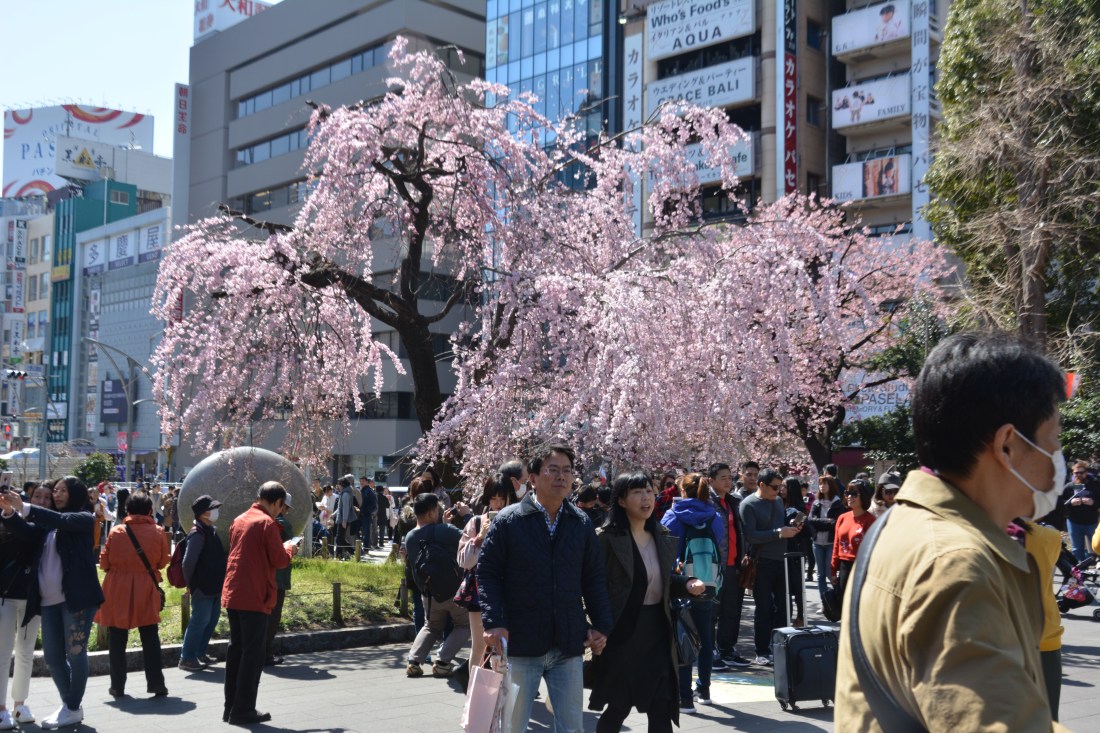
DSC_0410

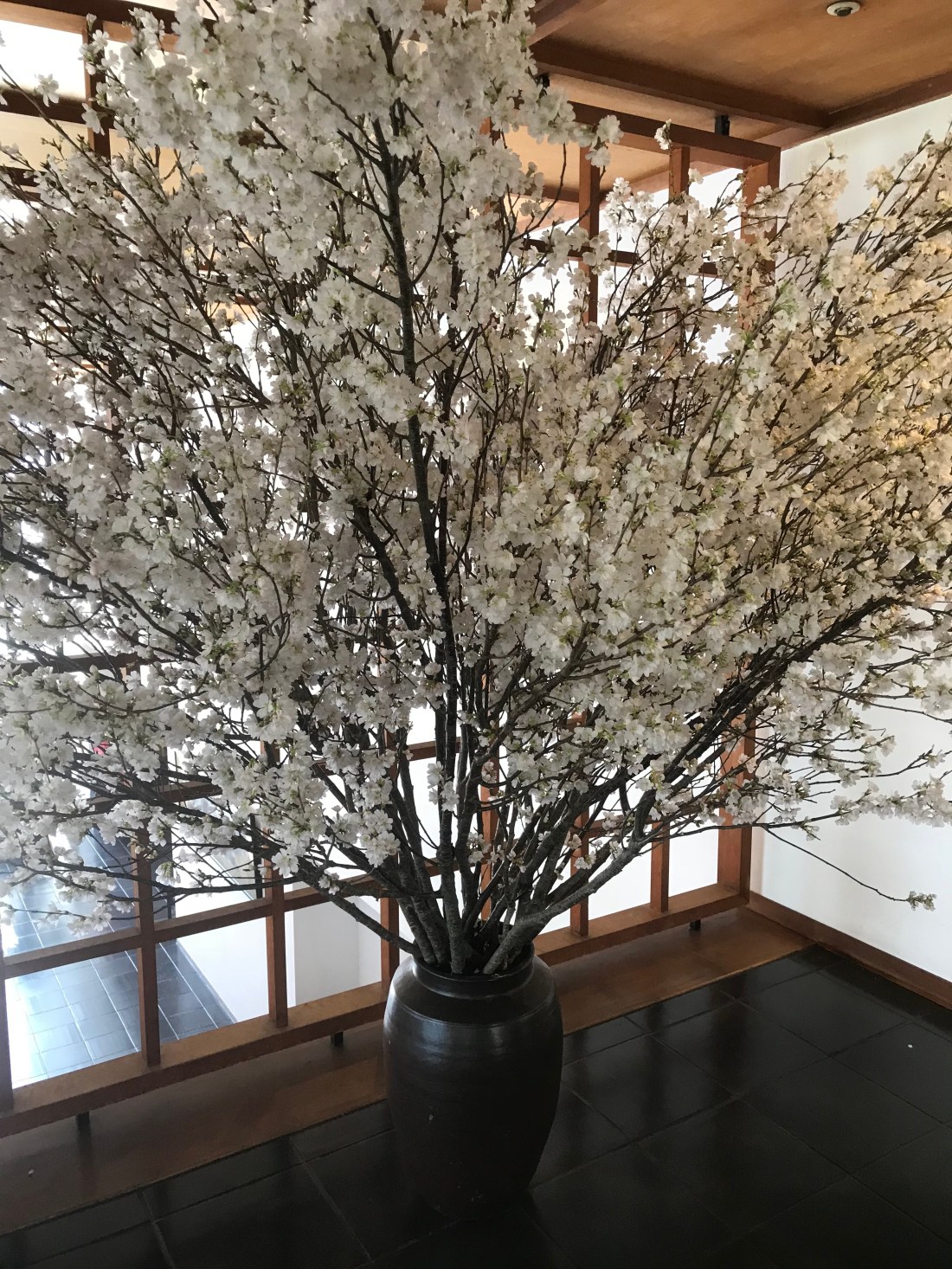
Above: Gratuitous photo of cherry blossoms.
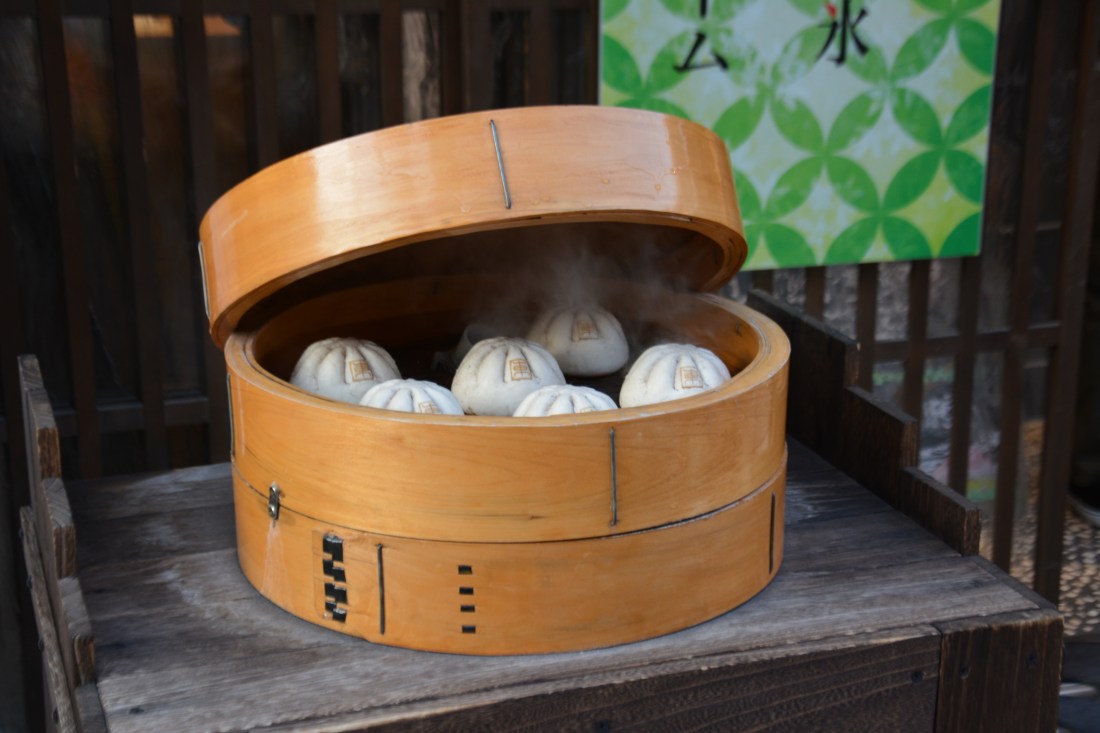
DSC_0292

Look.  At.  Those.  Buns.   Yet, however, they derive from Chinese cuisine, and arrived  into Japan in the past century.  While Chinese in origin,  Chuka Ryori dishes have morphed in cuisine that is uniquely Japanese.   Gyoza- who does not love Gyoza??  Or there is Karaage (唐揚げ), or Japanese fried chicken.

The second genre is Yoshoku, or food from the West.  Katsu, curries, spaghettis are examples.  I honestly I don’t know much of this- amazingly I did not go to McDonalds in Japan (more on the later).  Family restaurants are popular in Japan- trust me I had no idea except from reading Across Tokyo by Patrick Foss.  Apparently, you can get pancakes, bacon, a ham-burg- which is a cross between a hamburger and meatloaf.  He did note some rather attractive attributes about family restaurants:

  • good club sandwiches
  • fantastic French fries
  • you can stay as long as you want
  • the drink bar: tiny cups, but the re-fills are endless, which is fantastic when staying as long as you want

Ok I know nothing about the family restaurants as I have only been to Japan once as a traveler (but I will return dammit! want to live there too…. Sigh….).

So, the third genre: Washoku.   This is Japanese cuisine based on cuisine pre-dating the Meiji era.  There are a number of types, including Kappa Ryori which is similar to Kaiseki but not as elaborate.  There is Shojin ryori, or buddhist temple cuisine which came to Japan from China by the monk Dogen, the founder of Zen Buddhism.

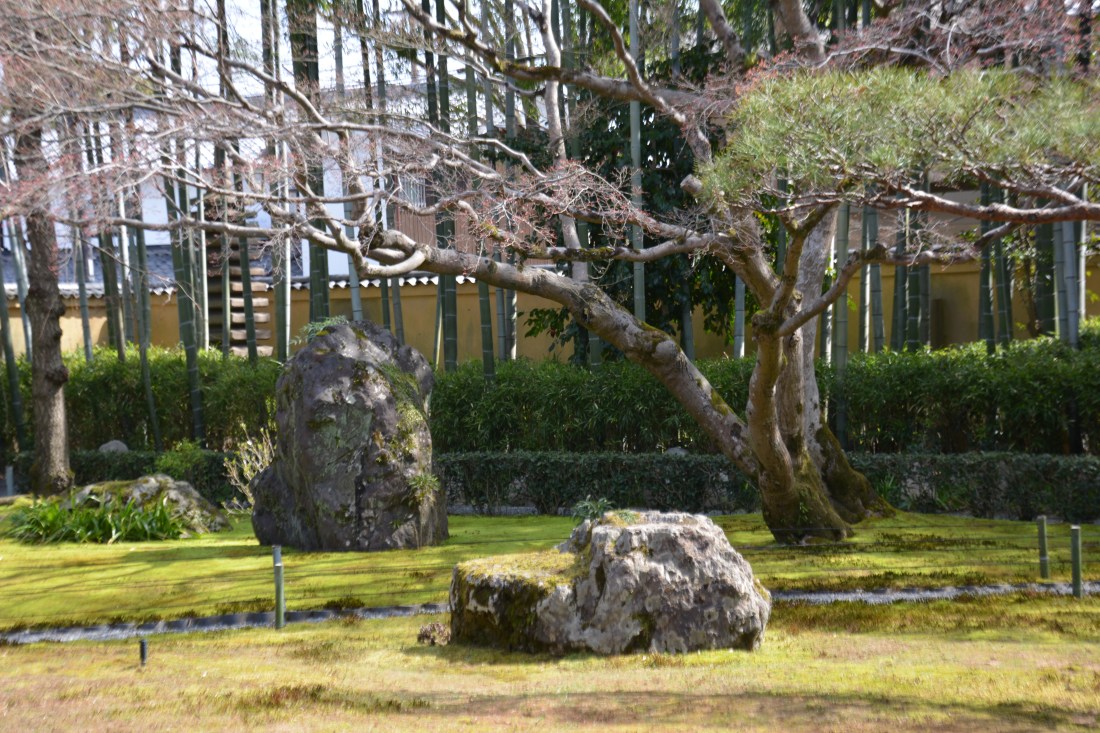
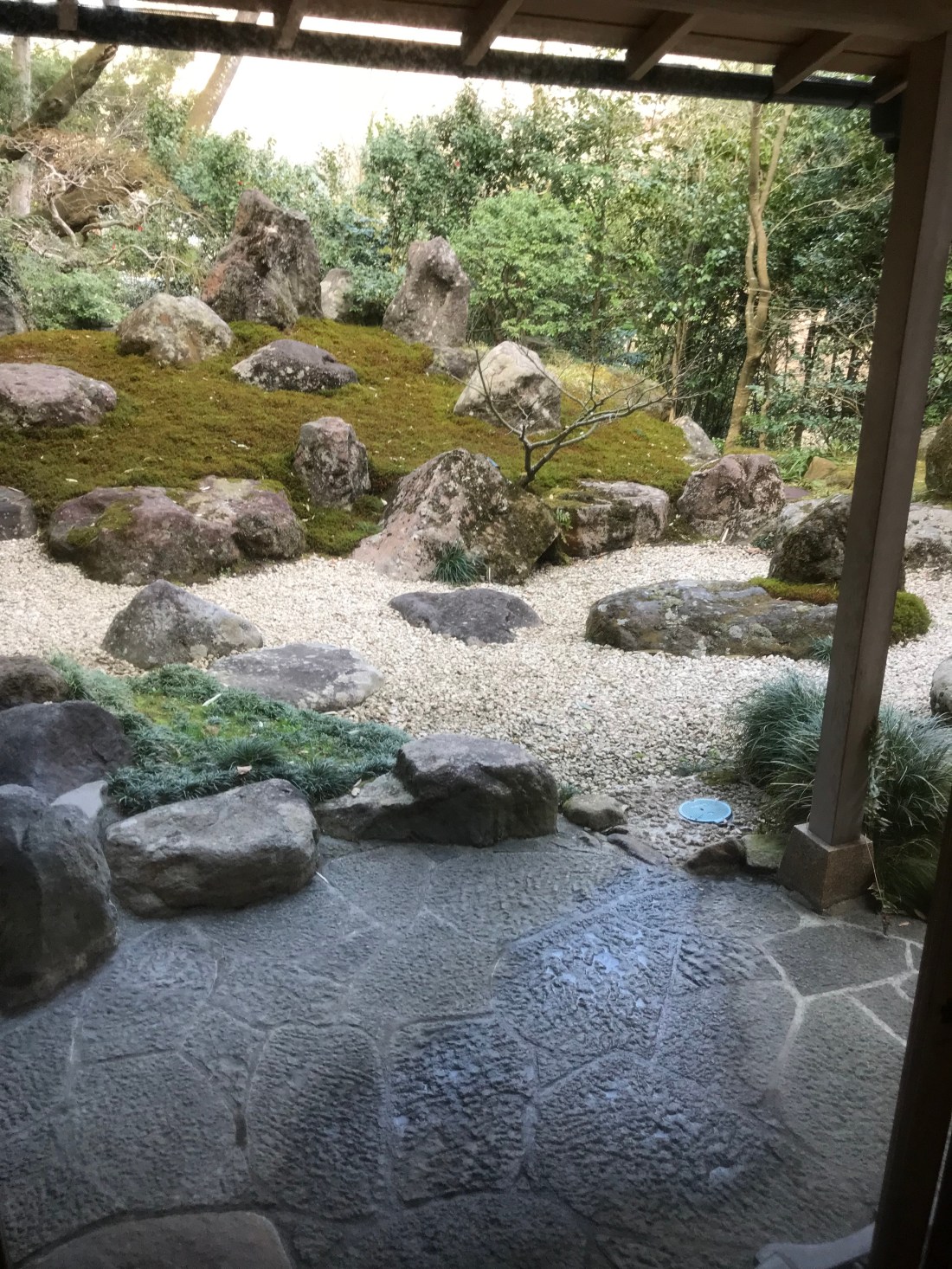
There is also Yodofu, which is also vegetarian.  Tofu is the star here.  We dined at a superb tofu restaurant  Yudofu Sagano in the Arayashima district of Kyoto (near the bamboo forest).  The garden was also quite stunning:
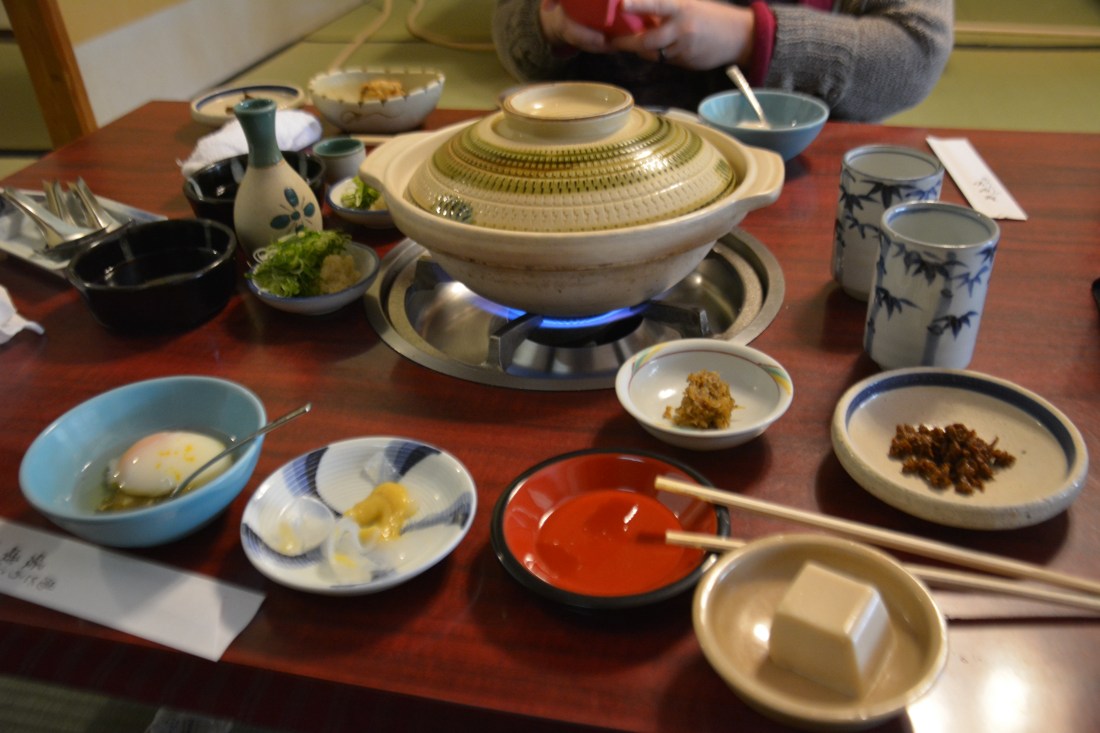
DSC_0650

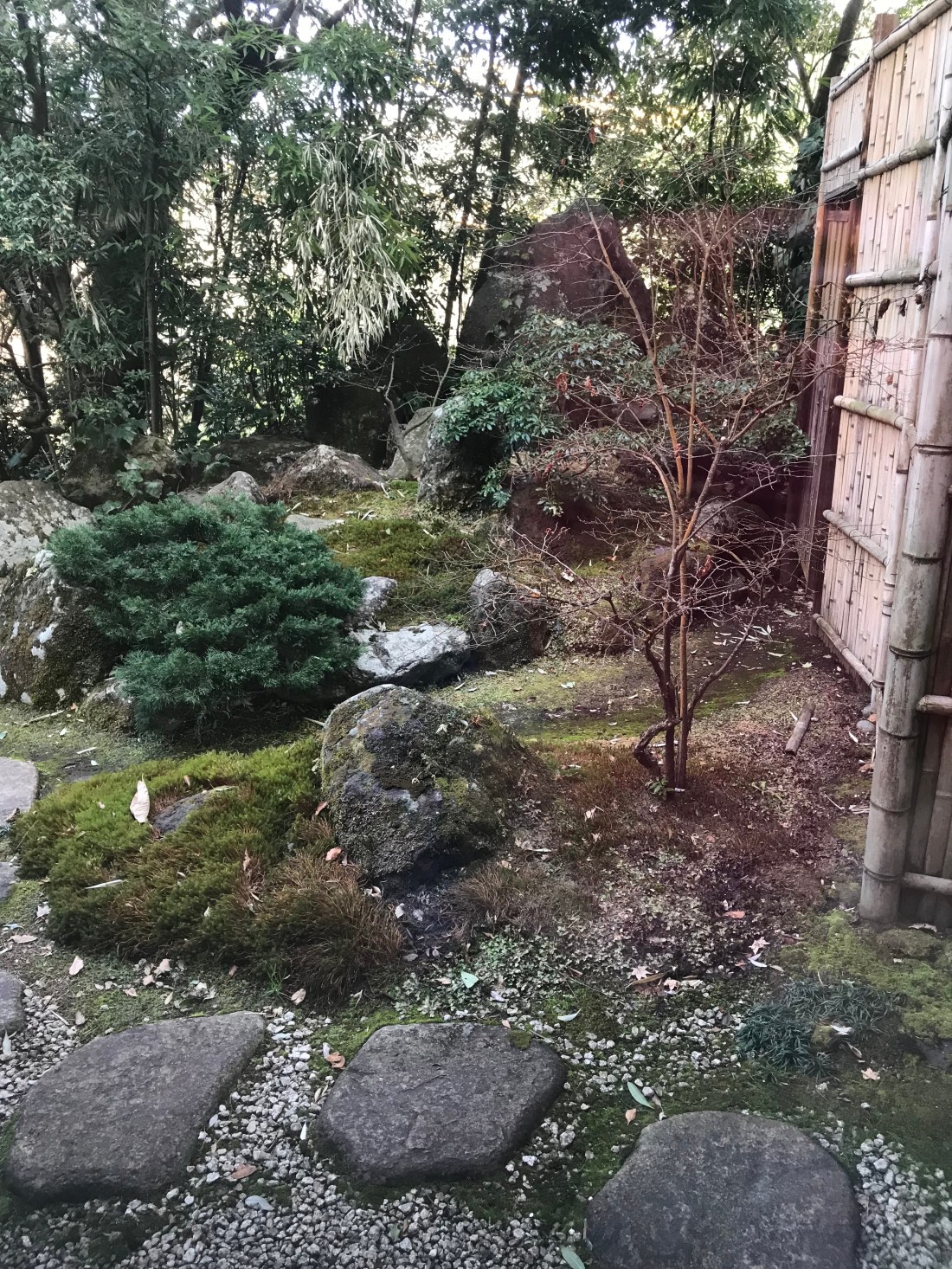
The view outside:

DSC_0653

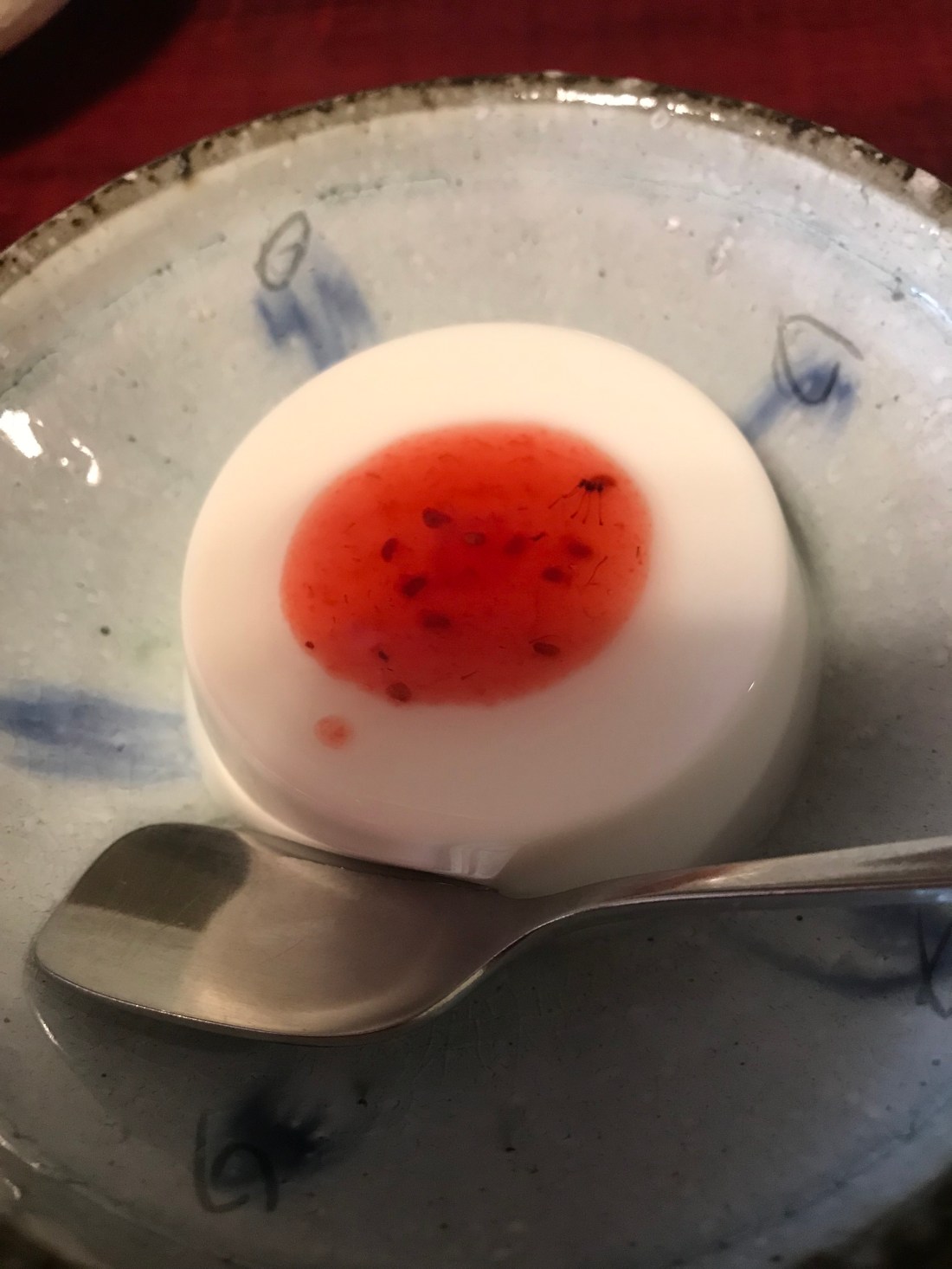
Dessert:

R7bWcS19TTKJWRhxxUSiTQ

Ok so not the best picture.   Tofu can be labeled as ‘silken’ versus ‘regular’.  It may be because I live in the U.S. but I can’t say I have ever had silken tofu that deserved the monniker here.  But this silken tofu dessert did.  So luscious, creamy and light.  It was a wonder.

Washoku is traditional Japanese food.  ‘Wa’ means Japan, and ‘shoku’ means food or to eat.  ‘Wa’, though, also means harmony, so it can also literally mean ‘harmony of food’.

Let me go over the principles of Washoku, as described by Elizabeth Andoh in her book Washoku.  This helped me to begin to appreciate, even if only at a slightly deeper level, what is behind Kaiseki cuisine.

I prize well written cookbooks.  Classics like Mastering the Art of French cooking (Julia Childs), Indian Cooking (Madhur Jaffrey), Mexico One Plate at a Time (Rick Bayless) and Essentials of Classic Italian Cooking (Marcella Hazan) are utterly much more than a collection of recipes as you likely know.  They offer windows into their respective cultures, and in particular, the daily lives of people.  Most often, the best of people.

Washoku was like that for me.
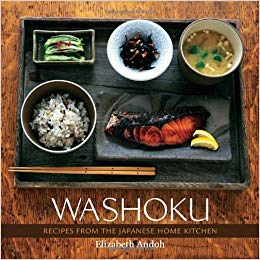
Washoku

Ms. Andoh is very astute, and cleverly rapidly wraps one up in the desire to learn more about Japanese cooking.  Well at least for me.  She does not dumb anything down and everything is so well-organized.  She helped me create a Japanese pantry in a snap. And my husband, an avid fisherman, is indeed quite grateful.

I shall hopefully paraphrase (not plagiarise) her, albeit I just won’t be as eloquent.  I’m just trying to be a decent student.

There are five principles of Washoku.  Sounds familiar.  Actually the number five plays a role in a variety of cuisines.  But what I dimly know now of Japanese cuisine, they are:

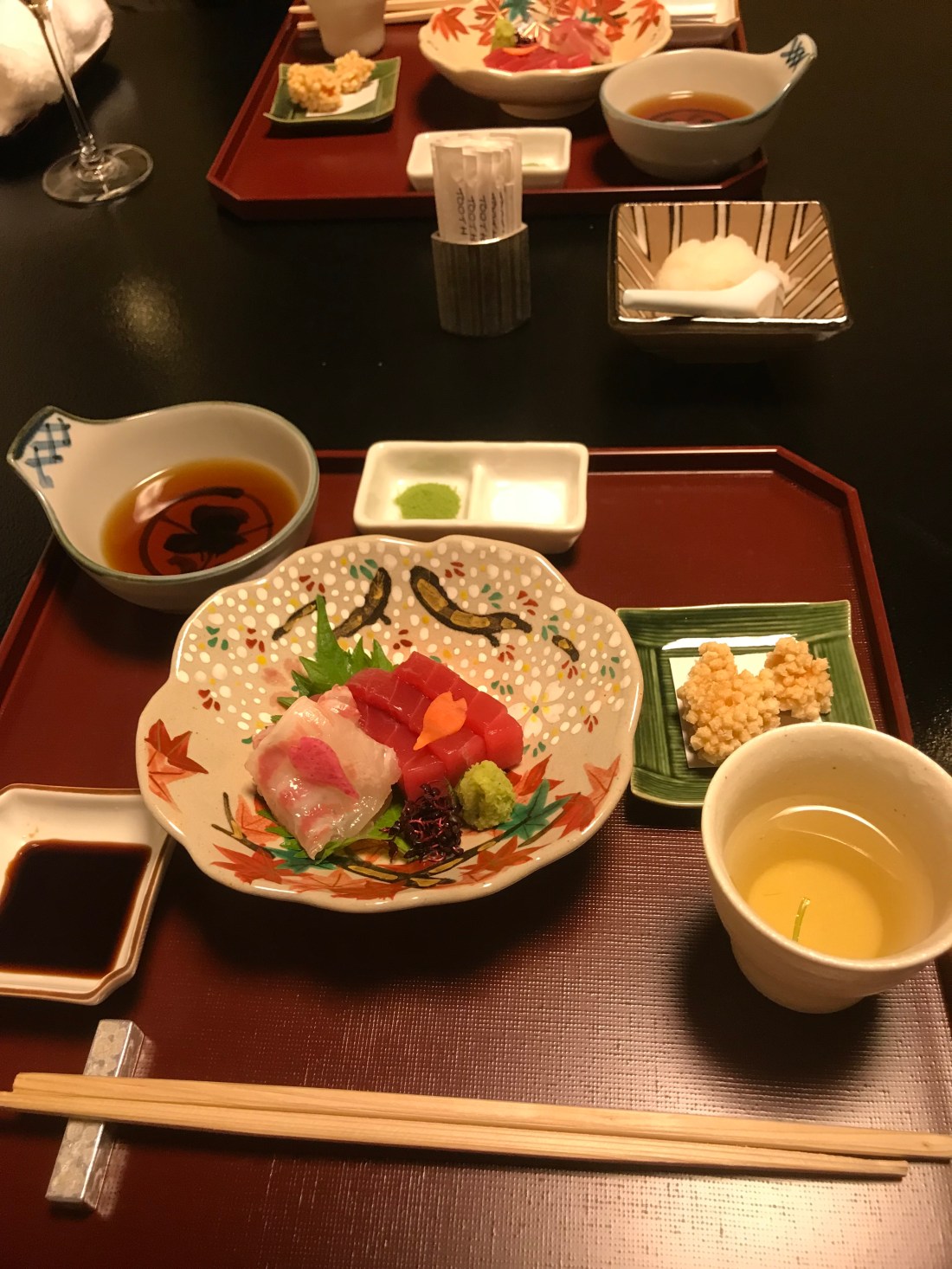
Go shikiI am trying to learn Japanese. ‘Go’ means five.  Go shiki refers to ‘five colors’, that is red, green, yellow, black and white.  Regarding black, eggplant or dark mushrooms count.   It seems to me that a bit of seaweed in dishes can add the black element as does grilling.  Clearly the cover for the Washoku book demonstrates the five colors, but as I go through our pictures, I see this as well:
xquFw8VCQUunBnyyIWhNXg

Go mi or five tastes: salty, sweet, bitter, sour and spicy.  Salty would refer to ingredients such as, well,  salt, and soy sauce and the myriad varieties of miso.  Honey, mirin and of course sugar are sweet ingredients.  With sour there is vinegar and citrus.  I am particular fond of homemade ponzu, a citrus based sauce used in Japanese cuisine.  Hmm, bitter.  Well, bitter helps clear the palate and …. Oh!  I just discovered that Ms. Andoh has a website while I was typing this up.

http://www.washokucooking.com

How fabulous!  I adore Japanese food, and I need all the help I can get with trying to re-create even a weak facsimile in our kitchen.  Did I mention my husband likes to fish?  We have about 150 pounds of fish in our freezer that needs some Japanese love.

Now, on the website, regarding the tastes and in particular bitter,  she points out that “In the mountainous areas of central Japan, a group of (naturally bitter) vegetables (ferns, bracken) known as sansai are foraged early in the spring.”  I know here in the U.S. we use a number of bitter greens as well.  These greens are good for nutritional content and aid in digestion.  I am thinking mainly of kale, endive, and my favorite: dark chocolate.

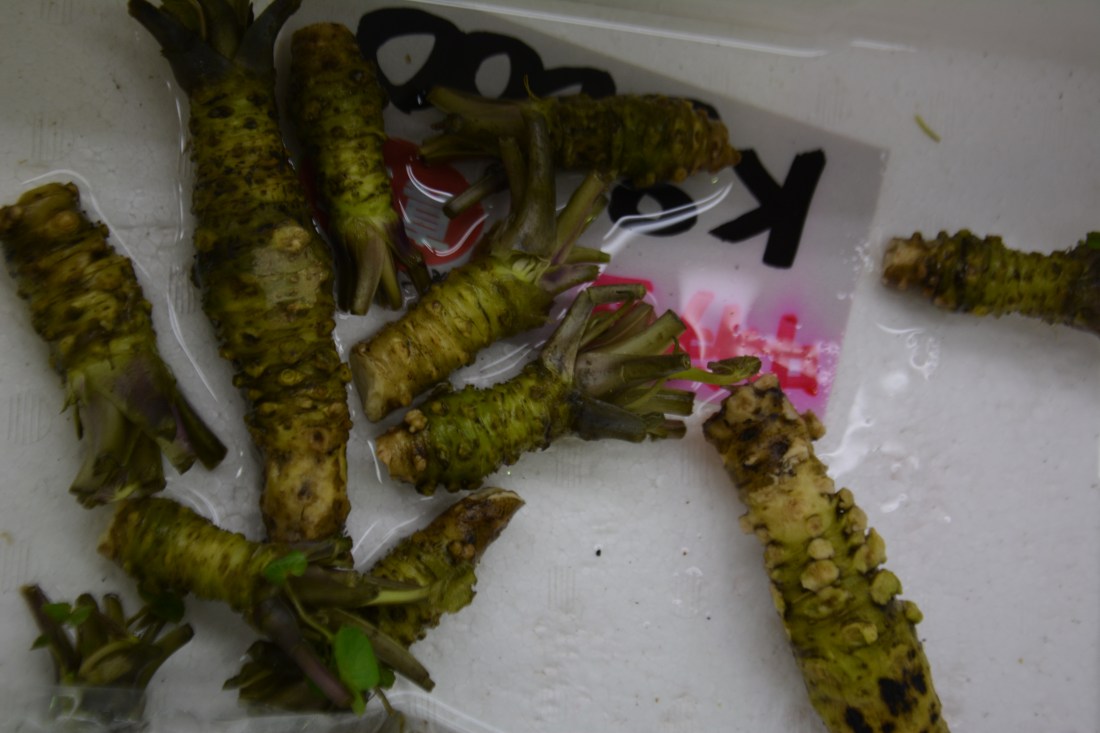
Regarding spicy: peppers, and then there is wasabi.  Much of the wasabi in the U.S. is not true wasabi.  It’s green tinted horseradish.  The real stuff still packs heat, but is far more subtle.  It has much more of an herby taste.  This is what wasabi the root looks like:
DSC_0076

We took this picture at Tsukiji market.  Real wasabi and the shark skin grater used to grate it deserve their own post at some point.

Go ho: There are five methods of preparation: grilling, steaming, frying, and simmering.  And then simply having food presented raw.

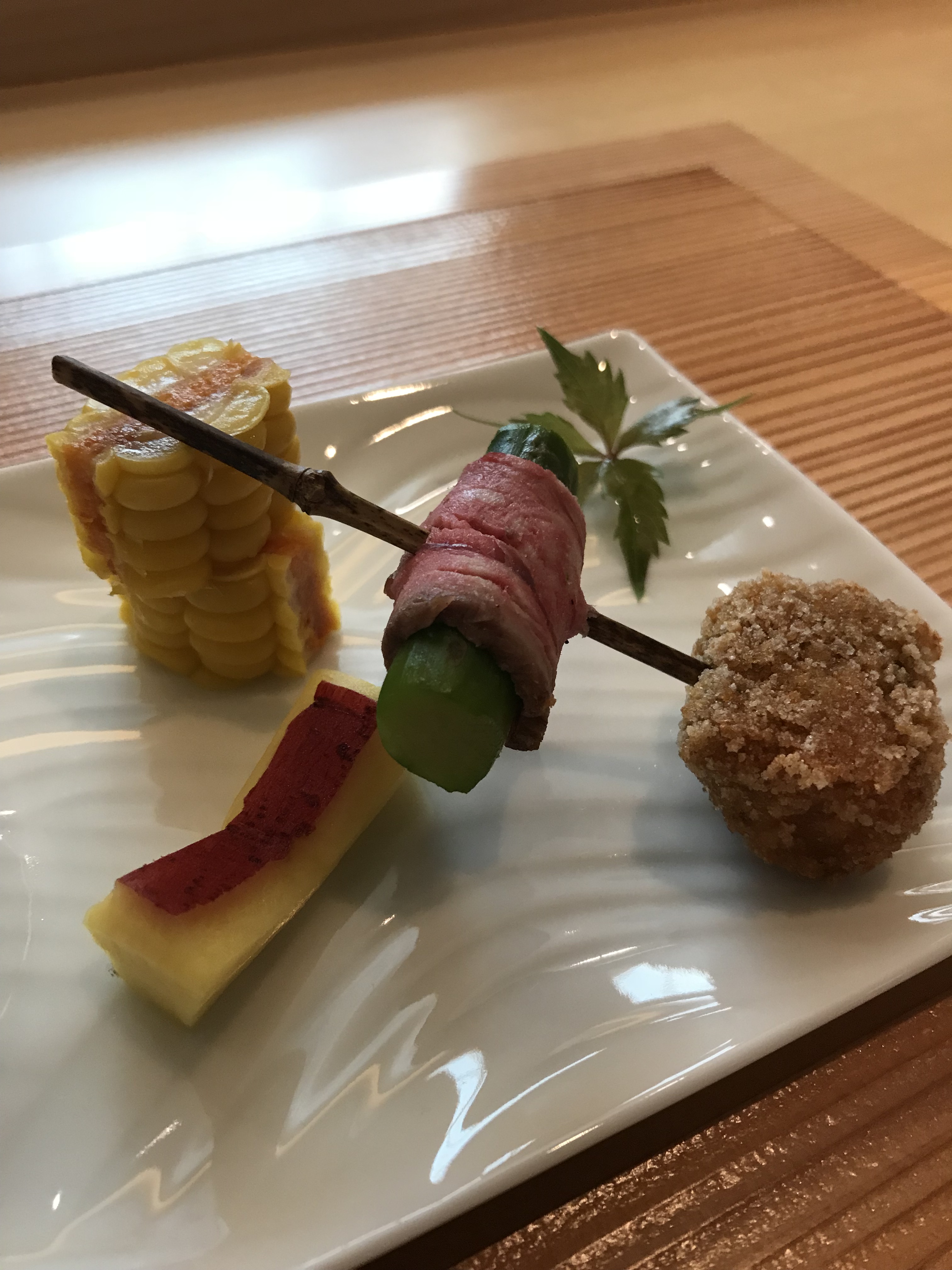
Go kan: Five senses.  With food, the focus is not just on taste and smell, but also sight, sound and touch.  Again look at the variety of textures here:
IMG_7163.JPG

With this dish, we were instructed to eat items in a specific order, which heightened the contrasting textures.  We started with the rice cracker encrusted Chiba octopus.   We followed with the corn- that is Hokkaido sea urchin in the middle.  What an amazing little sandwich!!  The corn was slightly chewy and that urchin just melted all over the tongue.  Then, we had the snappy fresh crispness of the asparagus followed by a slice of Wagyu heaven.

You may think it odd, but actually my favorite bit of this was the simmered sweet potato. It was not at all mushy as you can clearly see, and while eating it, one could fool oneself easily to thinking one is having a somewhat unripened peach.  It might just be, though, I am easily fooled.

I am now much more aware of the contrasting textures in my food.  The last time I truly thought about textures to the same degree was the savory mushroom mousse we had in Portugal which involved… pop rocks.  That was insane I have to say.  Maybe, a little weird?

Go kan mon: These refer to five outlooks. Ok, I’m going to quote Ms. Andoh: “They instruct us, first, to respect the efforts of all those who contributed their toil to cultivating and preparing our food; second, to do good deeds worthy of receiving such nourishment; third, to come to the table without ire; fourth, to eat for spiritual as well as temporal well-being; and fifth, to be serious in our struggle to attain enlightenment.”  How beautiful is that?


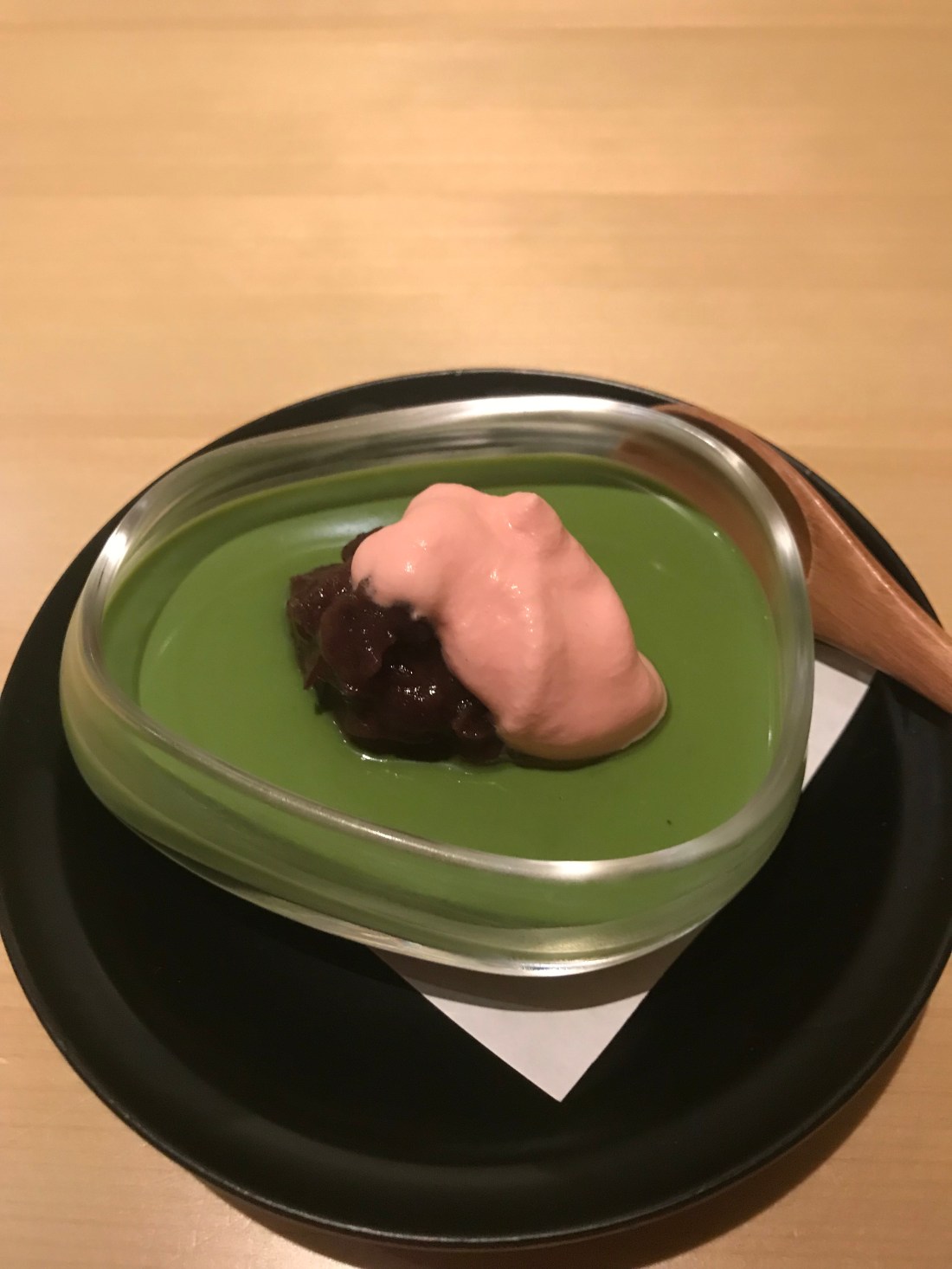
There, these are the five principles.  But did I mention seasonality?  The above dish was served in late summer.  And here is one of my desserts during Sakura, or the cherry blossom festival in spring:
lCwz+XefQH6rm6DkagSN%w

This was a silky matcha mouse topped with cherry jam and cream.

Sigh.  I could eat like this every damn day.  But of course I cannot.  Kaiseki is the haute cuisine of Washoku and was intended for special occasions and banquets.  It is a cultural masterpiece for certain.  I am studying a little more on Kaiseki.  Mrs. O and I will be re-visiting Kenzo soon- will delve more specifically on Kaiseki in the near future…


Gora Kadan Part 2

On our second day at Gora Kadan, we crammed in so much.  We did not waste a minute.

We went into town, purchased a suitcase full of various bric-à-brac.  Hiked in a bamboo forest.  Visited the Tori Gate, took a lake cruise…. We ate sushi.  We went diving in the lakewhile eating sushi.

I’m a liar.  No we didn’t. 

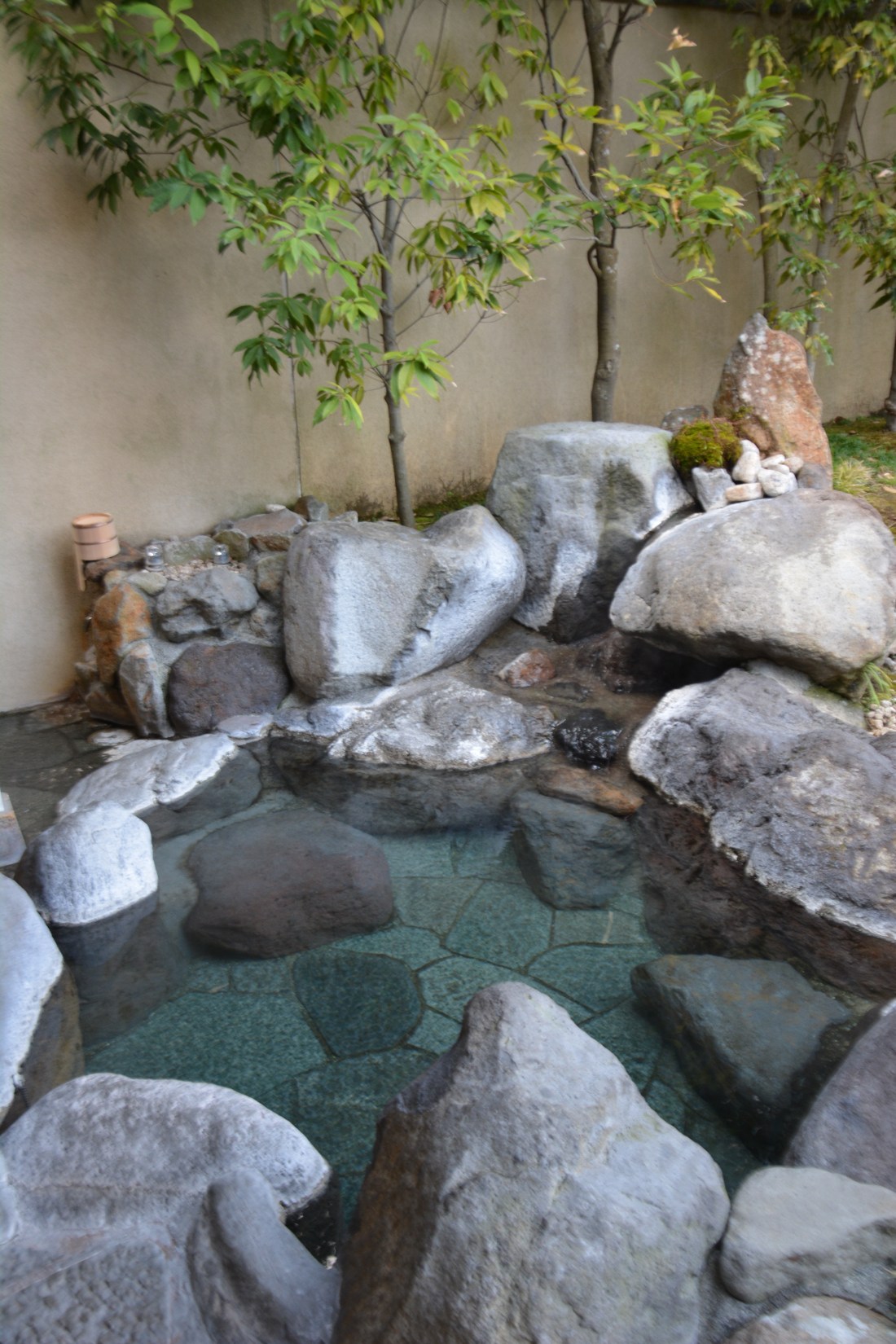
We behaved in our typical princess fashion.  We slept in.  Actually I sunk my big old badonkadonk in that sublime private onsen as the sky was midnight blue at 3 am.  

And then promptly slept in.

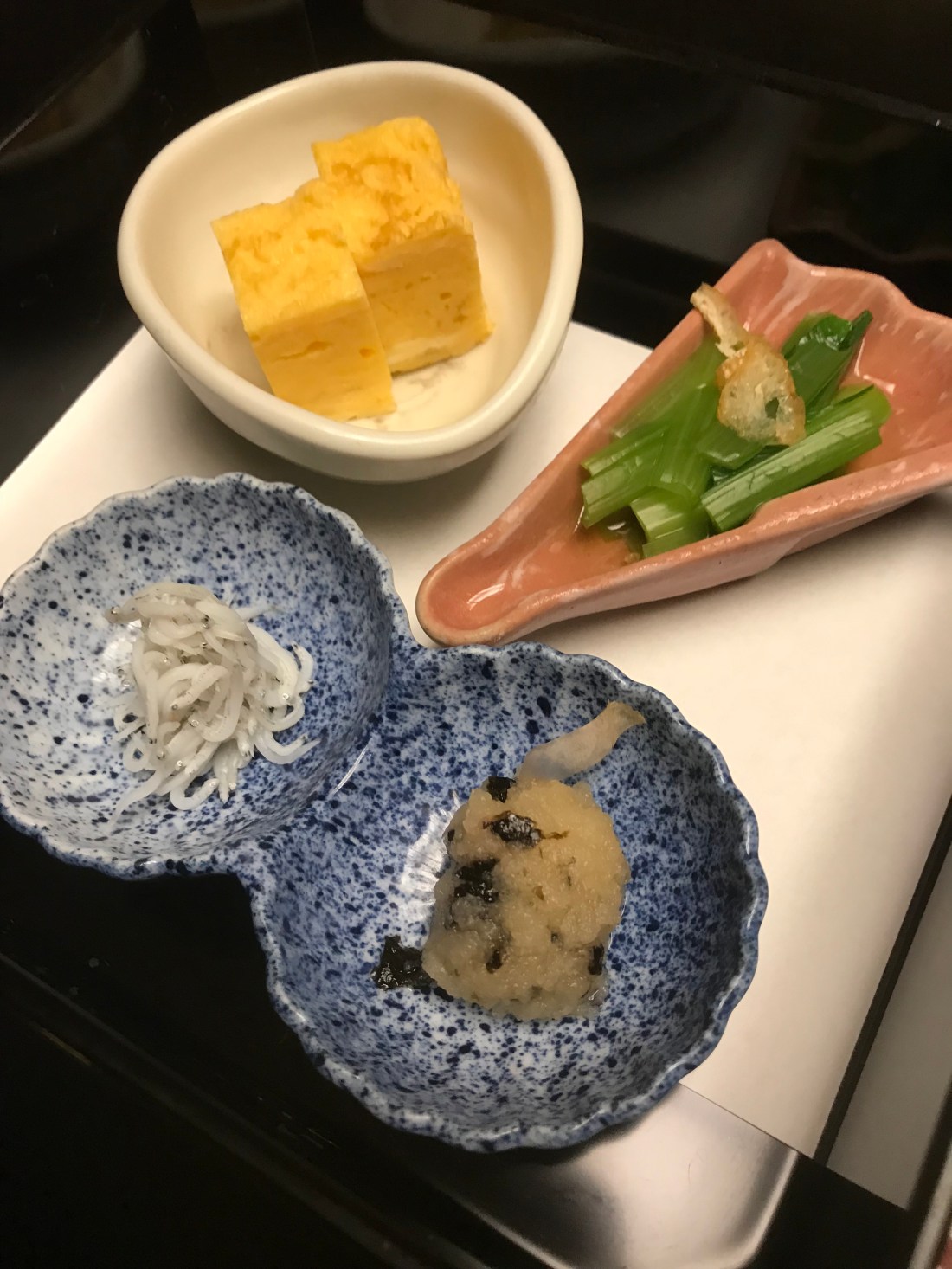
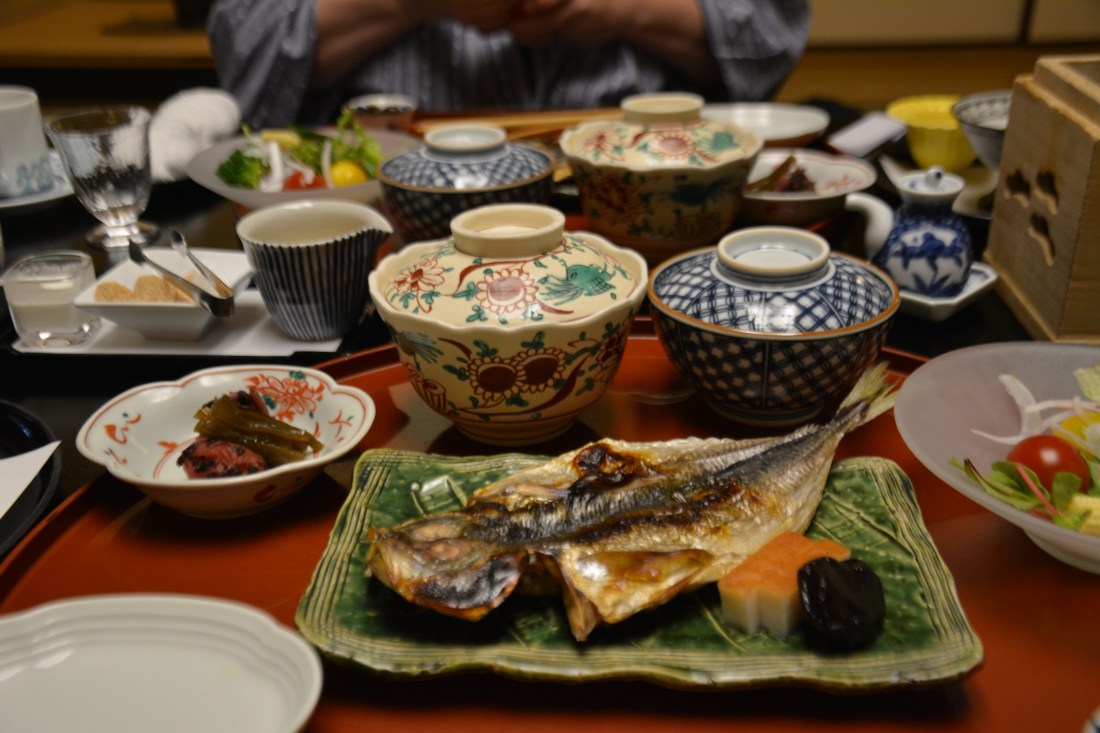
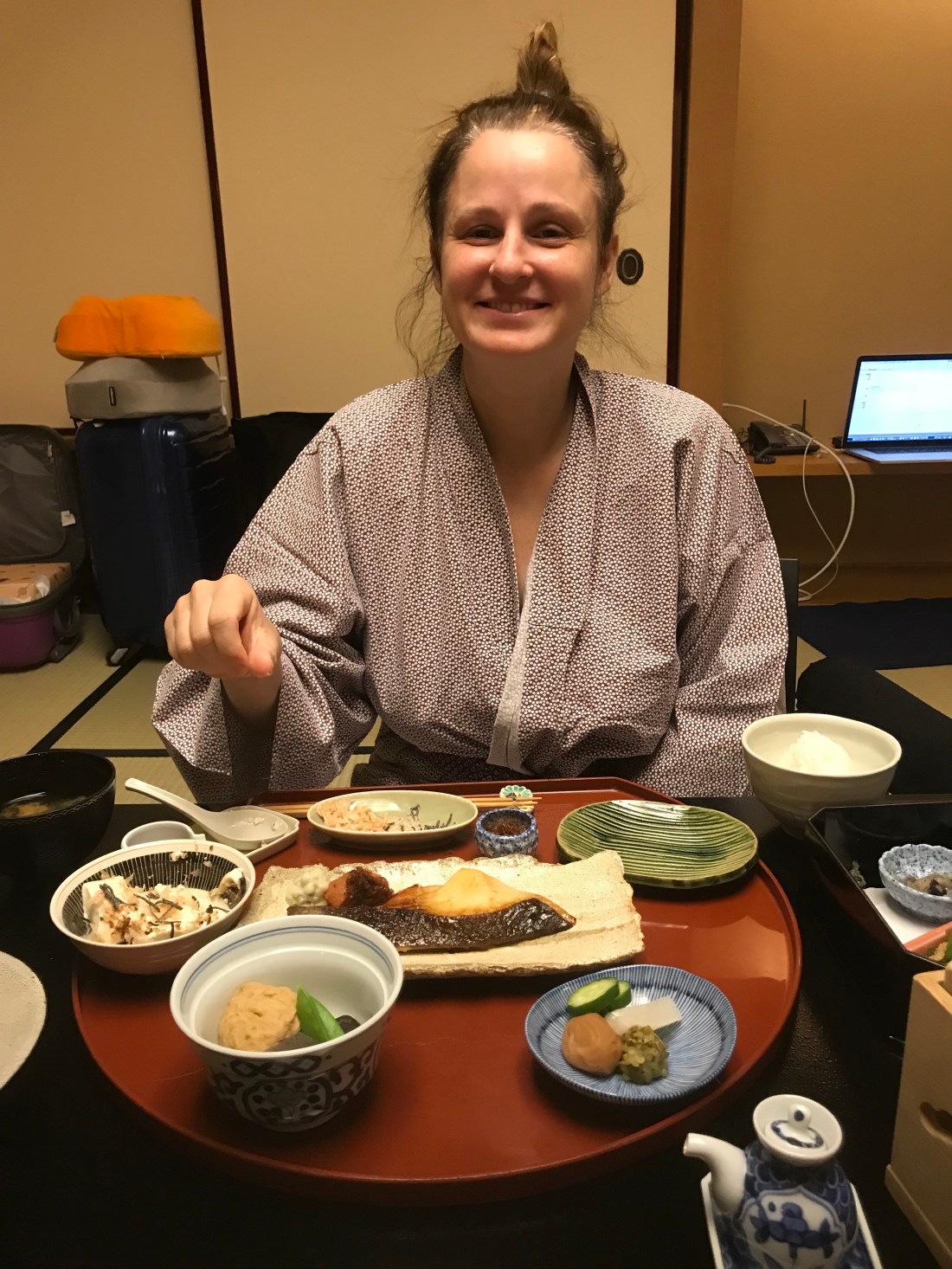
We had a Japanese multi course breakfast.  Guests can choose the Western breakfast, but if one does that, well…

Shame on you.

u4xr+kPkQvK+utPhukgDPQ

Sigh I just love tamago, i.e. egg in Japanese.  But I am incorrect.  What I truly love is Tamagoyaki.  That is what is at 11 o’clock below.   This is a form of  Japanese omelette, which is made by rolling together several layers of cooked egg.

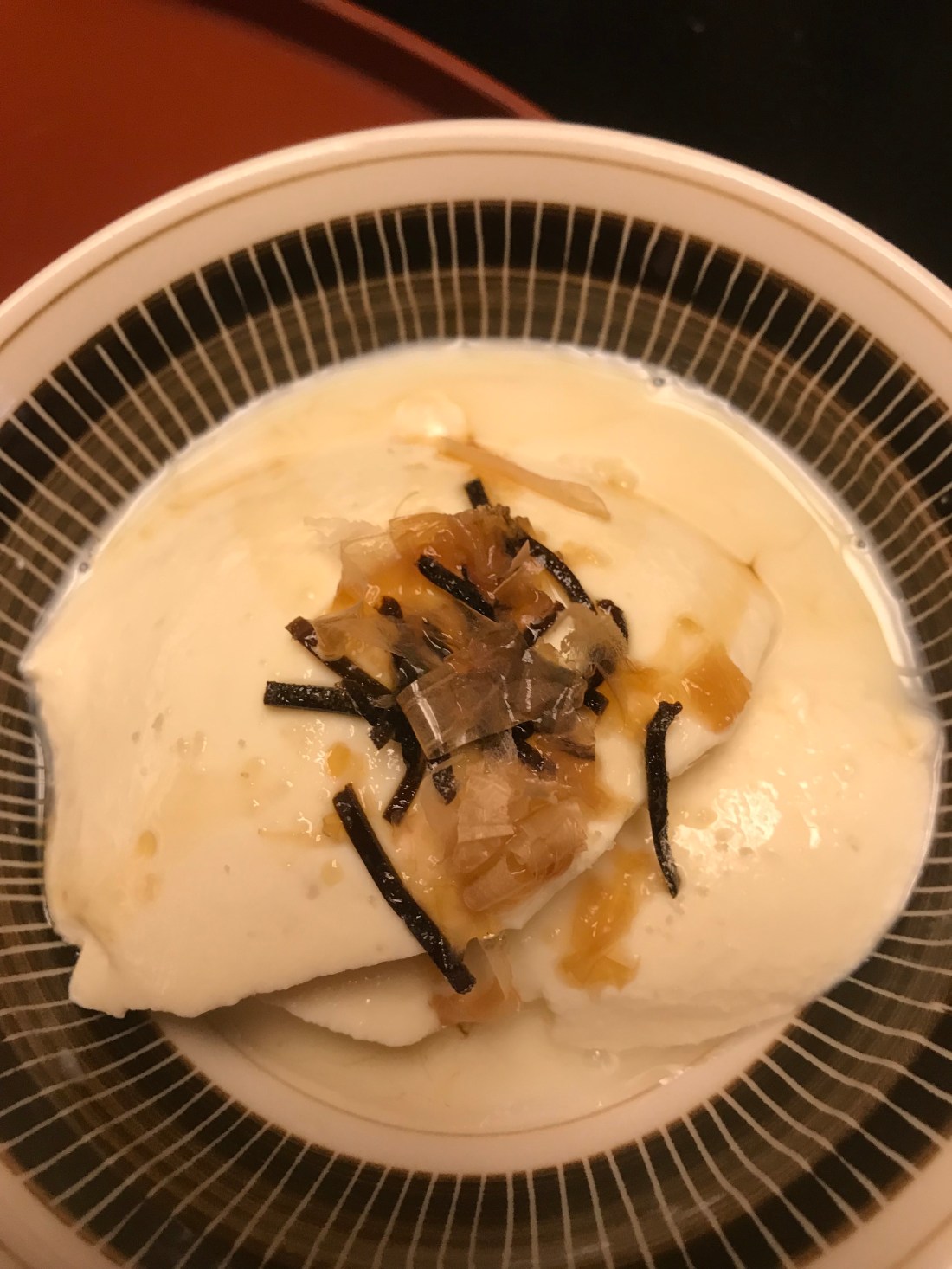
Pt7vrRjTS3+eiz+LpNqMLA

Ooooh and silky tofu….

bjOkFQgdQUuqMi40mRGUPA

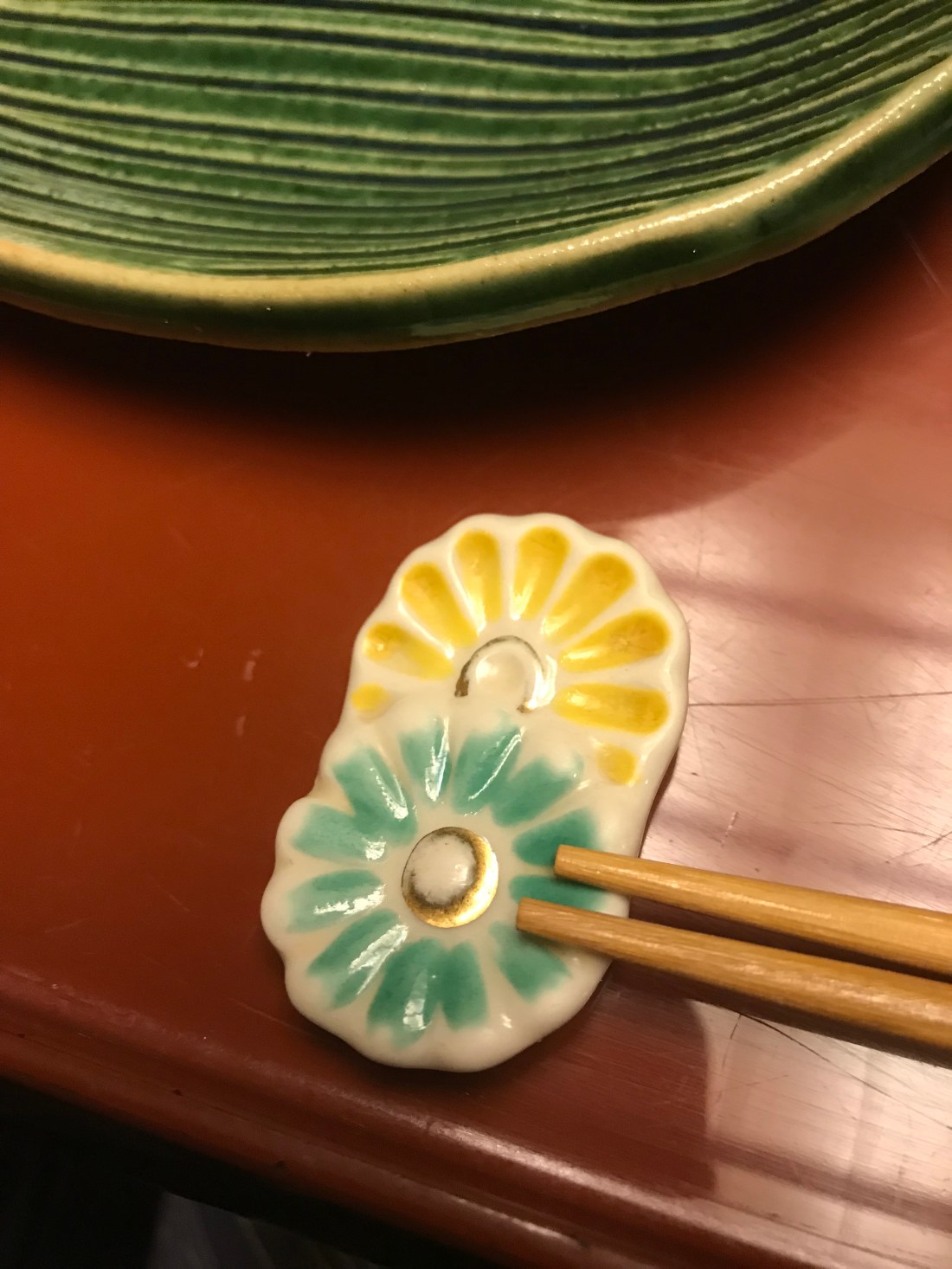
The chopstick holders are so very…  What is the word?  Nice?  No.  Sweet?  Maybe.  Ah, I know!  Kawaii

oEDy5eCXQaylF+JC9i4NEQ

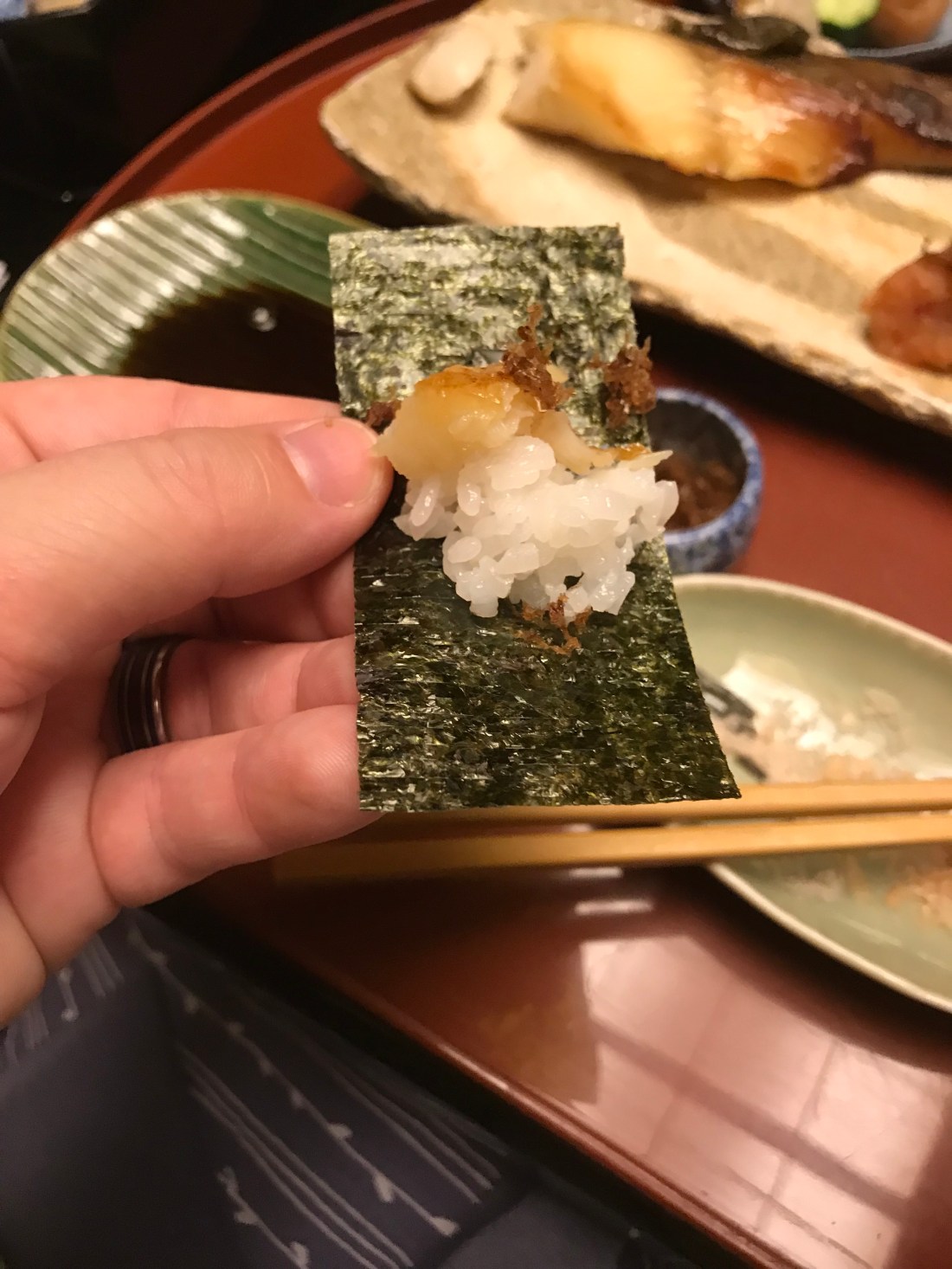
Oooh finger food:

ivY50%wUTgafsXEMz9OXwg


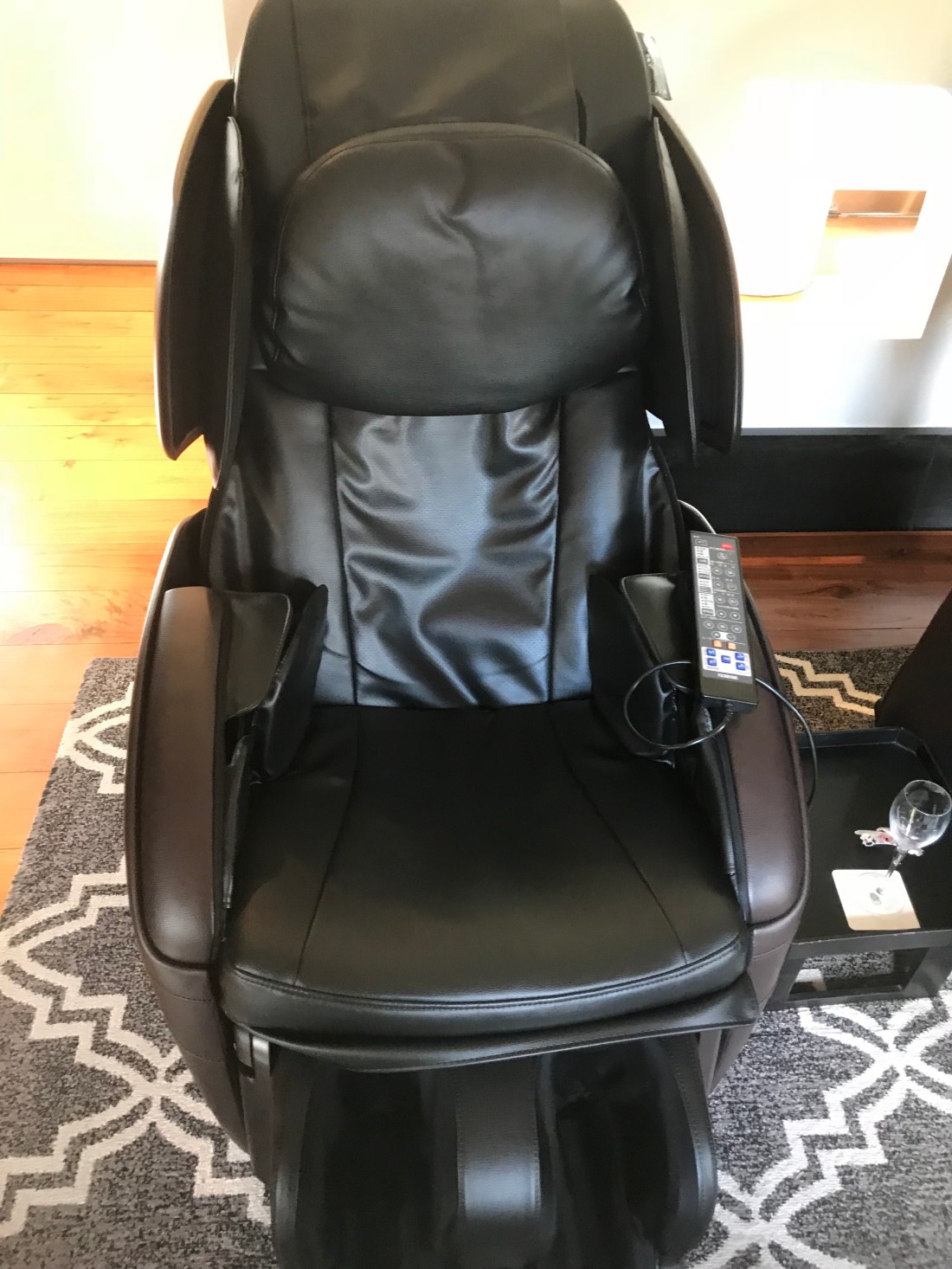
And then we went for massages.  No I did not take a camera there!!  So no pics.  But I do want to talk about somebody incredible I met after the massage.  Somebody who relaxed me like no other.  Someone… Ok, it’s a goddamn chair.  

aBNUOv+1SQ6wUf2hgTbxUA

Gora Kadan has three of these beauties.  Yes, after my massage, I went for more massage.  With him.  It will be a separate post.  That is, my obsession with massage chairs which apparently is something that Japan and I share.  In any case, Gora Kadan: thank-you, thank-you from the bottom of my withered heart.  These massage chairs are to die for.

We tried to mingle with some other guests in the lounge area after our massages.  We met three 50-something Persian business buddies.   We tried to discuss software or medicine or news of the day or politics or food or booze (not necessarily in that order).  

But, alas, they just kept asking us where our husbands were.  So after that titillating conversation we felt we should go revel in the beauty of our rooms.

More onsen:

DSC_0512

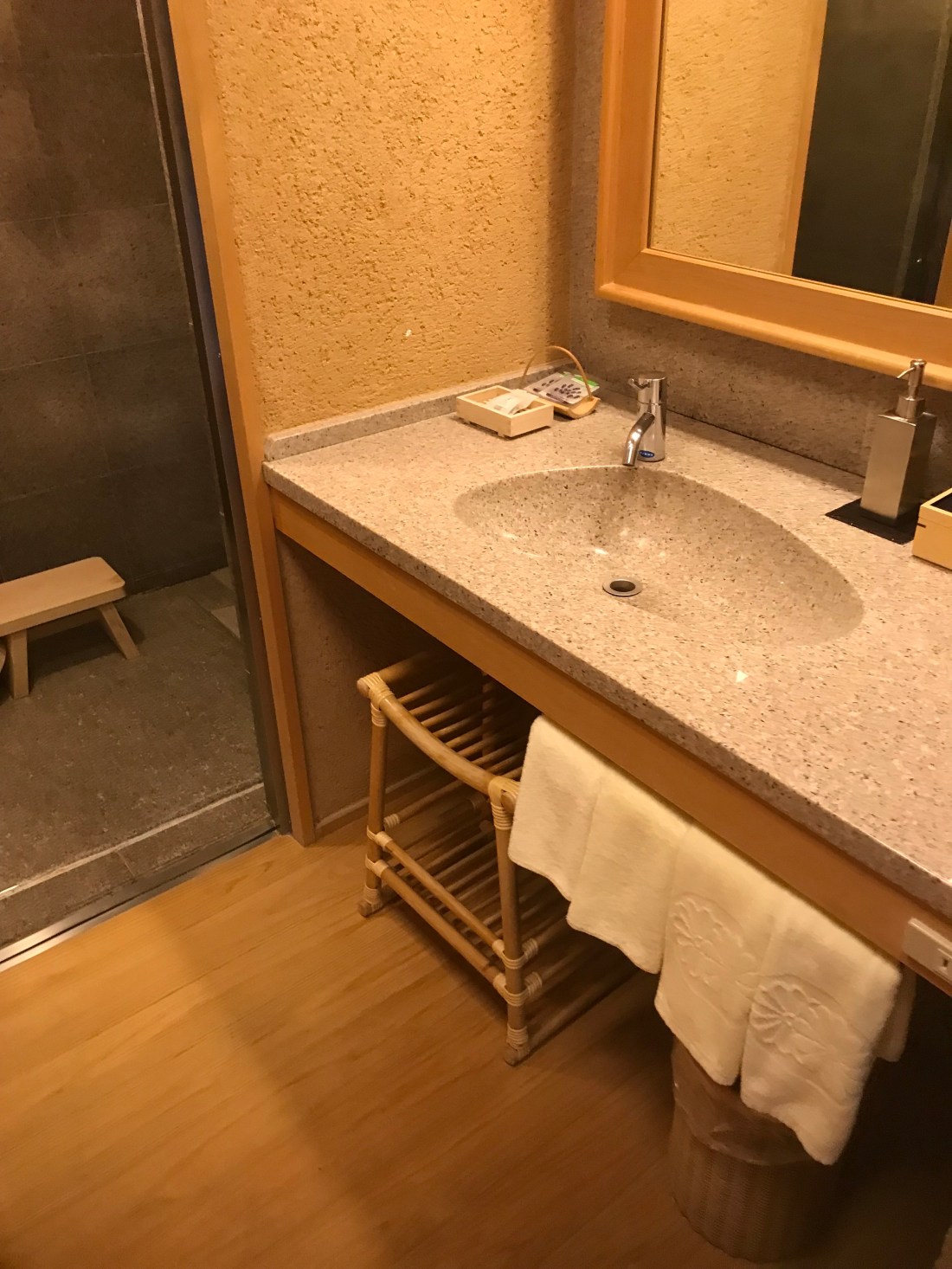
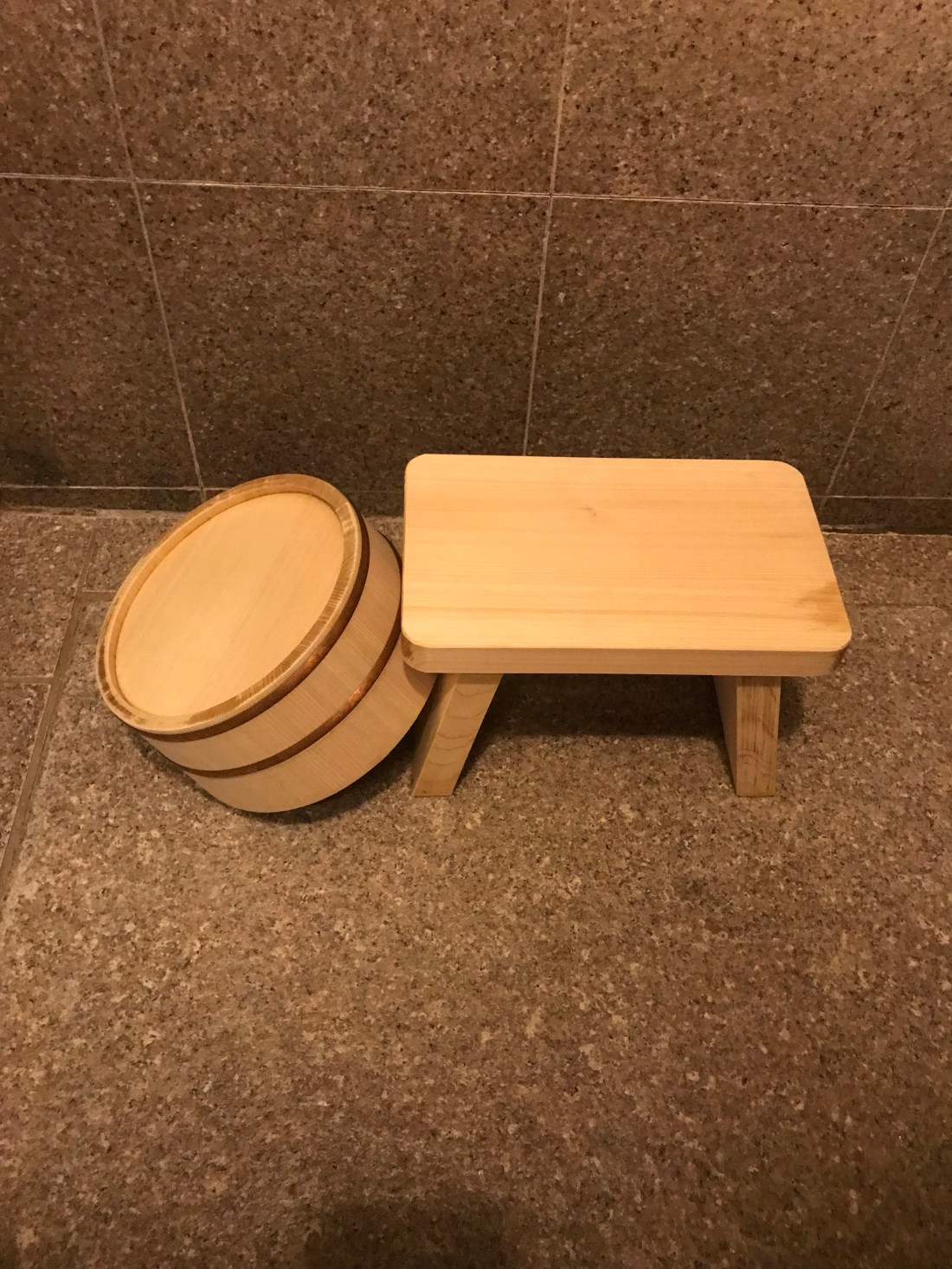
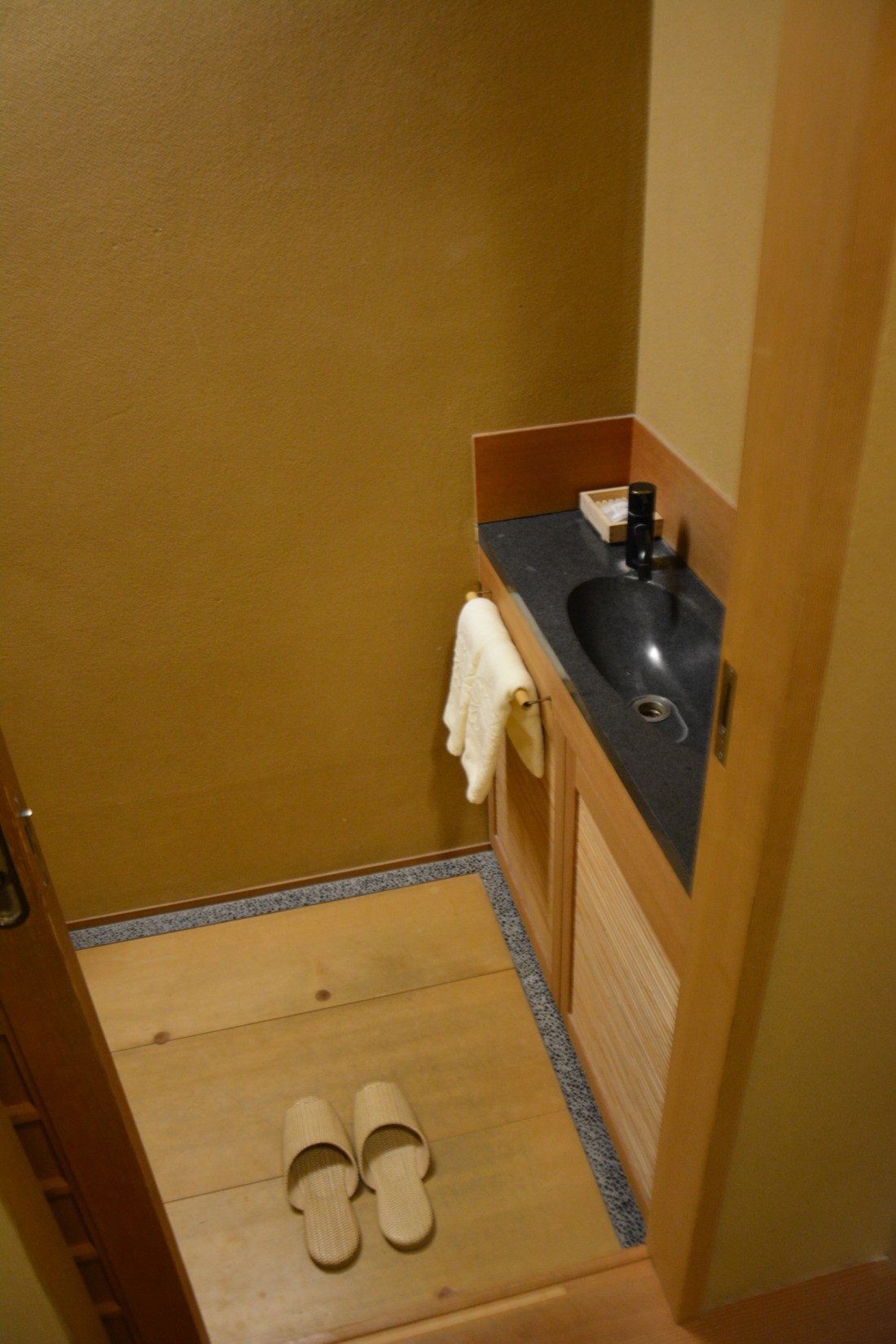
Even the bathrooms were so simple and elegant:

yPG4y%m7SX2KT9GZIaPDMw

CGmrDTypQweVEIXWHGmucw

DSC_0499

DSC_0497

By the way, about Japanese toilets.  Much has been written.  However, what I will say is that they are not complicated!!!  And they rank right up there with Gora Kadan.  Almost. Ok not quite at all.  But I want one.

Will discuss in a later post about toilets round the world.  I bet you can’t wait…

The decor just fills one with peace and relaxation:

DSC_0505

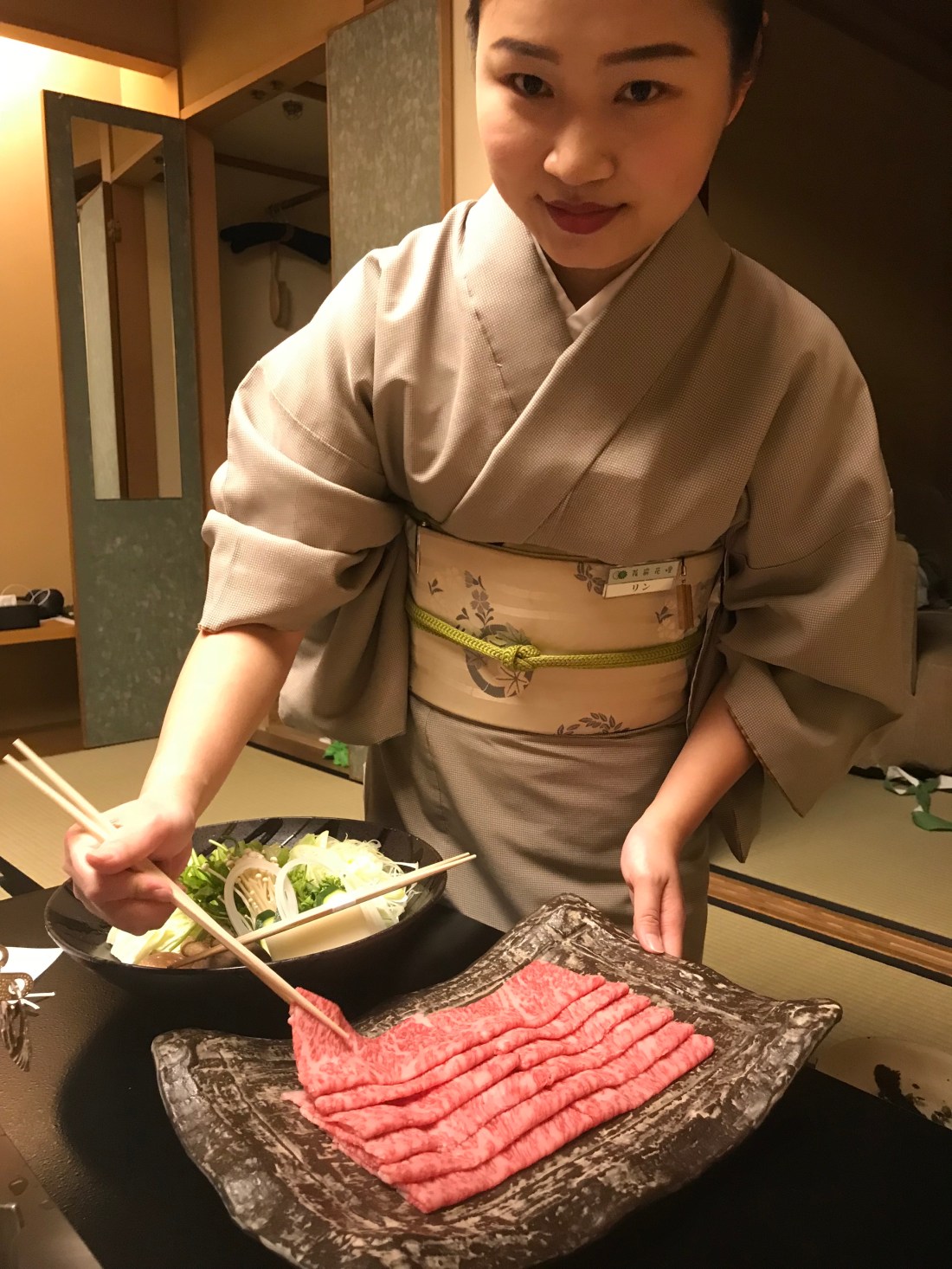
Ahh, dinner.  Well, I don’t know about you, but I don’t see this every day:

hoH+RXLqQnu6SfiVtwXIyA


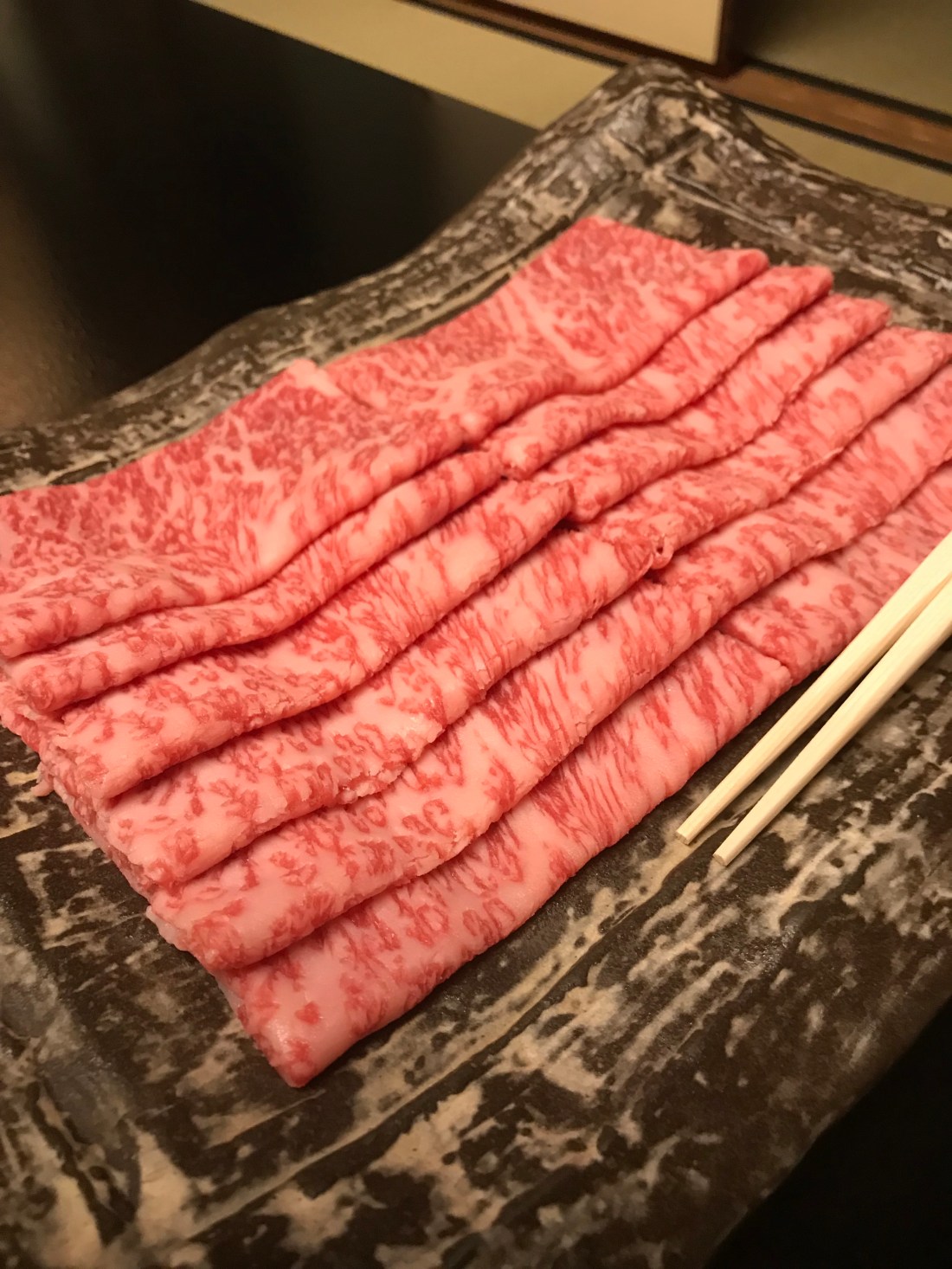
This is, of course, Wagyu beef.  I have eaten this a number of times outside of Japan, but I have never had the quality of Wagyu I had in Japan.  No exception here at Gora Kadan.

The velvety smooth utter deliciousness of Wagyu derives from a number of factors.  The fat in Wagyu is more dispersed intramuscularly as opposed to more of a rind around a muscle.  Wagyu is high in glutamic acid and inosinic acid, two molecules responsible for the taste known as umami, one of the qualities that makes Japanese food, in my humble opinion, some of the most savory on the planet.  Wagyu fat is higher in monounsaturated fat,  and omega 3 and omega 6 fatty acids compared to other beef.  Not only are these the ‘good fats’, but they also melt at lower temperatures which further enhances the deliciousness.  And texture.  It can be said that in addition to tasting delicious, Wagyu feels delicious.  Again, regarding the best of Japanese cuisine, texture matters greatly.

How all this is achieved is somewhat of a mystery.  Although I know some of it involves giving the cows massages- I believe to soothe muscle spasms- and giving the cows beer in the hot summer months to increase appetite.   This is certainly different from what I have seen here in the U.S.  Although I readily confess I am rather ignorant about all of this or perhaps biased by what I see driving down I-5 in California or reading in Supersize Me.   I have read, indeed, some Wagyu does come from the U.S. and also Australia.

I digress.  More food porn:

LGr%JqUZQD2h0y5xeMvQBg

5+aztR2tTHWHewZcE4+P6A


YTgI%QbnRXyXdReIjOWAcQ

MRM8FgE4TVim4bcALc1ctg

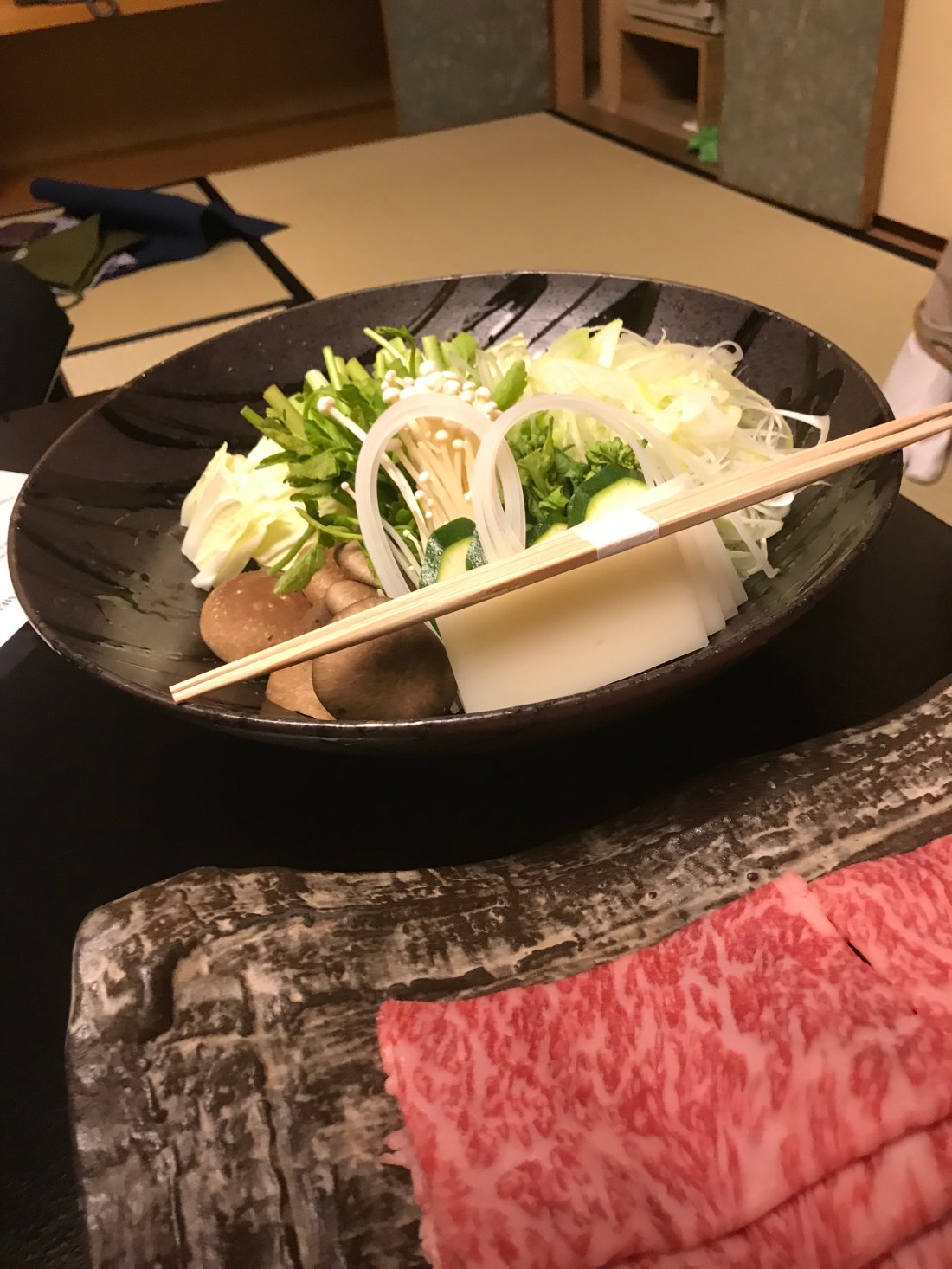
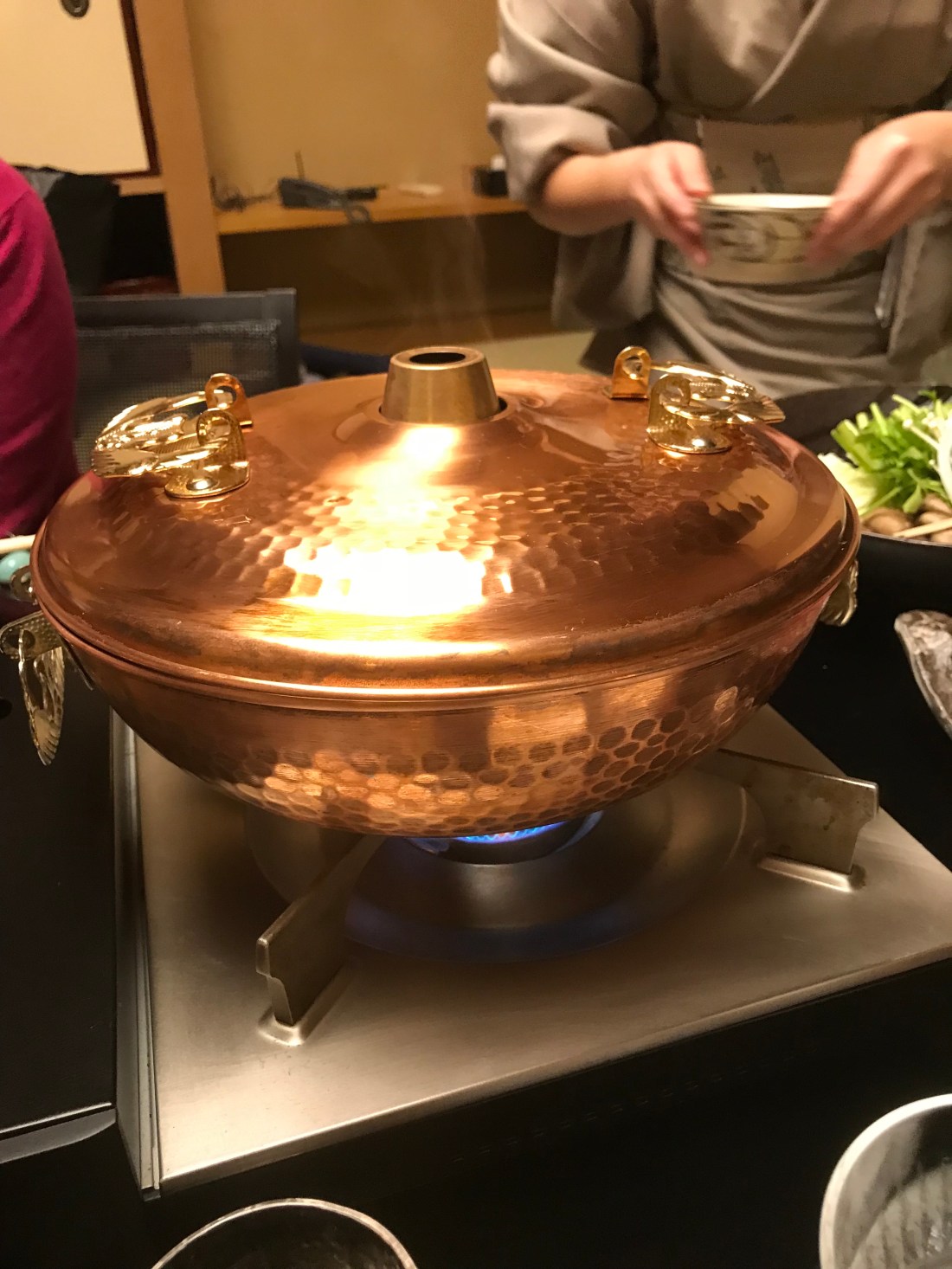
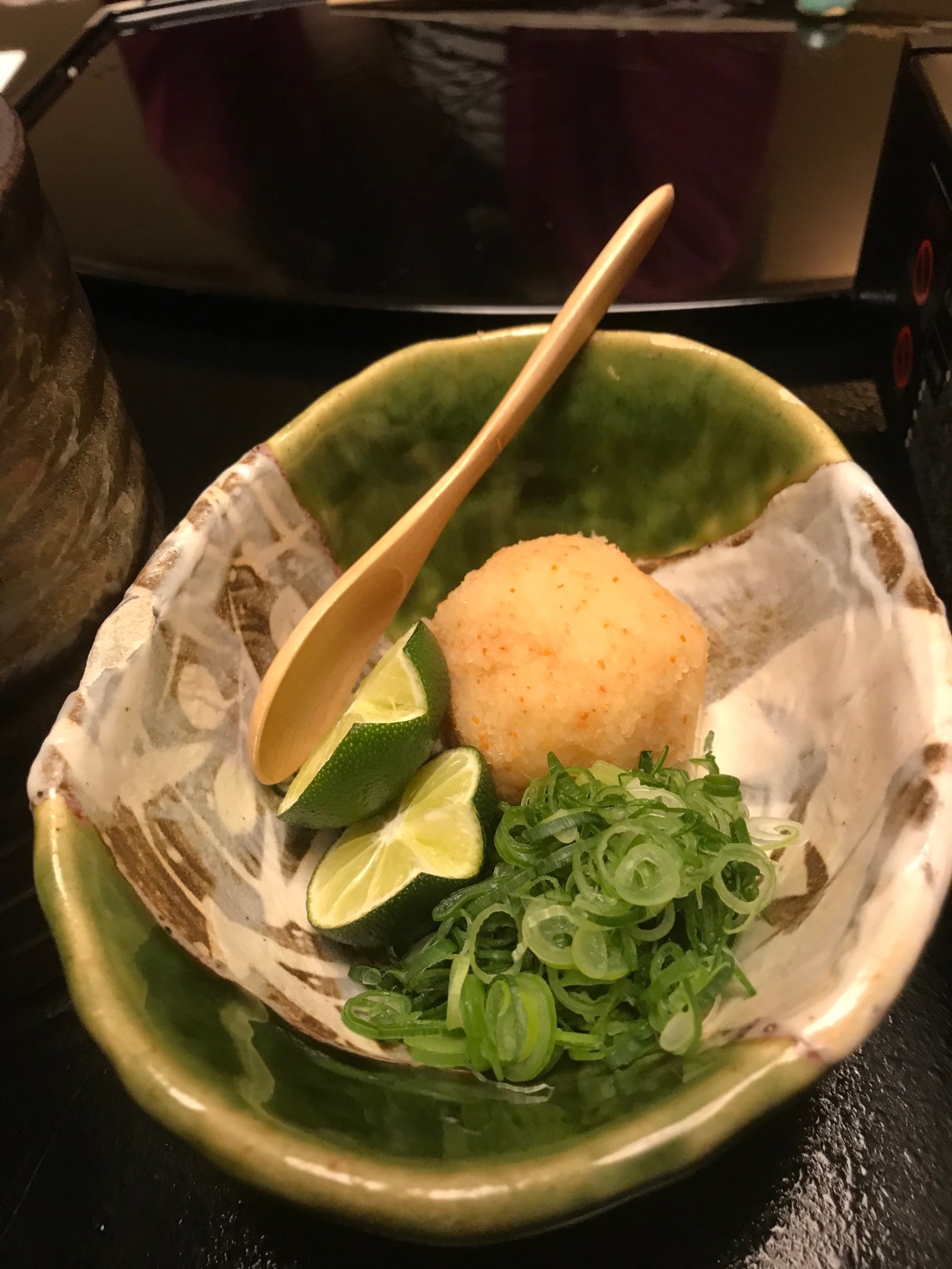
The beef was very quickly cooked in the pot with the vegetables added.  We had these for toppings:

bqetJ+swQSSNP5pn22dAeg

The beef was nothing short of spectacular.  Not sure if it was the sake or the beef or both but we were in such a state of bliss that we took no further pictures of this incredible meal.  My body was in a state of Wagyu shock.  I’m pretty sure that- actually quite certain- this will be the closest I will be allowed to Heaven.

The next morning we had another fabulous breakfast:

DSC_0532

C0frrXOTQPOg9kSoGygCSw

exJ1uitoTqSRLm+f+GVRuQ

Sigh, it was time to leave this glorious place.  Look at how lovely this is:

BMp7NNTVTr6vcjLfKRLmkw

But we were headed to Kyoto.  Which was not a bad place to be, either.

I know this is not subtle like the above scene, but I truly recommend Gora Kadan.  We will be back…

Gora Kadan

Kawaii

Ok not done with Gora Kadan part II yet.  Instead, after going through our trip pictures, and after a particularly delightful week at work, I needed a bolus of cuteness.

We all love things that are cute.  Babies are cute.  Kitties are cute.  Puppies are cute.  The show ‘Too Cute’ is, well, so damn cute.

But no people in the world kick ass at cuteness more than the Japanese.  This is doubtless a fact.  It’s known as Kawaii.  To borrow from Wikipedia:

The word kawaii originally derives from the phrase 顔映しkao hayushi, which literally means “(one’s) face (is) aglow,” commonly used to refer to flushing or blushing of the face. The second morpheme is cognate with -bayu in mabayui(眩い, 目映い, or 目映ゆい) “dazzling, glaring, blinding, too bright; dazzlingly beautiful” (ma- is from 目 me “eye”) and -hayu in omohayui (面映い or 面映ゆい) “embarrassed/embarrassing, awkward, feeling self-conscious/making one feel self-conscious” (omo- is from 面 omo, an archaic word for “face, looks, features; surface; image, semblance, vestige”). Over time, the meaning changed into the modern meaning of “cute”, and the pronunciation changed to かわゆい kawayuiand then to the modern かわいい kawaii.[8][9][10] It is most commonly written in hiragana, かわいい, but the ateji, 可愛い, has also been appended. The kanji in the ateji literally translates to “able to be loved, can/may love, lovable.”

Ok enough of words.  I just feel like posting a bunch of photos from Japan from March 2018.  Self-explanatory.

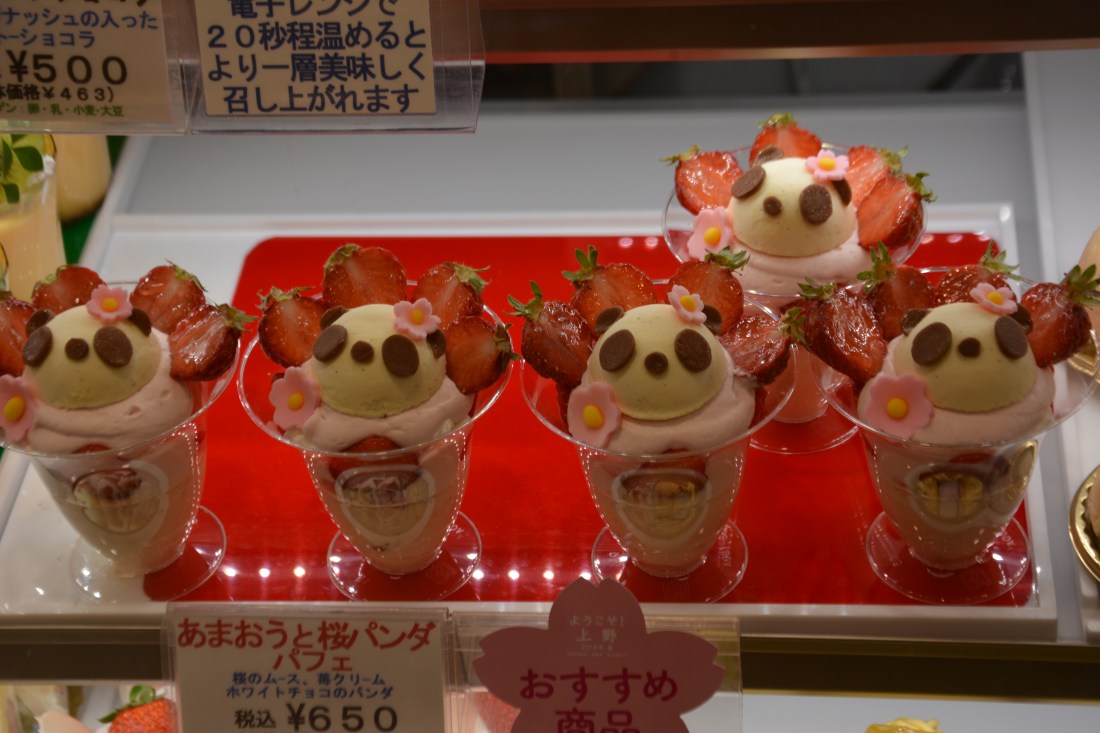
DSC_0444DSC_0452DSC_0454


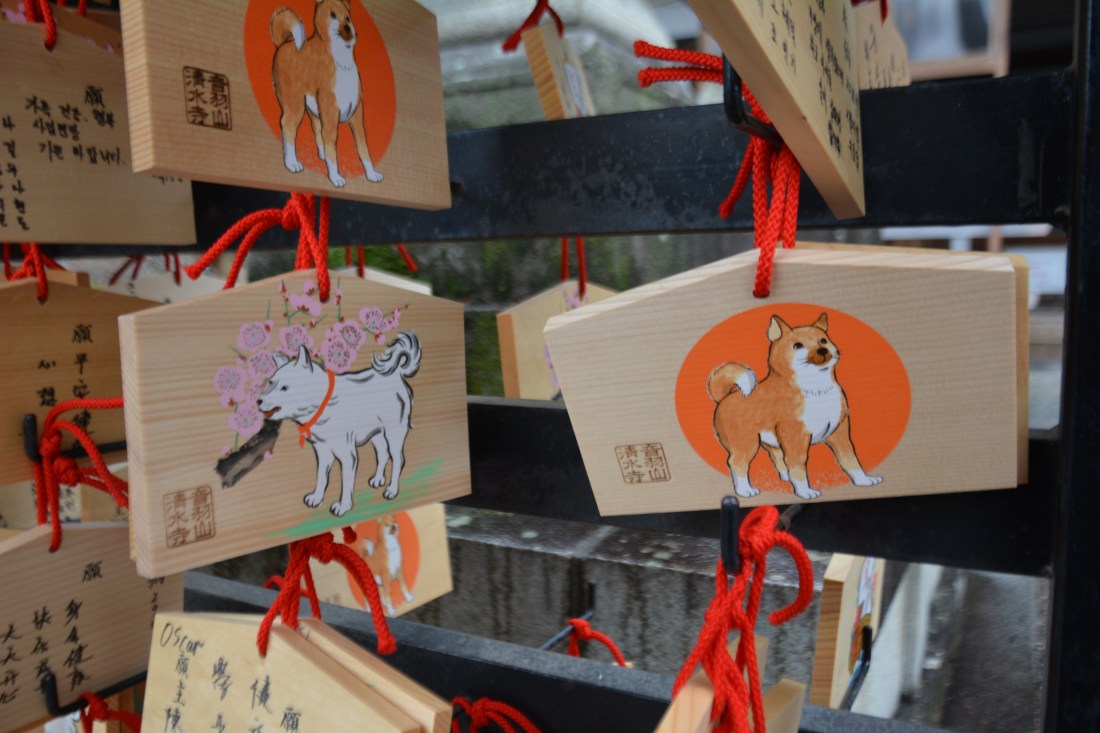
Are you going make prayer offerings or requests?  Better make them cute!

DSC_0686


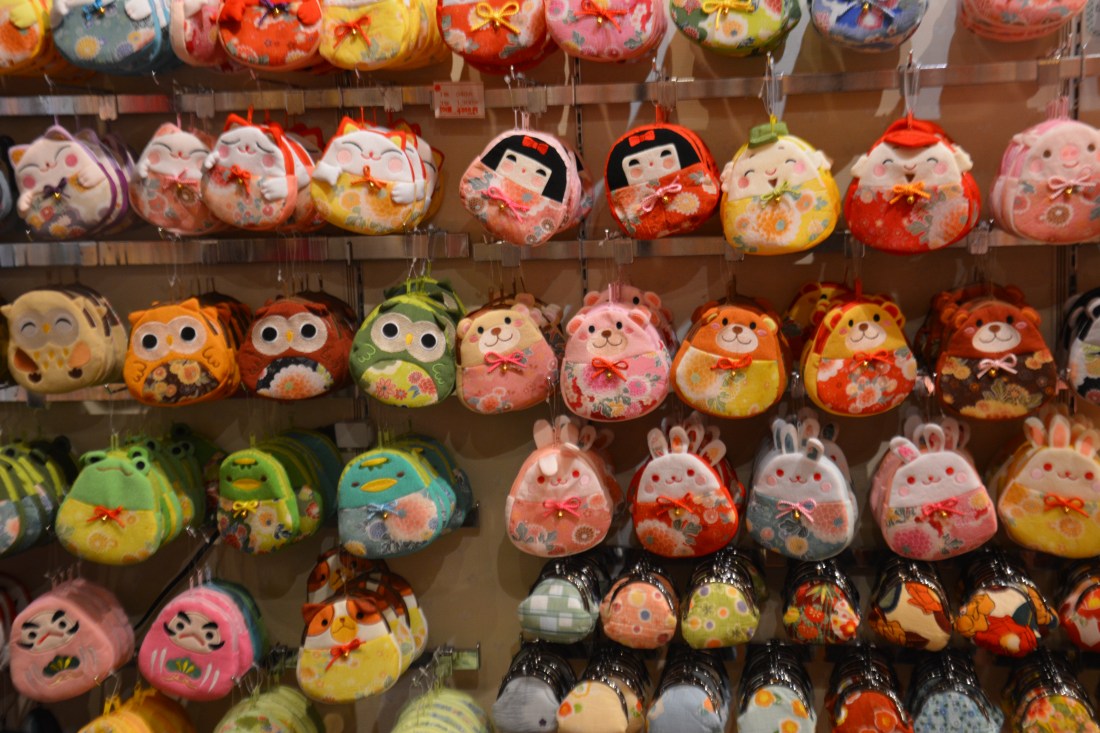
Are these key rings?  Are they something to pin on your backpack?  Who cares??

DSC_0816

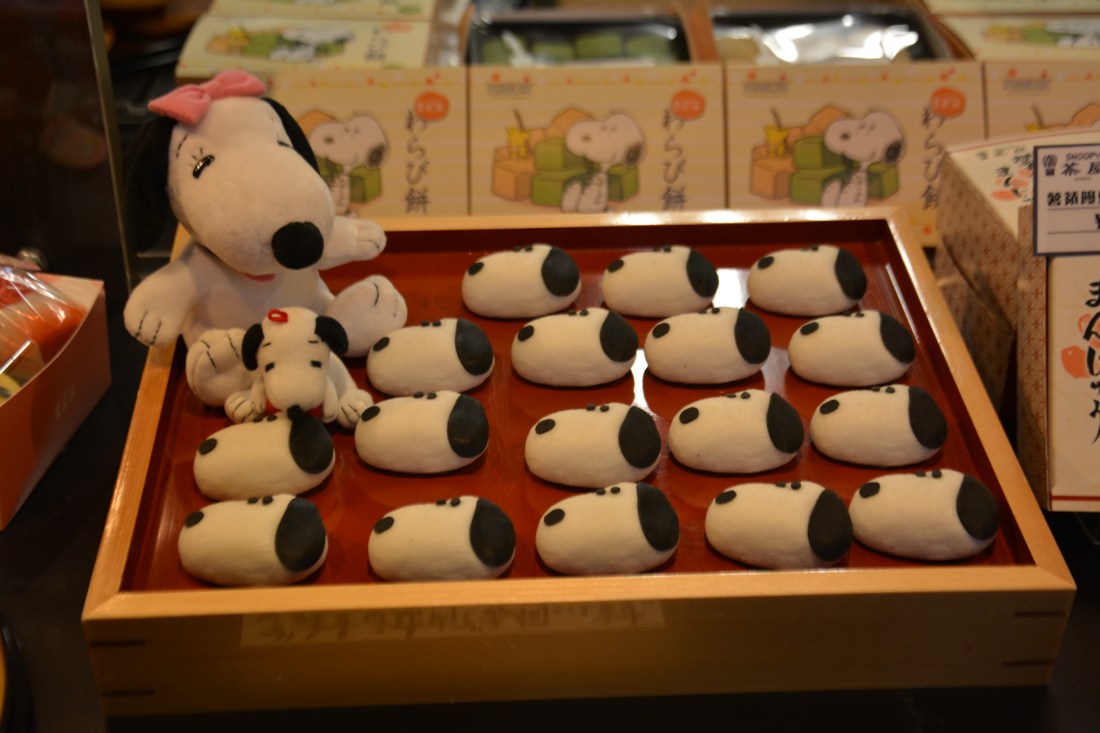
The Japanese love Snoopy.  Because of course they should.  There is a shop in Kyoto selling all things Snoopy et al.

DSC_0856

DSC_0857

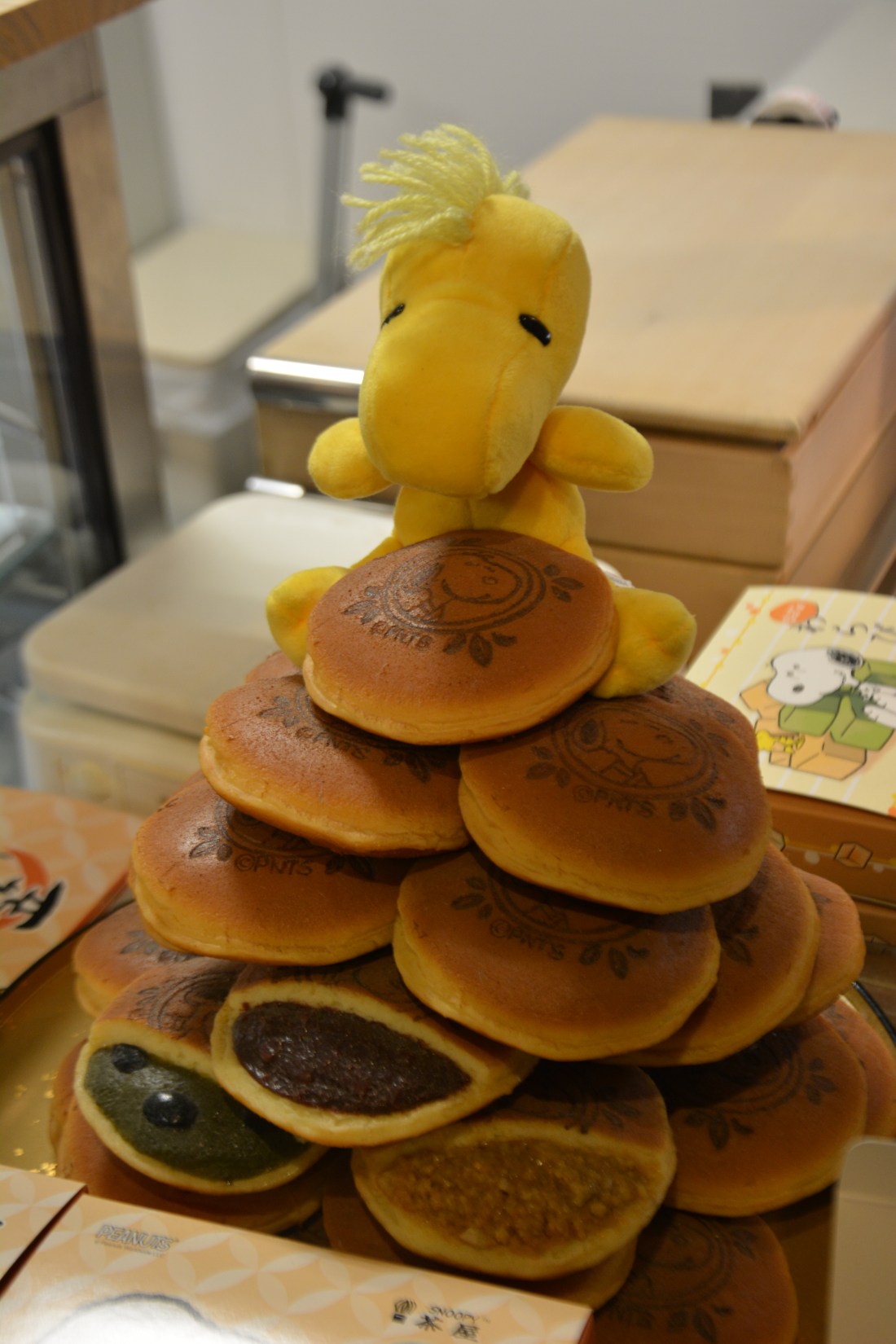
These are Dorayaki.  Dorayaki are two pancakes patties typically wrapped around a filling of sweet Azuki red bean paste.  Some Westerners are not overly fond of red bean paste.  Although, it might be because they have not enjoyed ones of high quality.

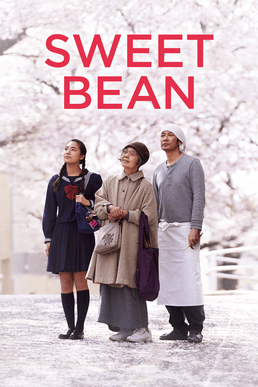
That is not the case for me.  I love those damn things, quality be damned!  But part of this is sentimentality because of a film I am rather fond of.  It is a Japanese film called ‘Sweet Bean’.   If, after watching this film (which I strongly urge you do), if you don’t develop at least a little desire to understand the fuss of cooking beans correctly, well… Screw you!!  More dorayaki for me!!


An_(Sweet_Bean)_poster

Ok, clearly I don’t know how to review or sell movies.  If food is part of the movie’s subject, I consider the film fabulous.  It’s like how some folks just have to have explosions, or major recognizable cites imploding, or superheroes or Benedict Cumberbatch.  For me, Big NightEat Drink Man Woman, Ratatouille are among my favorites.  I think it is because I am obsessed with absorbing cultures, although I know it is done at most very superficially.  Yet nothing in my humble view is better than going down a culinary path of absorption.  What is the worst that can happen?

Actually I have only gotten food poisoning from Western deli type items that they serve at hotels trying to please Westerners.  In places like Peru.  Actually I did get damn sick in Crete from a breakfast pastry buffet.  I hoovered through an amazing pear tart until the last bite when I realized that there was mold on the bottom.  We went to Knossos right after.  I had dreamed and dreamed for a long time about going to that place, but now it is mainly associated with some things I was not aware my intestines could do.

Ok not cute.  Back to cuteness.  Look, we landed at Haneda Airport in Tokyo and look what greeted us:

DSC_0004

DSC_0005

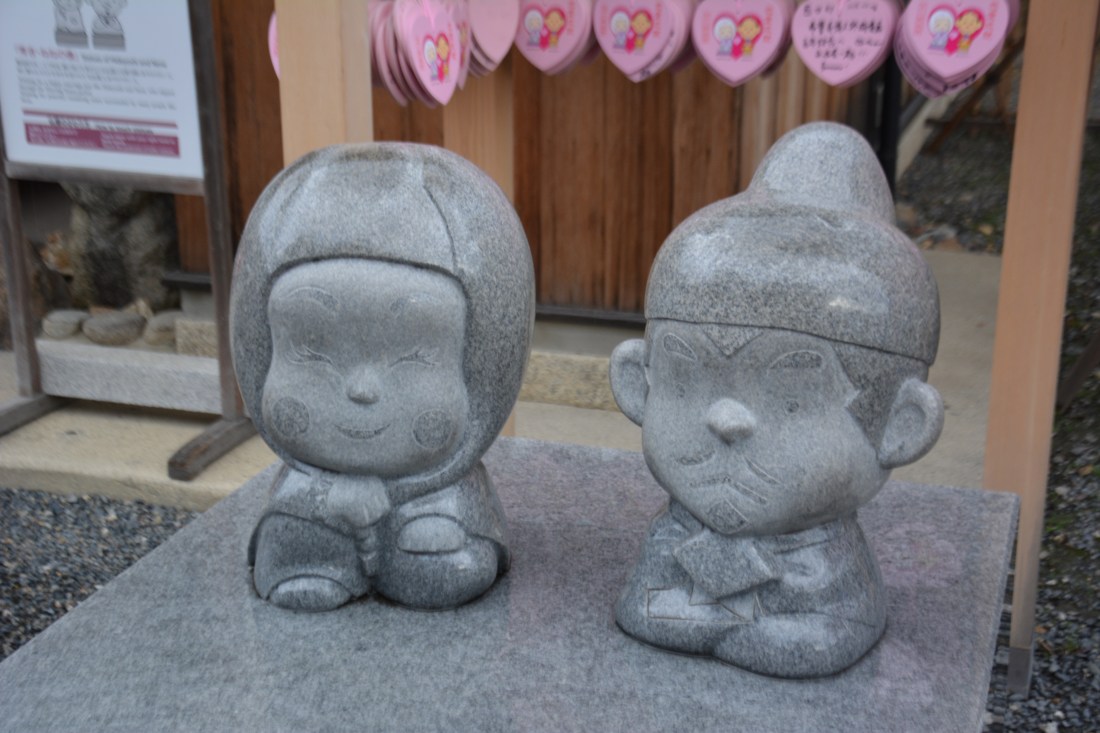
There are cute statues everywhere:

DSC_0480

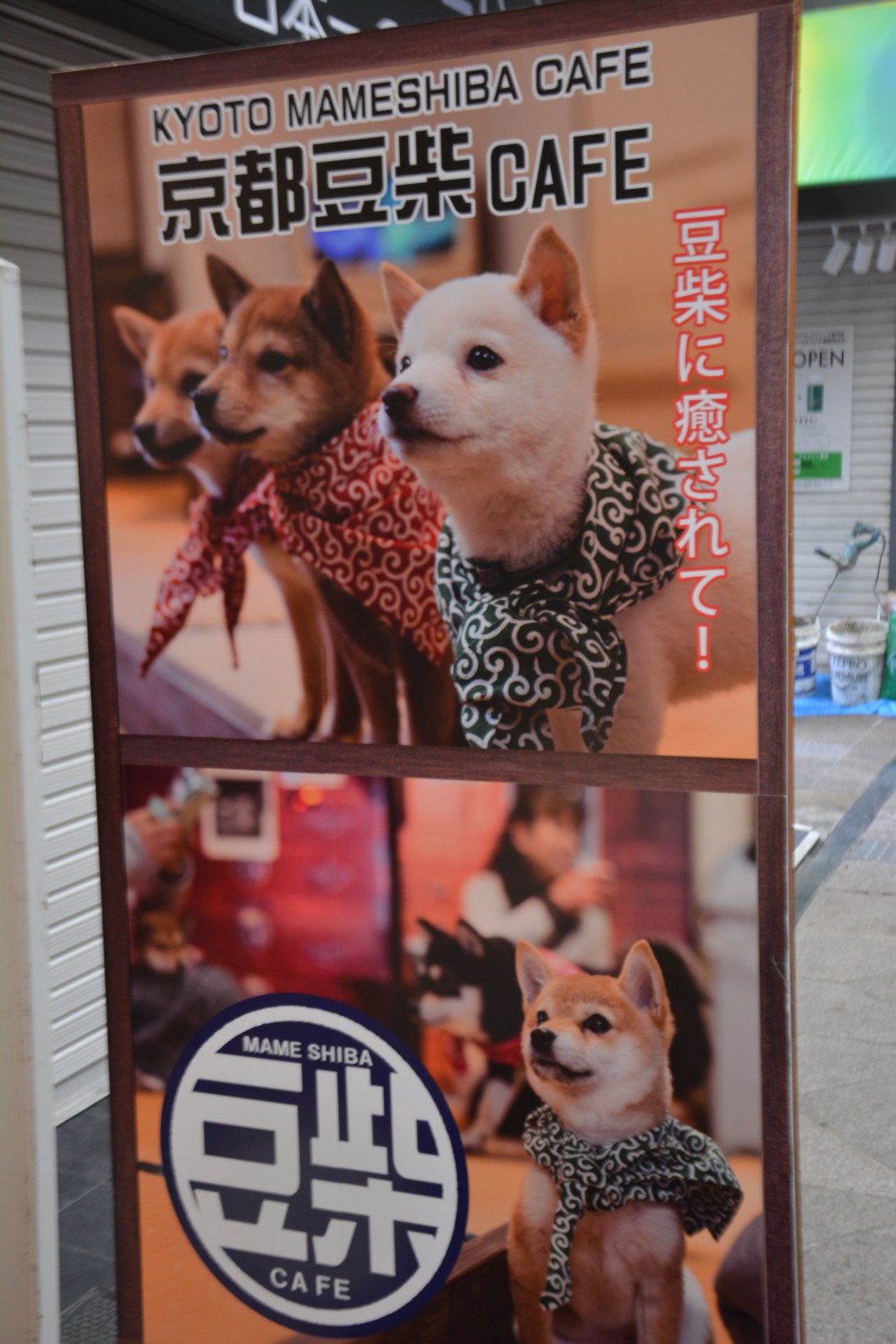
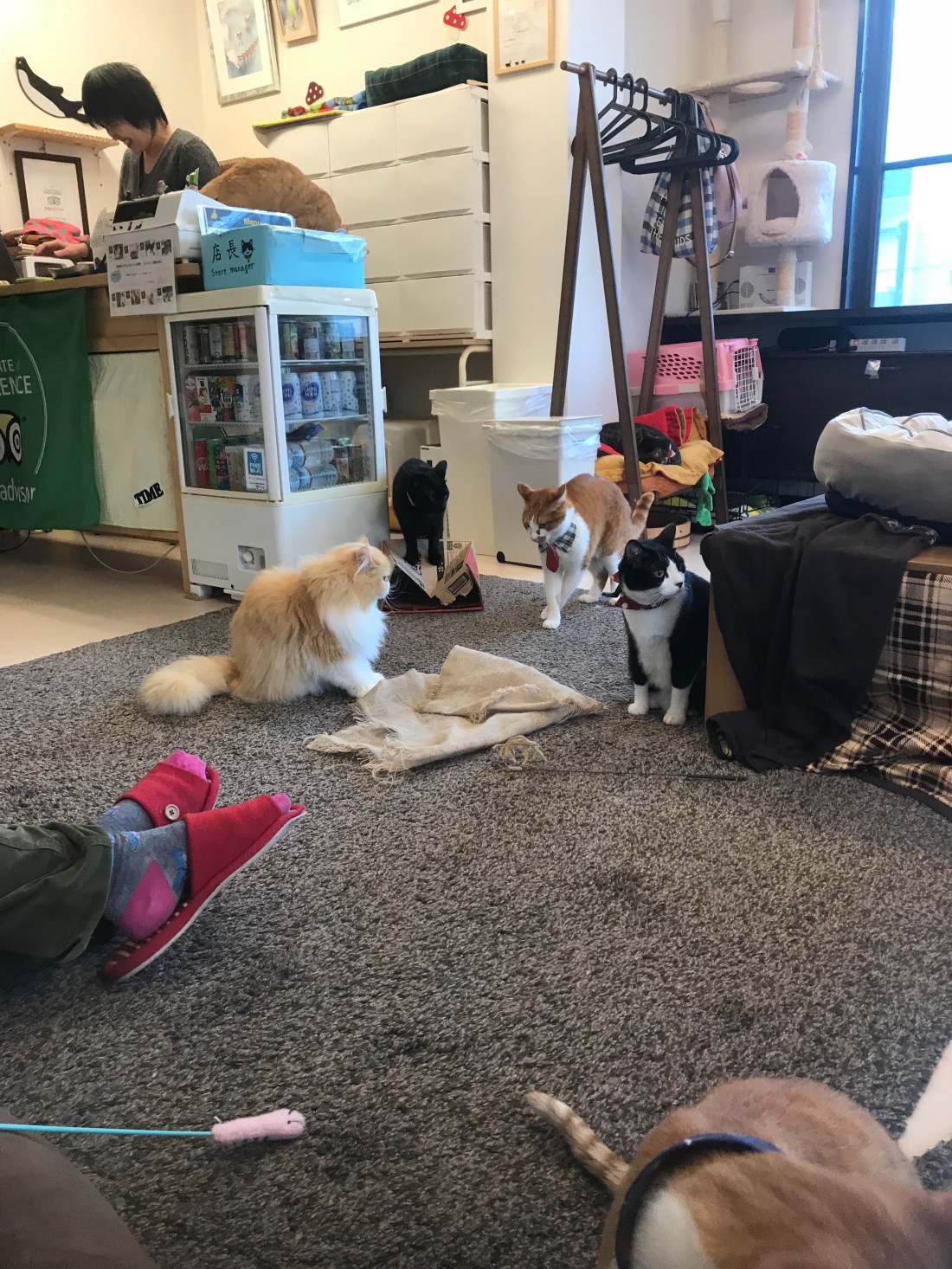
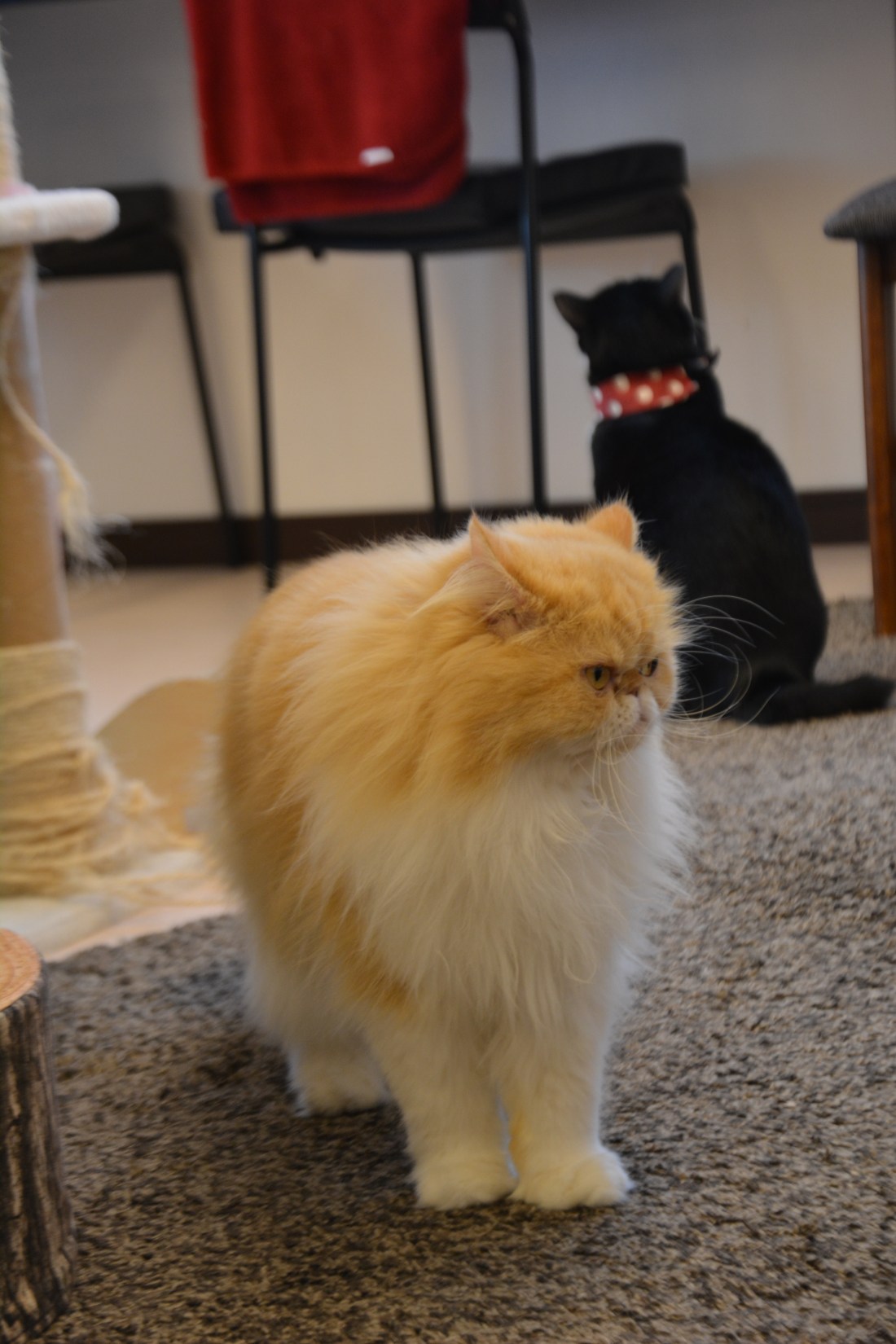
Cute dog and cat cafes. I mean, dog or cat cafes.  Both together, maybe, not so cute unless you like fighting and fur flying.

DSC_0793


iS6pU6uxT6eedo58VtpuyQ

This is Peach:

DSC_0989

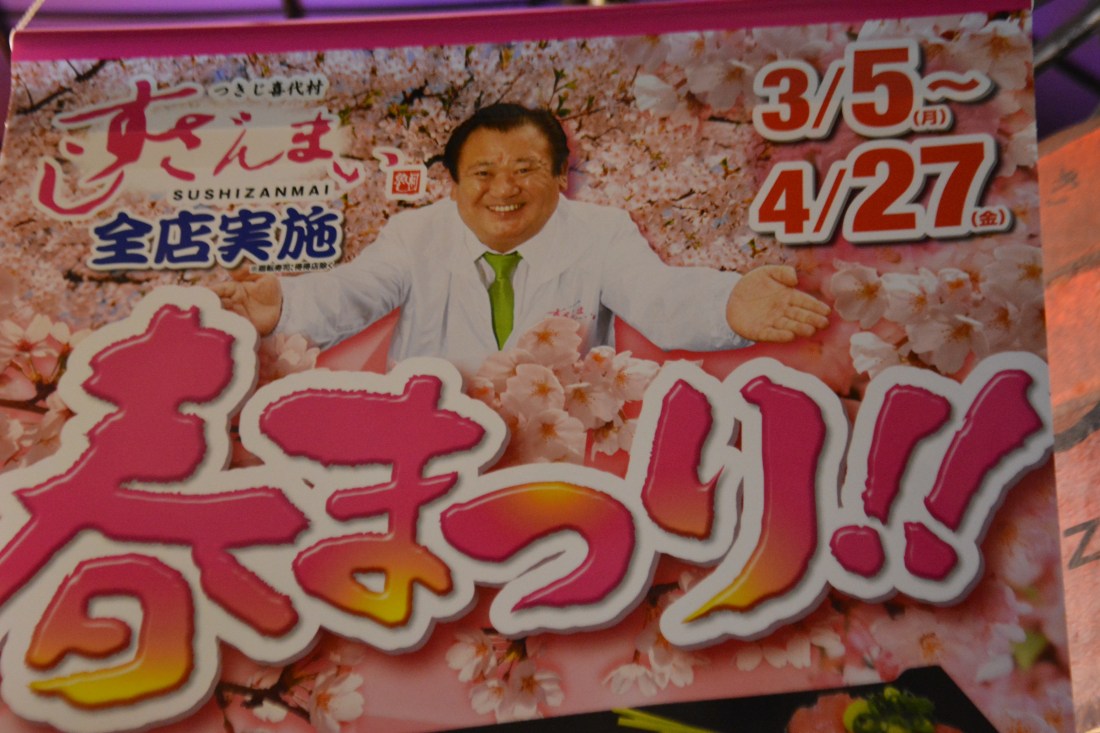
Even restaurant magnates love the cute:

DSC_0009

Ok, actually this is actually about Sakura.  I will get to that.

So, I’m pooped.  Going to go cuddle with this:

IMG_3598

This is my Josie.  So Kawaii!!


Hakone and Gora Kadan Part 1

(not necessarily in the right order)

When we visited Japan in March, we stayed in Tokyo, then Hakone and then finally Kyoto.

Let me discuss our Hakone leg first, as I have decent pics for that part.  Mrs. O has the rest on a hard drive we need to find.

So, Hakone.  The lake here is Lake Ashi, near the base of Mount Fuji.  When the cloud veil that envelops the peak of Mt Fuji lifts, and if the lake is calm, the reflection is utterly spectacular.

Alas, it was overcast when we were there.  So I can only know about the reflection based on pics from the web.  But, it did not matter a wit.

We were going to Gora Kadan.

We messed how up how we got there.  Got on the wrong bullet train.   Tried to get on the right train.  BLOCKED.  We stood on a platform in Yokohama flummoxed- how the heck to get to Hakone?

And you know what?  We got a taxi from Yokohama to Hakone.  Cause we just had to get to Hakone, dammit!

It was very windy and overcast.  Could not see Mount Fuji.  Saw 2 cool biker gangs though.

BadEXOZcT+aqRFQPee78Kg

Ok here are their asses.

But we have travelled many miles.  No Mount Fuji.  No beautiful Tori Gate next to lake.  Of course, it was there, but we could not see from where our exasperated taxi driver was desperate to dump us off.

However, overall we did not mess this up.    

Because we went to Gora Kadan.

What the frack is that you say?

Gora Kadan.   I don’t know where to start?

I lie, I totally know where to start.

You have heard of the the hot springs in Japan, no?  Also known as onsens.  Well…

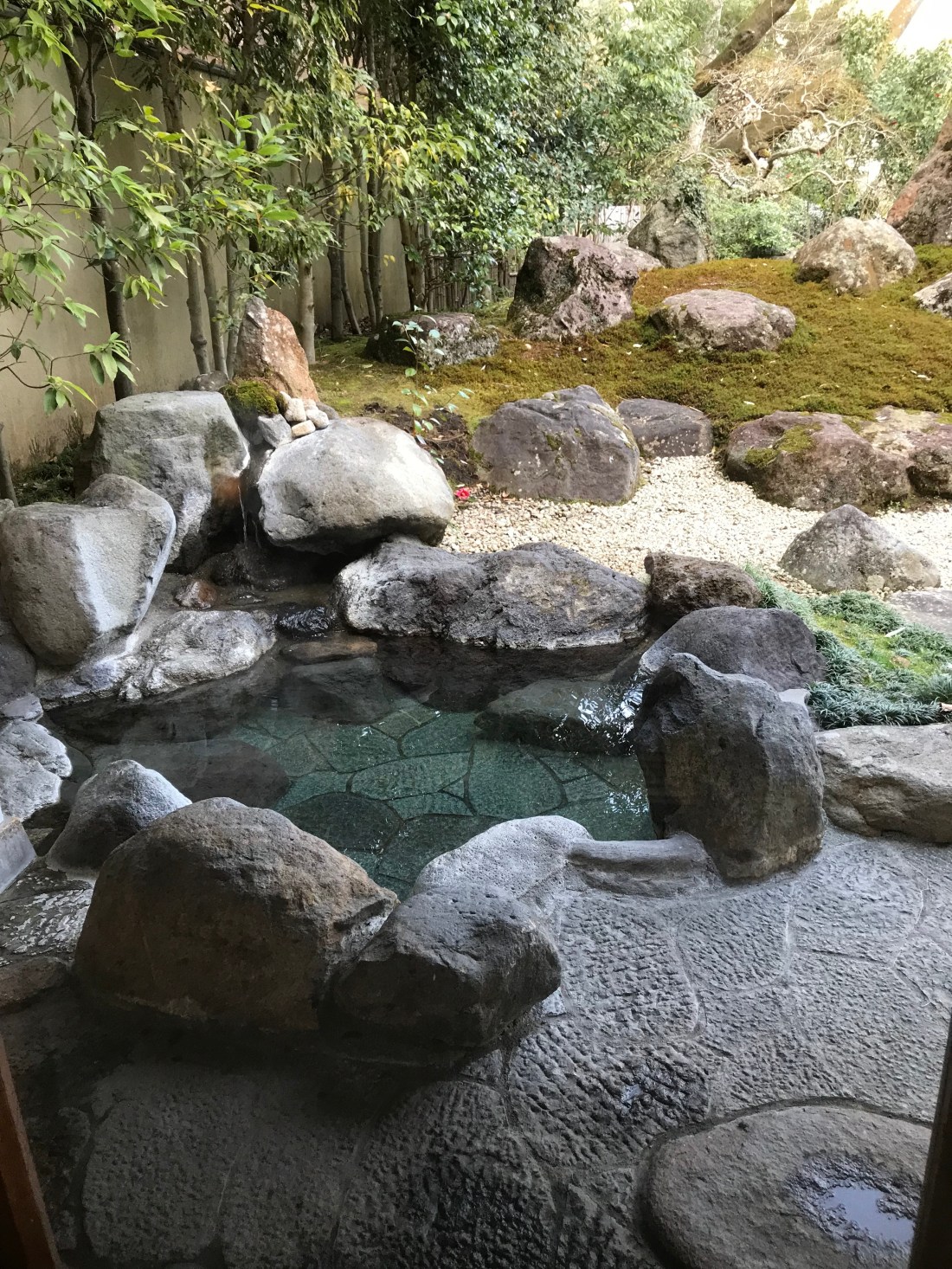
We had our very own private onsen nestled in our own Japanese garden:

30cS4qnKTGyP4CXDGS1Gtg

%oK0086eQaGFtB5%Q%0V%A

The rest of our ryokan was as disappointing.  Take a look:

WUkDjk+ZSICln75Pg8O2ygOk this is from my phone.  Mrs. O has a much finer picture.  No idea where that damn drive is.
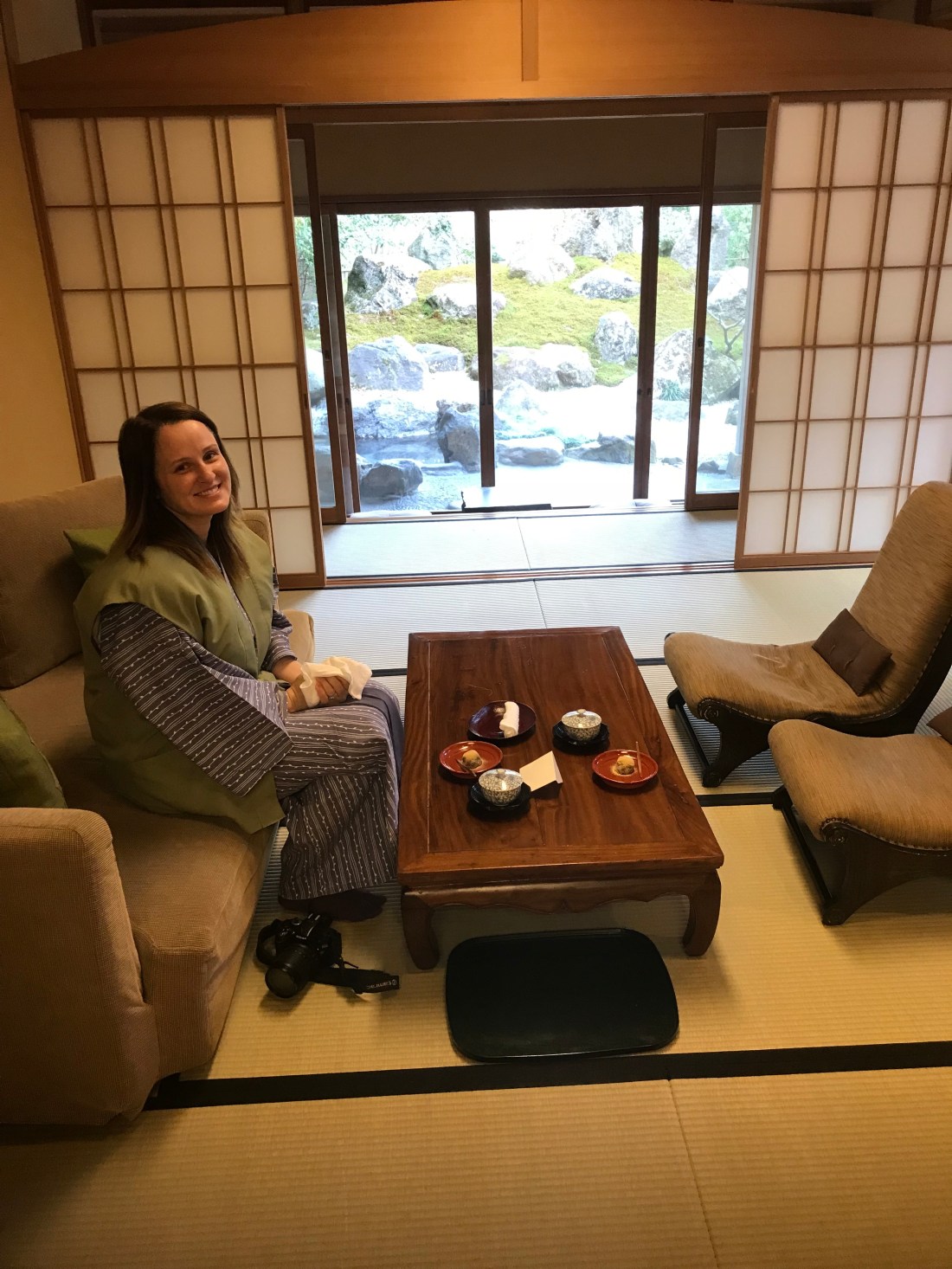
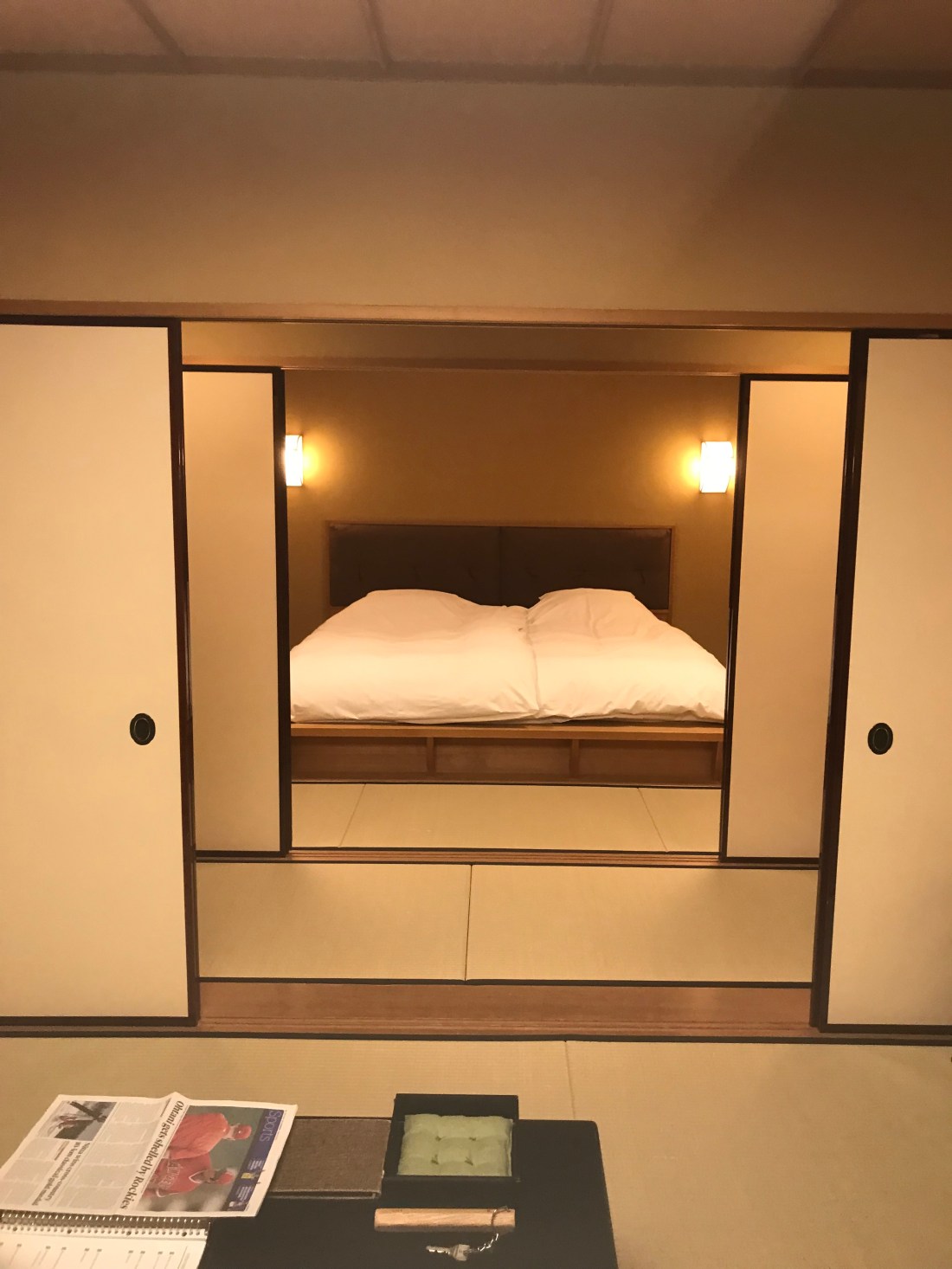
But here is our room.   Or rather ‘one of the rooms’ of our little oasis.

BxuSOoBiSdSDVLWvHjjVTQPYyAEs%+Q1mrgVjIBeo6pQLCVmcncRRbK3iRU5swstFAStunning.

But, let me digress.

Back to Kaiseki.  

Ryokans will include food.  This can be communal.  But we asked for it to be private in our room.

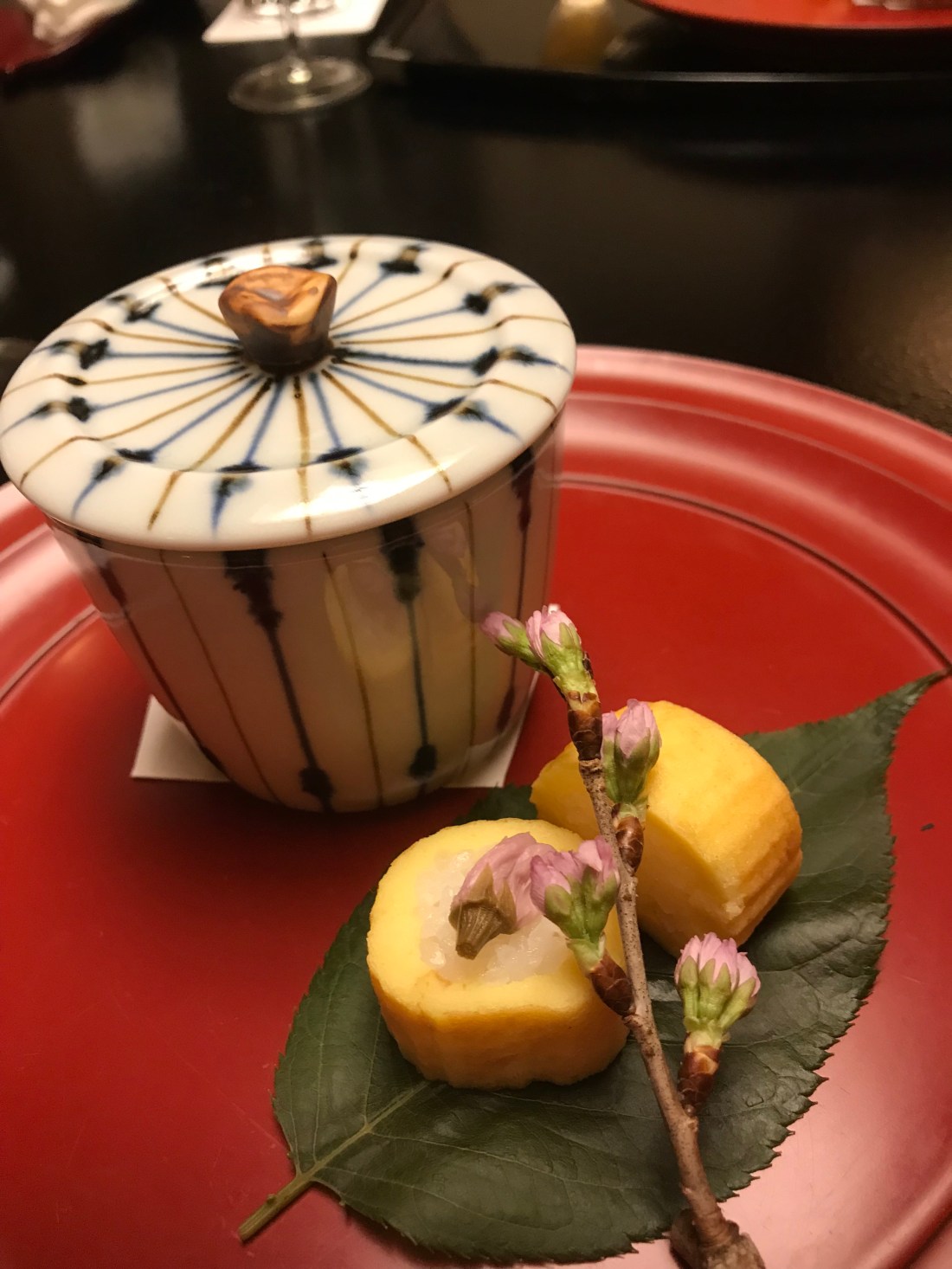
Here is our meal night #1.  Remember we are staying during Sakura (ok a later post but essentially middle spring).  Cherry blossom time.   Don’t forget about cherry leaves as well:

BMExflECQvG6FU9axLSWjg

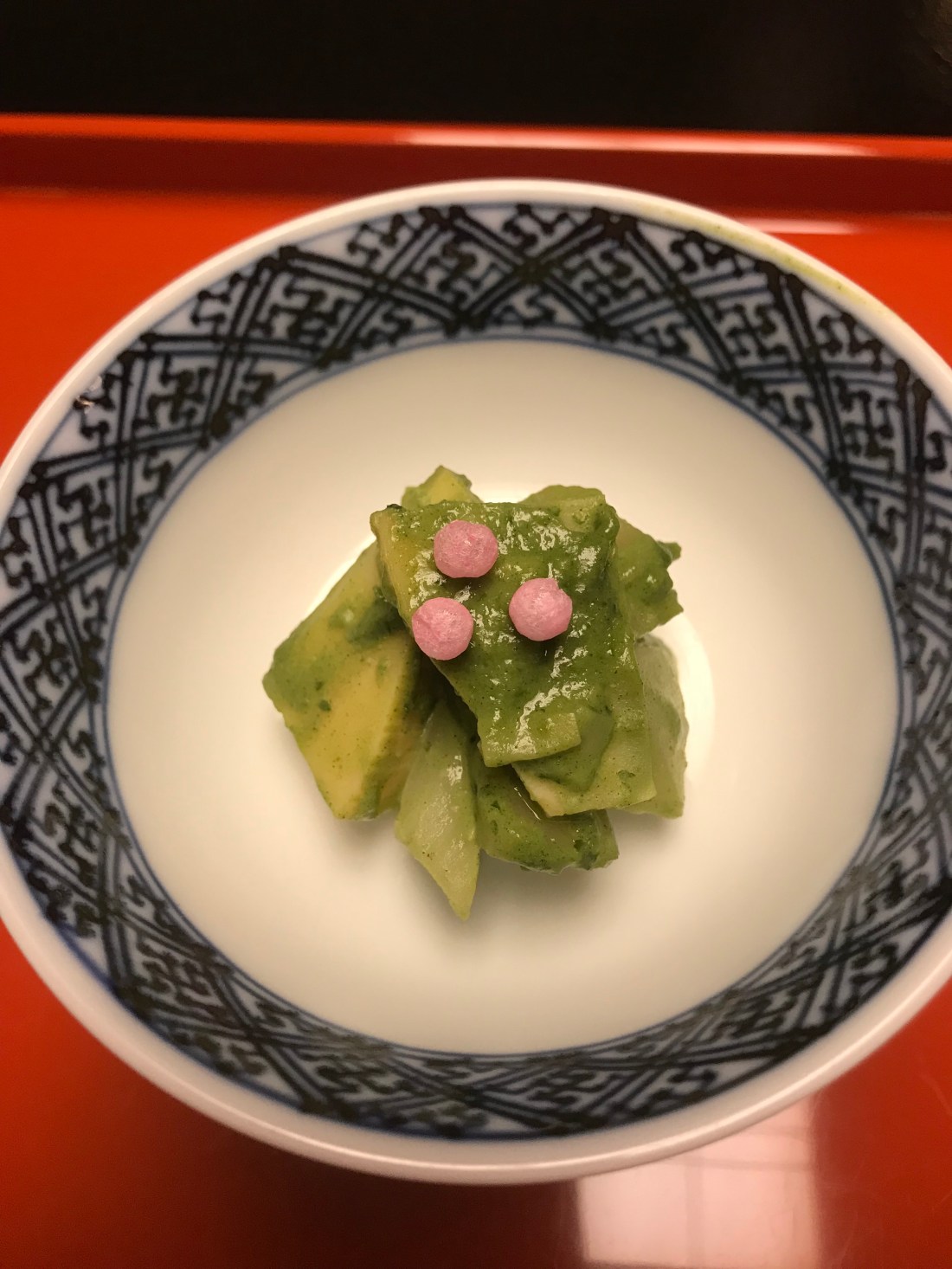
Unfortunately, at this point, I was not aware I would end up blogging.  But this was our first course.  And while I do not know all the ingredients, I think the colors suggest Sakura pretty nicely, no?

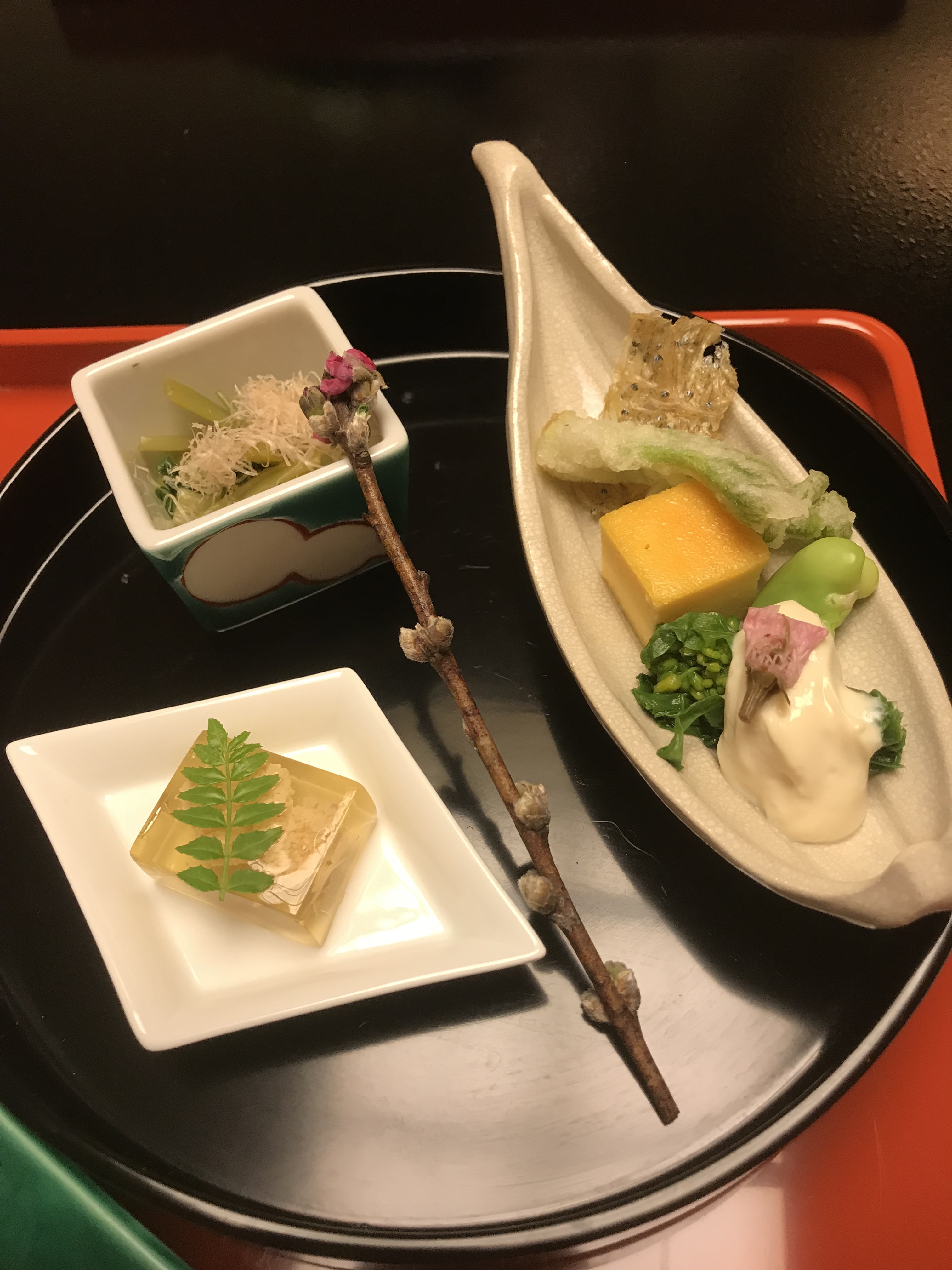
Next plate:

vYK70%cITeiwh2u4lbGtRg.jpg


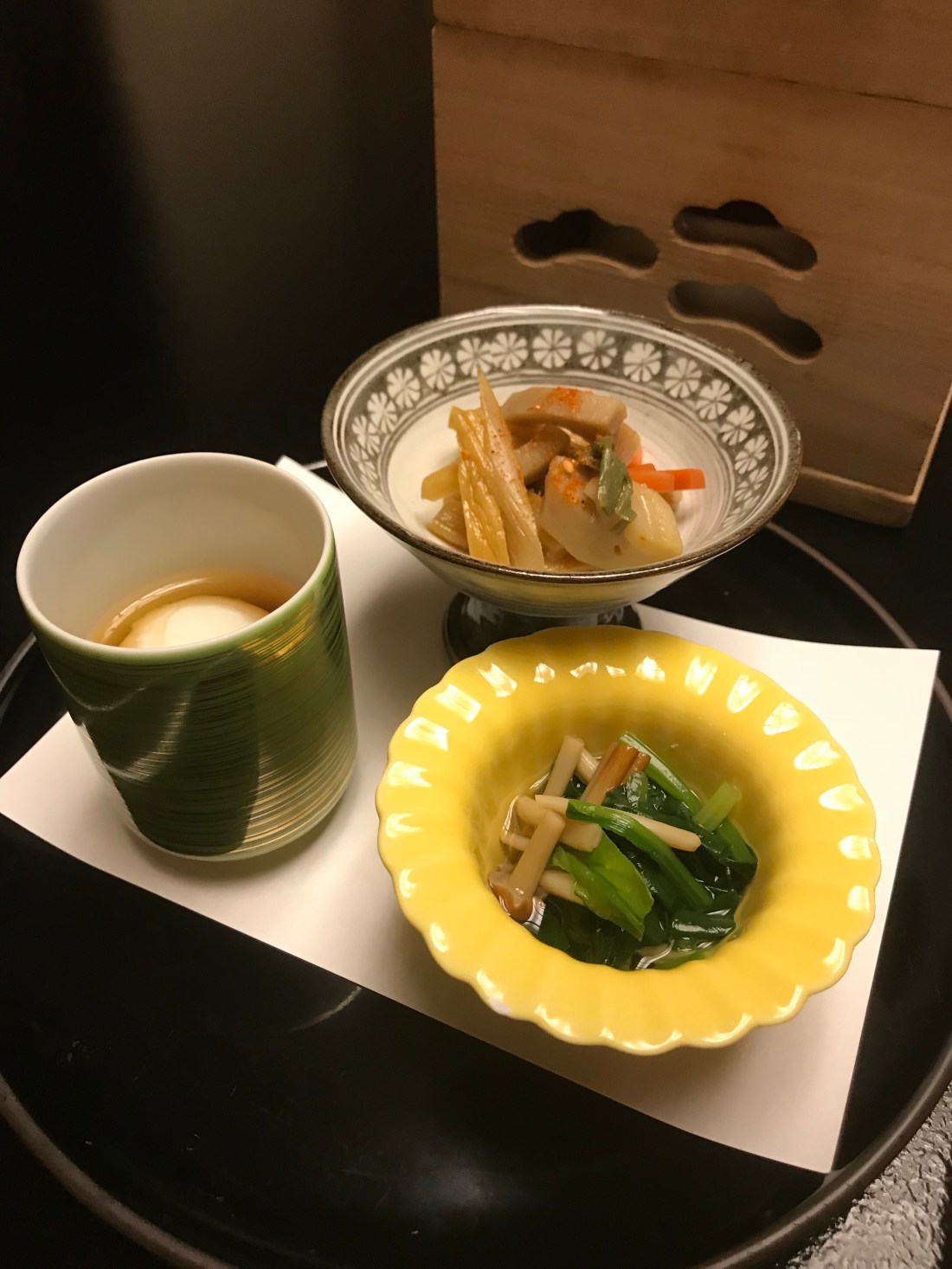
The visual aspect is stunning with Kaiseki.  However, it is not simply the colors.  The mixture of textures is astounding.  When we think of texture, we think of what we touch, including how the food feels in the mouth.  I feel the textures come out so visually as well with Kaiseki.

Look at the textures of this next dish:+RmdwYakTfaohFnbHCv5AA.jpg

The choices that are made, with the food, how it is prepared, how it is presented, generates this plate of contrasting elements that somehow make a coherent whole.  And all the pieces enhance each other.  It’s like how different colors enhance each other and bring out the most of their essence- like pairing yellow with purple makes purple that much more purple.  The extent this is done with Kaiseki, the sophistication of the choices, well, almost, leaves me wordless.

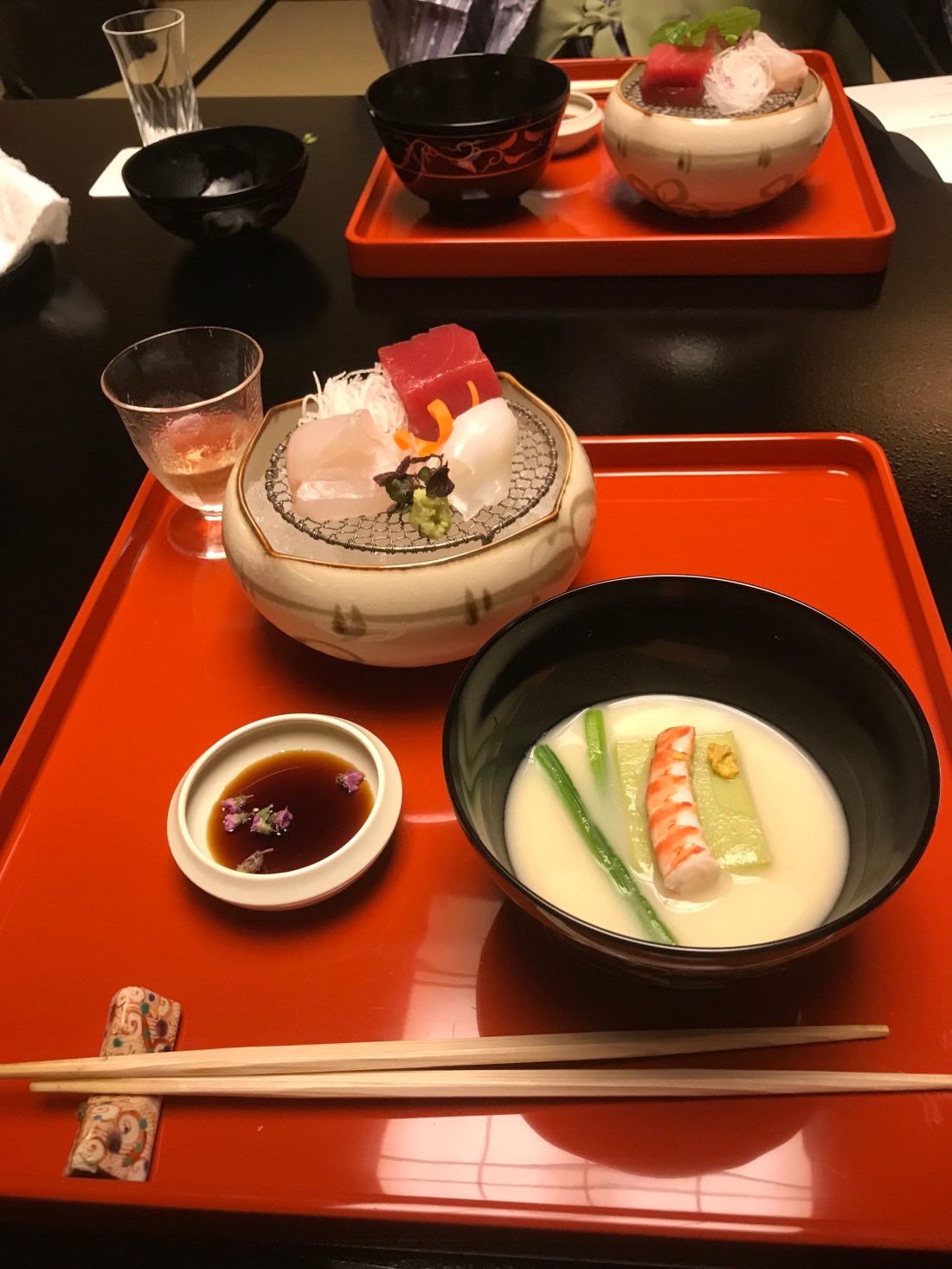
Another course:

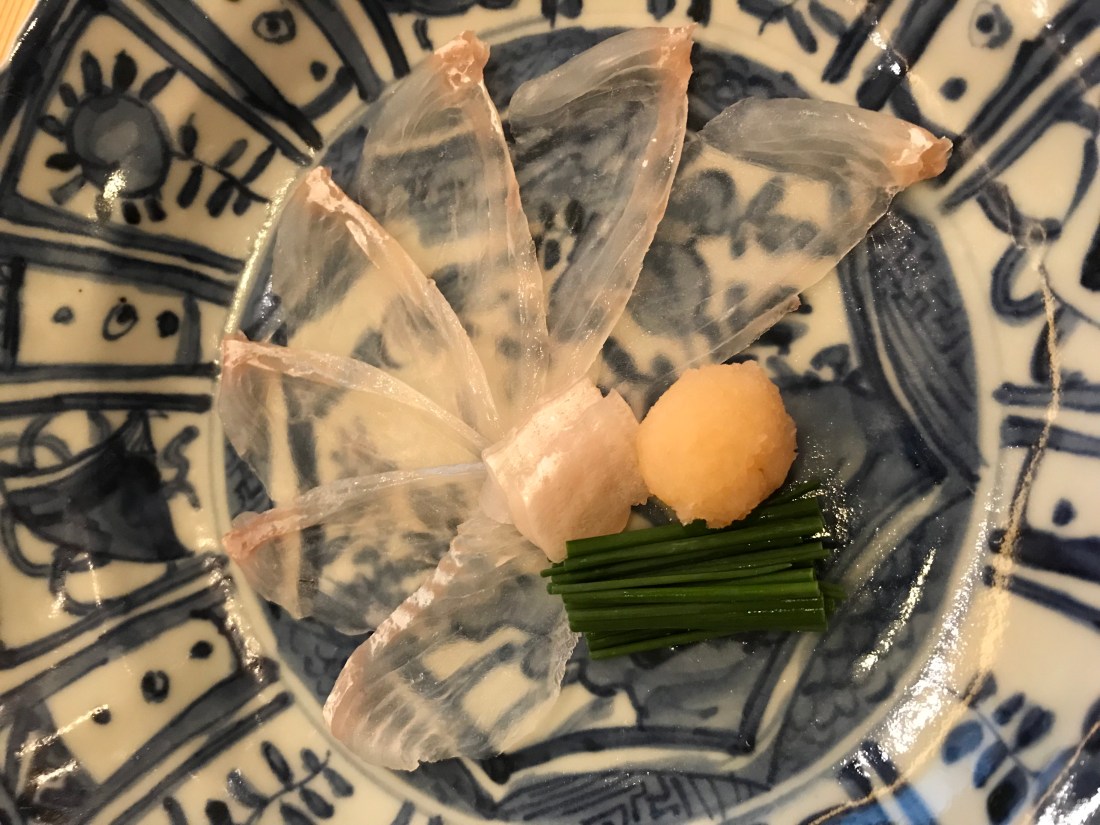
ViHZi2DCRESQhKD+mp5S+AThe sashimi- again there are no words.   The prawn with that sauce- with what I now suspect is edamame tofu…
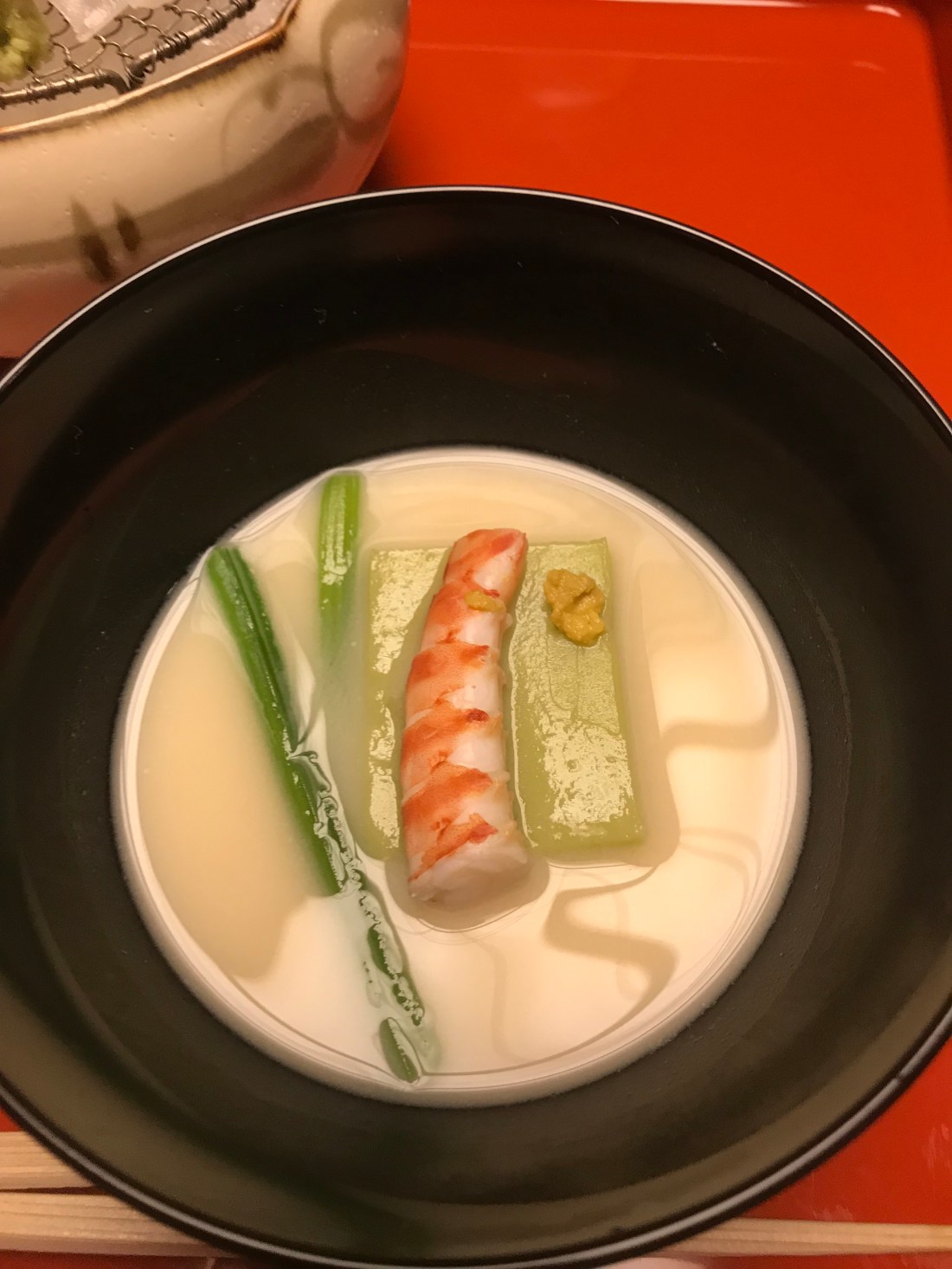
PEEGf+0BQj6KdxT1VfLlow

So sublime.  Sensual.  Sensational.

Will post our next meal soon.

However, what I work on next is a post where I wish to go all food nerd.  I don’t know about you, but I find it rather empty to just go through pictures without some sort of context.  I feel my knowledge of Kaiseki is just about nil.  I know it exists.  I have eaten it.  And I have been transformed.  However, I am excited to try to simply learn just a bit more than nil, then post my thoughts.


Japanese Food: Part 1

Be prepared.  

To foodgasm.

Yes.  That’s right.  I’m not a food snob.  I love corndogs.  I love lunchmeat.

I love airplane food.  

But if you had to push me what to eat for the last meal it would be:

                                                    懐石 

Kaiseki.

Gosh I wanted that in yellow letters on black but I’m too dumb to figure it out (sorry watched Isle of Dogs, was inspired by that)

Yes.  That’s right.  The Ultimate meal.  Japanese high cuisine.  Kaiseki.

Mrs. O and I went to Japan for the first time in March.  We did not know about Kaiseki.  But boy did we learn.  Well at little I should say.  At least an intro.  And it was divine.

So, what is Kaiseki?

Well, it is many things.  Simply, it is a high end multi course Japanese meal.  However it is, like so many things, so very much more than.  

Yes, there are multiple plates.  Each is a delight for eyes and mouth.  And supremely seasonal and local. 

So very beautiful, artful and evocative.  For example:


br0UFpo3RA+uHC+CA20sNQ


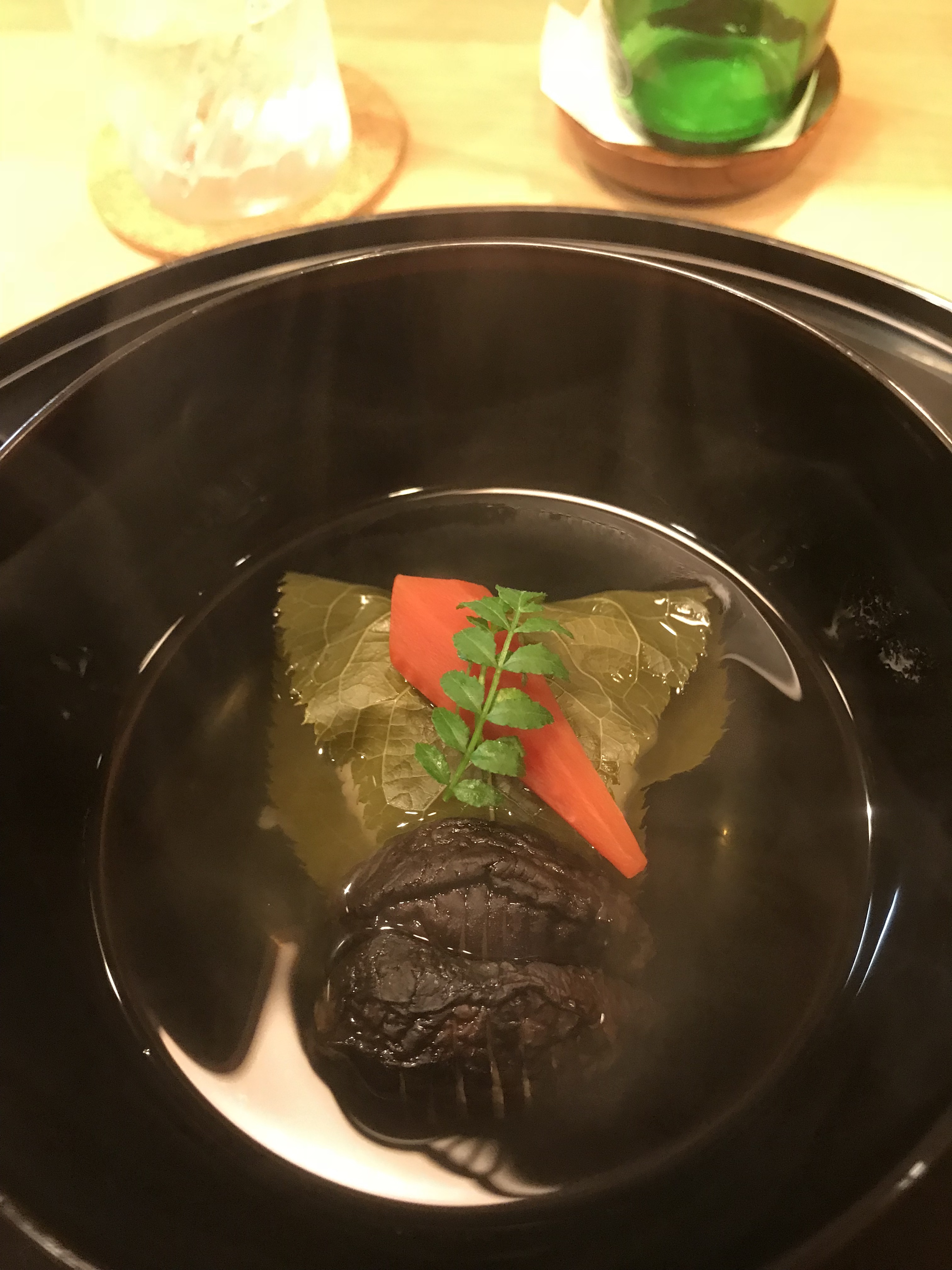
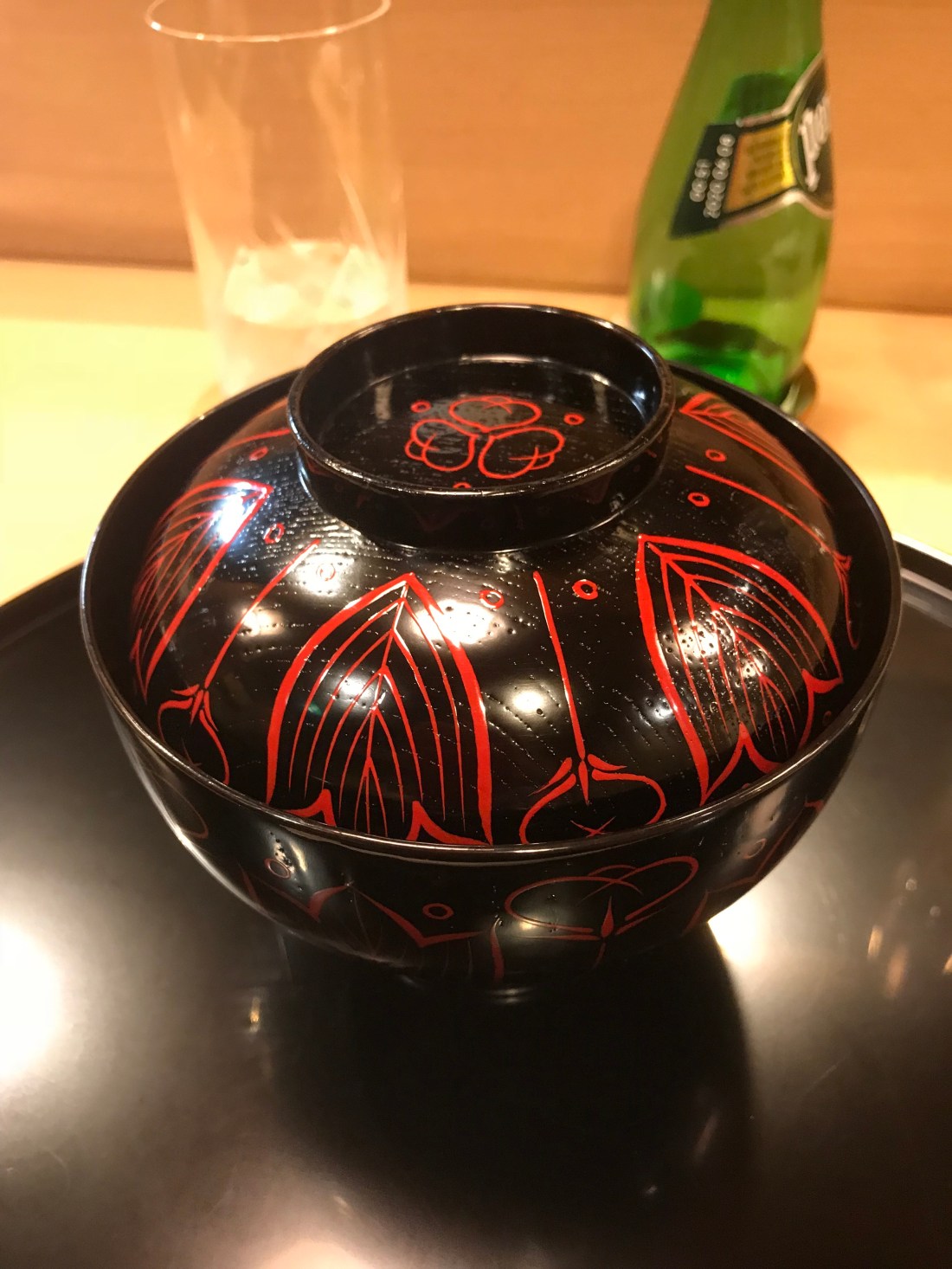
Oh.  No.  It can’t just be presented in a bowl.  Nope you are going to get an exquisite serving vessel first, dammit!

But ah.  Open and here you go:


EasVxBggTDe2ovS8zgiV9Q.jpg


There was a fish wrapped in cherry leaf, during Sakura, the cherry blossom season in Japan.  The carrot there looks orange but was in fact red.  Not dyed.  This  is sweet red carrot from Japan.  This is a Japanese traditional heirloom vegetable, dento yasai, grown in the Kyoto area.  This was served with a seasonal spring mushroom.  Which was damn delicious.

Each plate is very precise and the raw fish and other sea critters are utterly like anything I have had in the states.


t7LxdFRSRXmfnVj25+Gbcg


Um this was pretty tasty too:


uKgriDN5RBWQhK67CIL5tg.jpg

This is a teeny tip of the iceberg so to speak.  Will be blogging more about that trip.

Alas, we had to come back from Japan. 

No Kaiseki.  Only dreams of Kaiseki.

But then….

We discovered a restaurant that serves Kaiseki (!?).  Here, in the Bay Area. 

And, I guess, this is where I am going to have my last meal as this is the Kaiseki that is nearest to me.

I present:

                                                                    Kenzo


Ok actually Mrs O and I visited for the second time.  We did go in April after our Japan trip.  But I did not blog then.  So now I will.

I will just follow the menu.  Because it deserves that.

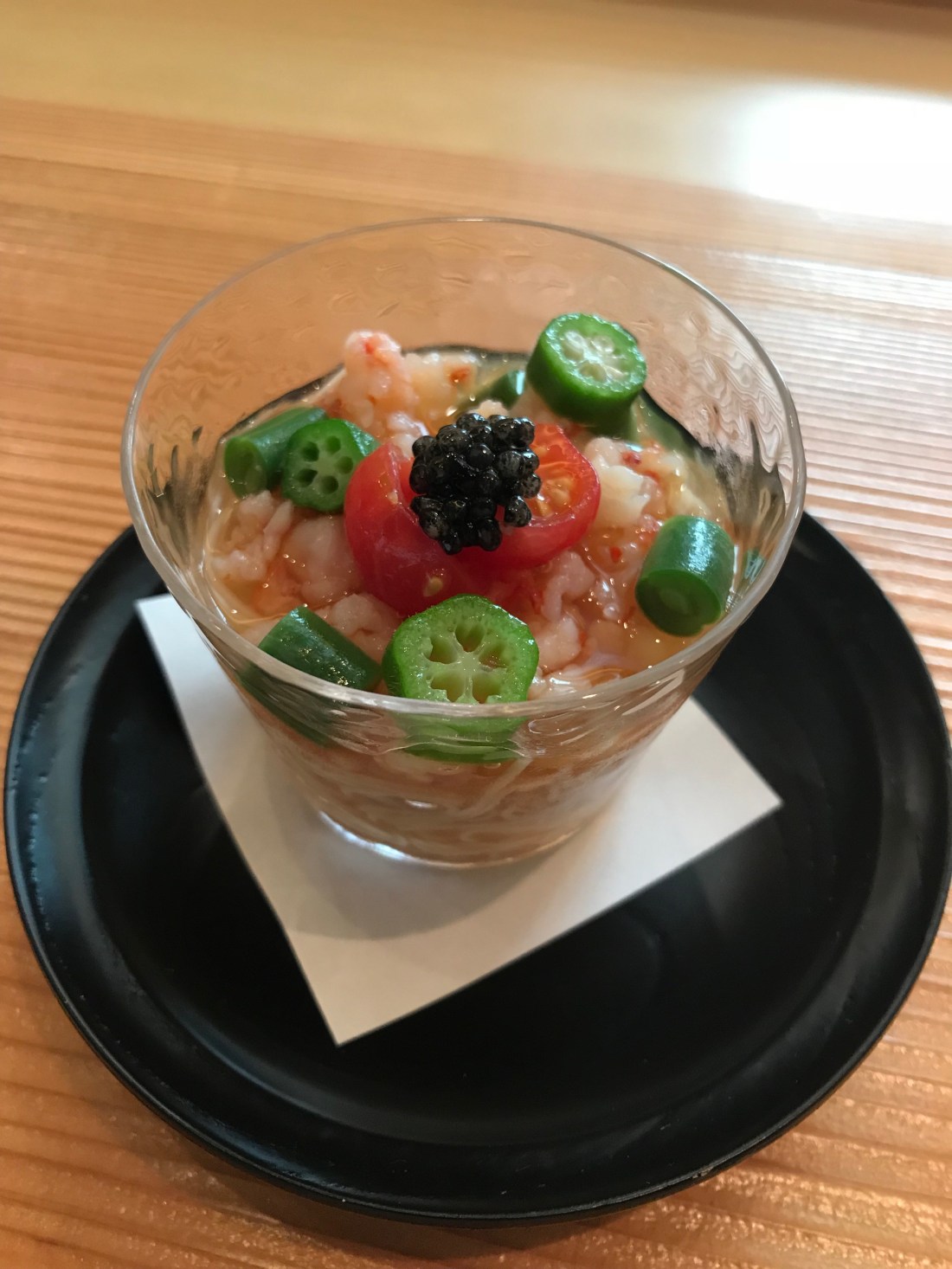
Somen noodles with tomato infused dashi:

KenzoAppetizer


Dashi broth is very simple.   It is water (of course) with kombu (kelp) and katsuo-bushi (bonito flakes, or dried skip jack tuna).

And (of course) this description is utterly narrow-minded, uninformed and oversimplified.

Because dashi is so very, very much more than that.

To start, like many things marvelous, it is deceptively marvelously simple.  Because you only have 3 ingredients, one must be very judicious to make this something that somebody who seriously loves food wants to blog about.

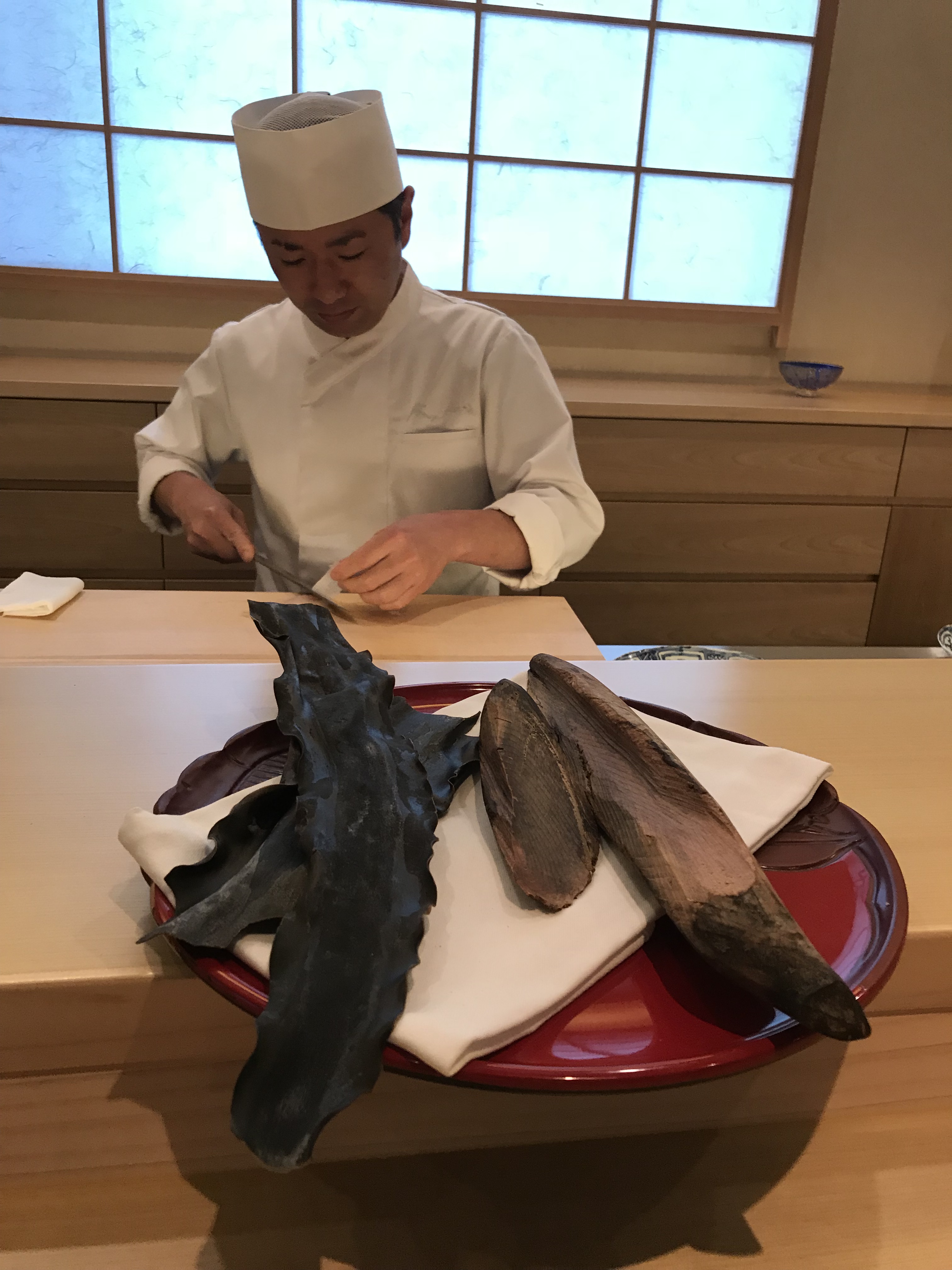
In this instance, here is what Kenzo uses to make dashi broth:

IMG_7437.JPG


Kelp on left, bonito flakes (shaved from the piece of wood) on right.

Here is the bonito:

IMG_9618

Well done dashi is an art.  If you go to Japan, you must learn at least a little about dashi.  I will blog about this a little more in the near future.

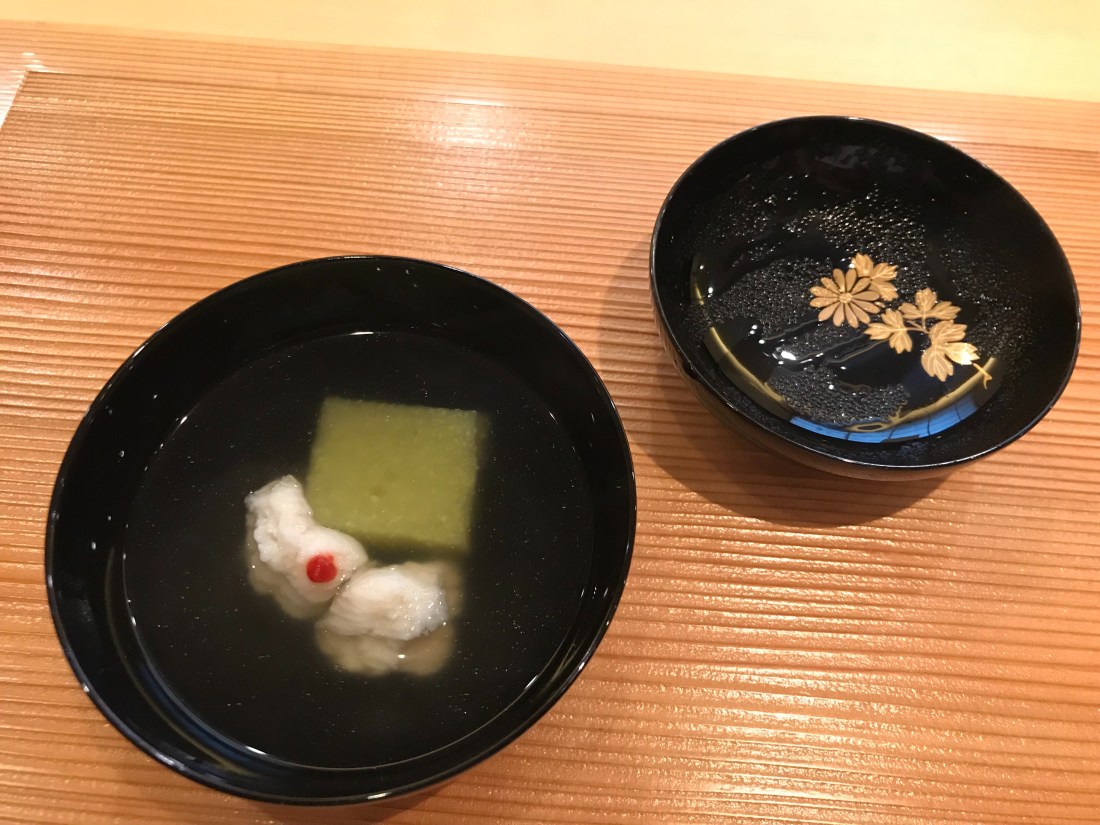
This dish was based on a gentle smokey dashi.  Akashi Pike Conger Eel Owan.  This is dashi broth, edamame tofu, pickled ume plum.


IMG_5883

Ha!  Not revealed yet.  So sneaky!

This reminds me of Japanese gardens which will use a ‘hide and reveal’ surprise.

img_5828.jpg

It may look odd.  But the aroma was to DIE FOR.  OK THIS WOULD BE, NO MUST BE, PART OF MY LAST MEAL.

That little dot of red was so piquant.  And the green tofu?  Made from edamame?  It just melted all over my mouth.

This was another course.  By the way there are names and expectations for each course of a Kaiseki meal which I will address later.  But c’mon, look how pretty:

IMG_5023This is one part of a scrumptious whole:
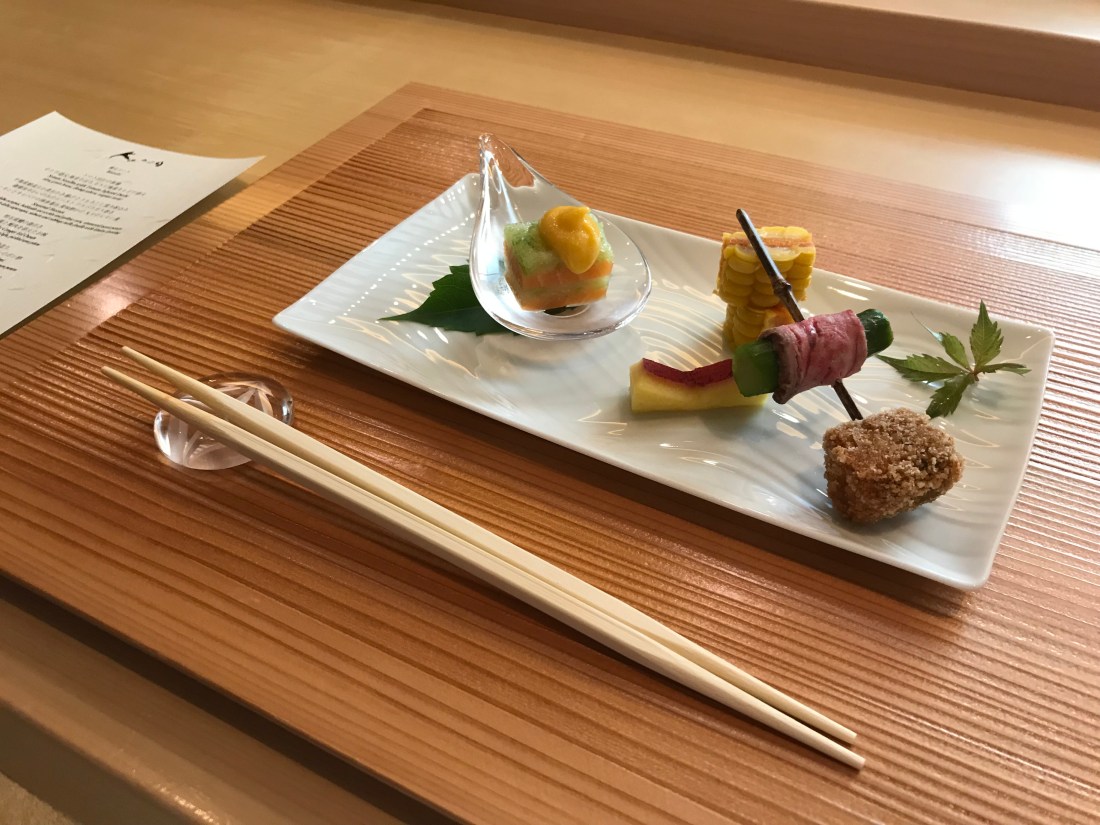
 

IMG_6735

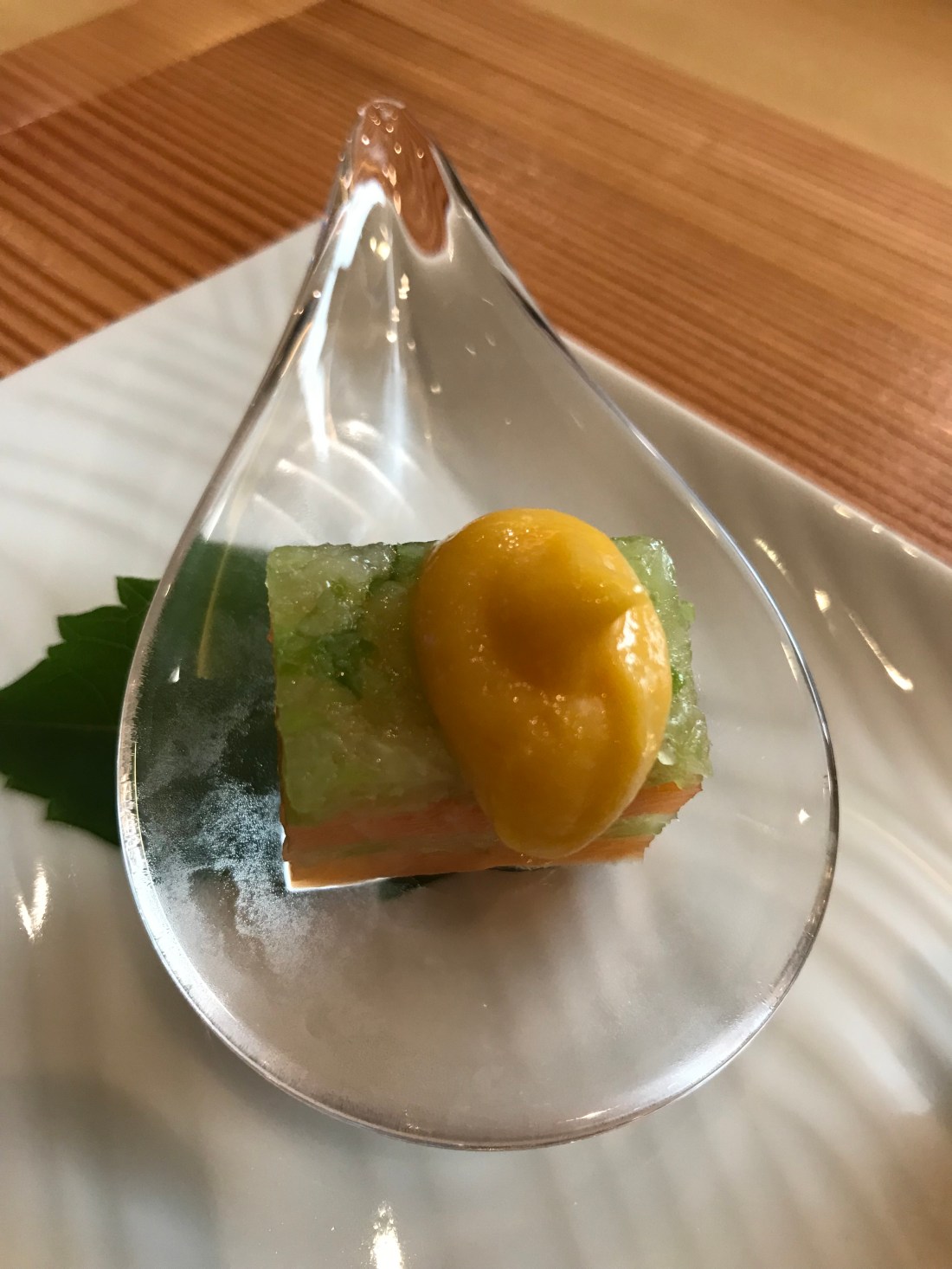
Seasonal Hassun: rice cracker curated Chiba octopus, Hokkaido sea urchin and yellow corn, simmered sweet potato, satsuma wagyu sirloin with delta asparagus, salmon and cabbage mille-feuille with kimizu dressing.

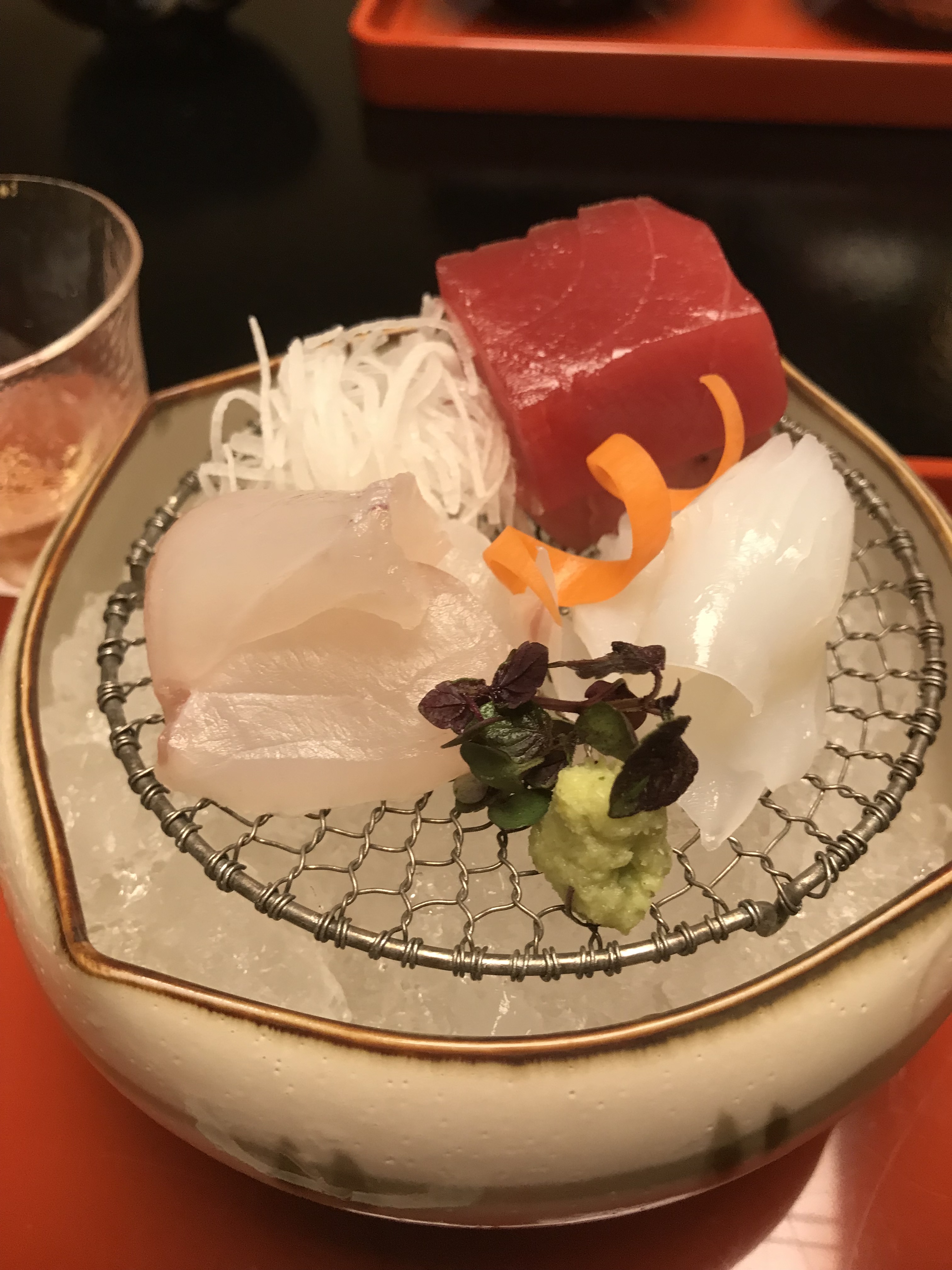
Oh, here is some sashimi- flounder:

IMG_3785

And here is the beef dish- it is wagyu because of course!

IMG_3791

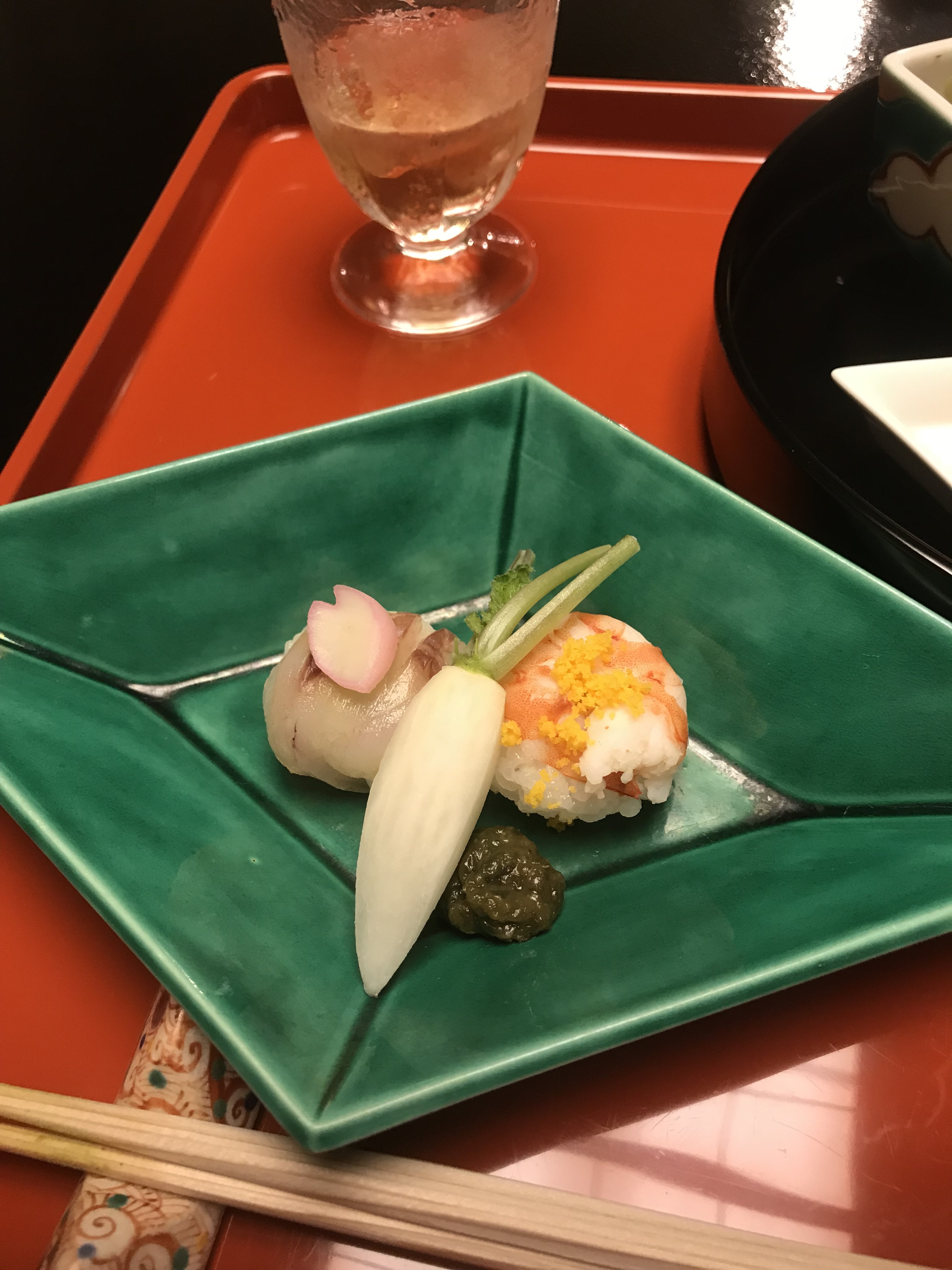
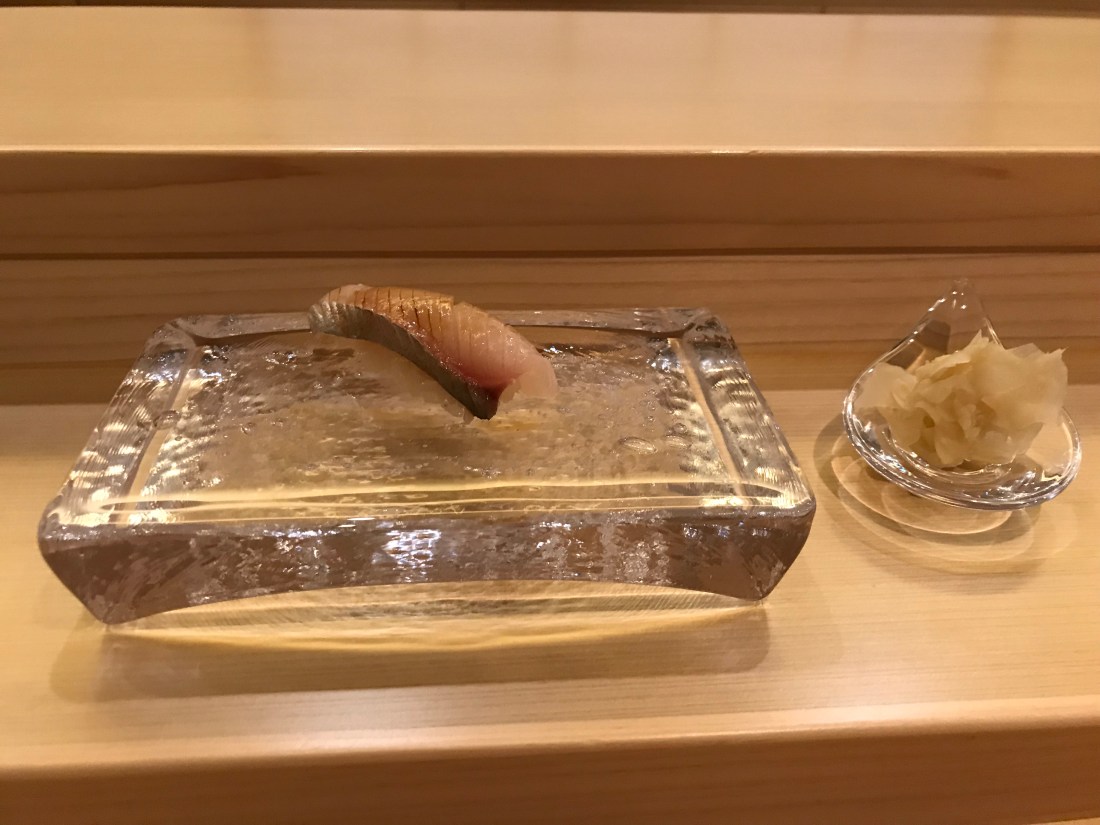
Ah, then the sushi course:

IMG_3793

And then there is desert (actually 3 courses!).  I will show one.


IMG_3795

Ha!  I lied.  More from the sushi course.  Because damn this is damn good.

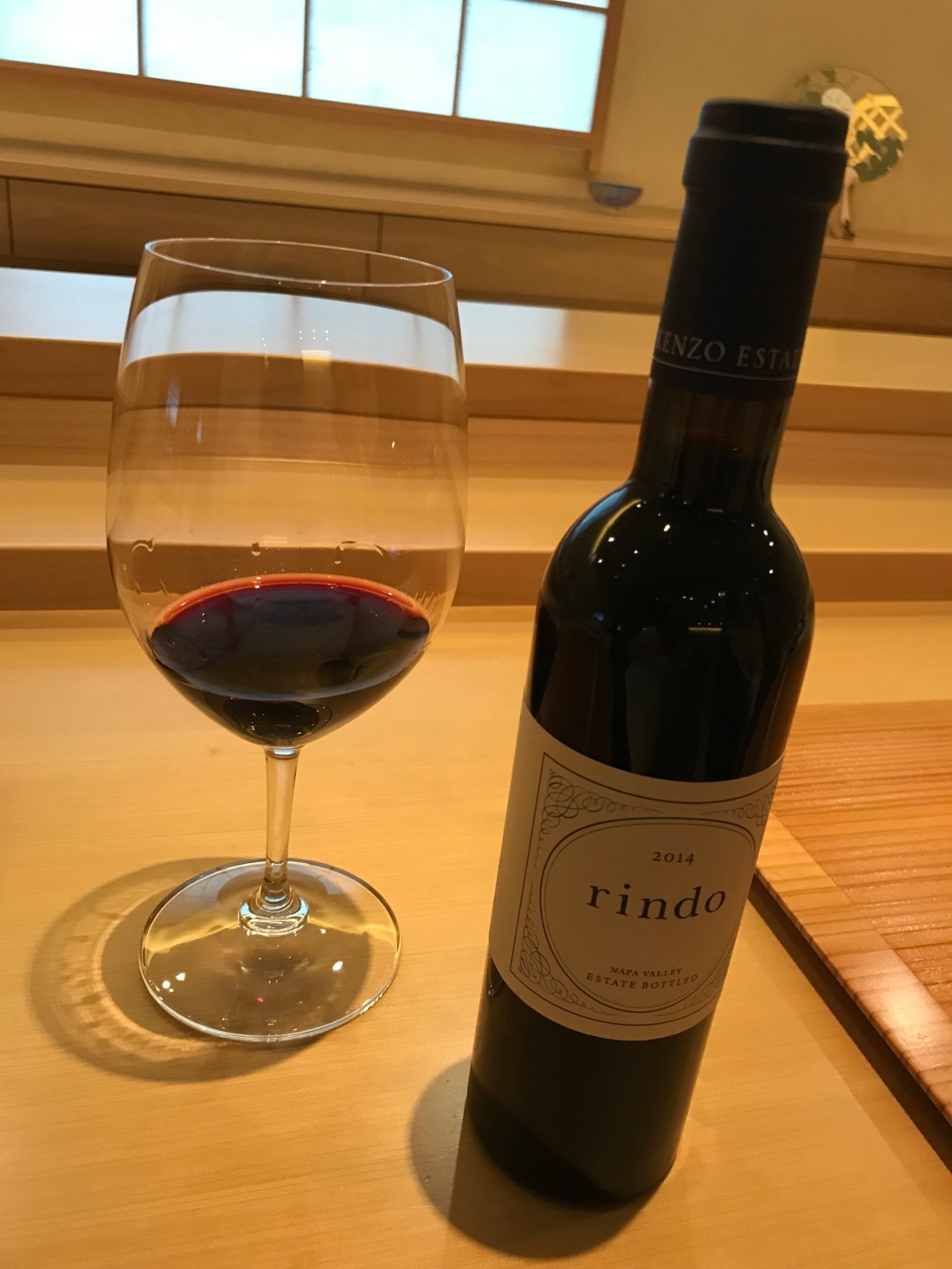
Oh their wine is superb.  But interspersed is sake.

IMG_3786

Ok so picture quality is decreasing.  But it is because of the damn wine!  And sake.  Oooh sake…

IMG_3792

Sake not like you (or at least I) know/knew it.  Chilled, clear nectar of the gods.  Or more accurately, another art of Japan.  Even the labels are art…

Ok,  Enough of the food porn.

What I want to write about is how amazing this place is.  Because it takes me to another place.  Japan.  For those of us who love travel.  Japan must be a place we go.  And frankly never leave.  Even if your body leaves, your soul does not. Trust me.

If you live in the Bay Area please try Kenzo.  If you live anywhere else, please try Kenzo.  But maybe first, go to Japan.  So you can understand.  Albeit, only just a teeny bit.  If Kenzo is expensive, save for it.  Skip fast food, skip Chili’s, skip whatever.  There are not too many experience in which you eat the soul of a nation married to a little valley in California, USA.

Actually I lied again.  With travel, you can eat the soul of a place.  Just weird to find here in California… That is with Japanese food.  But maybe I’m wrong.  Am I?


Ok so gonna try blogging

IMG_0896.JPG

Always wanted to start a travel blog.  But several things deterred me.

WAY too busy for that I would say to self.  Work full time as a doc, also serve as chair of my department and co-director of our medical group.  Serve on numerous committees.  Called when I am on.  Called when I am off.  Called when I’m asleep.  Called called called.  Address emails day in and out even when traveling.  The only time I am not responding to texts and emails is when I’m diving (amazing have not worked on trying to answer texts during diving). I am the kind of person who tries to figure stuff like that out.

Sad.

Oh I don’t reply when there is no connectivity. Which increasingly never happens. There are the family needs, etc etc.  Which includes 3 dogs.

Too old to learn how to blog I’d say.  Shoot every time I get a computer glitch I just press the power on/off button (wait- I have to admit I have seen IT at work do that a bit anyways)

Finally, and the big one was,

Who wants to read my crap anyways?!?

But, then, today I was visiting Bodega Bay which is not too far from where I live (Bay Area).  My brother has a vacation house there (lucky us!) so we stayed there for several days (for free!).

And hell, it was just so beautiful.  I think about all the places I have been- here in the Bay Area to France to Mozambique to Honduras.  There are many things- beauty, sadness, chaos- with travel.  And all those times at night when I should be reviewing this or that, I will instead turn to travel blogs, getting to vicariously be with folks whatever place they are- a California girl who takes a year off to explore Southeast Asia, some dude who quits his job and surfs in Africa, or the couple who need (very much need) a several week break and decide to campervan it across New Zealand. With their dogs.  And the food, ooh the food…

So as my spoilt self was just walking the beach with my Frenchy, I decided, heck why not spend some time blogging about the places I’ve been.  And maybe, just maybe, I can meet new people that way.


Oh and about the title…

Honestly, I never knew Anthony Bourdain personally.  But when  I saw the news headlines of his suicide in June, I think, that like it was for many people, horribly soul sucking.  Devoured his shows for eons, read his books.  He was hilarious, and honest, and blunt and irreverent.


I thought of him while on my Bodega trip.  Sitting, supping some wine, enjoying the beautiful Pacific, I think to myself:

This. Does not suck…