
Cultural submersion is one of the great delights of traveling. Of course, we often just skim the surface because we run from one ‘must see site’ to another in a rapid blur.
However, a meal is an opportunity to pause, and to allow ourselves the opportunity to effortlessly sink a little deeper into the soul of a place.
It, of course, does not need to pillage the pocket-book. Indeed, it often does not.
I swear– I do stay and eat much more cheaply than what I have implied by the posts I have done so far.
But of Kaiseki, it is $$$$ so to speak.
However, it is well worth the price.
Much of what I write here of course is gleaned from the web. However I do wish to point out 3 resources that are easy to access as they are available on Kindle and are truly wonderful. The first is The Foolproof Table Manner in Japanese Cuisine I by Takumi Kawano. Another is The Taste of Kyoto: A Guide to Dining and Sightseeing in the Old Capital by Richard Opheim. Finally, Washoku, written by Elizabeth Andoh, focuses on home Japanese cooking.
There are 3 genres, if you will, of Japanese cuisine. First, Chuka Ryori:
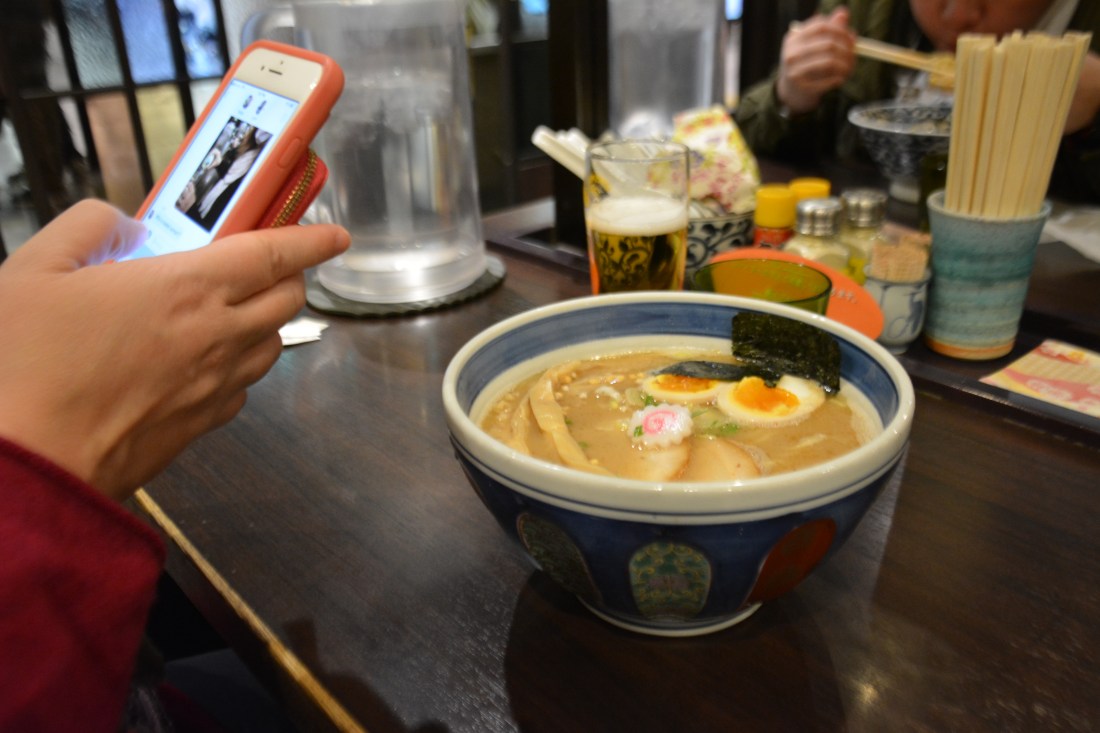
Above: Ramen at a restaurant in Ramen Alley in Tokyo
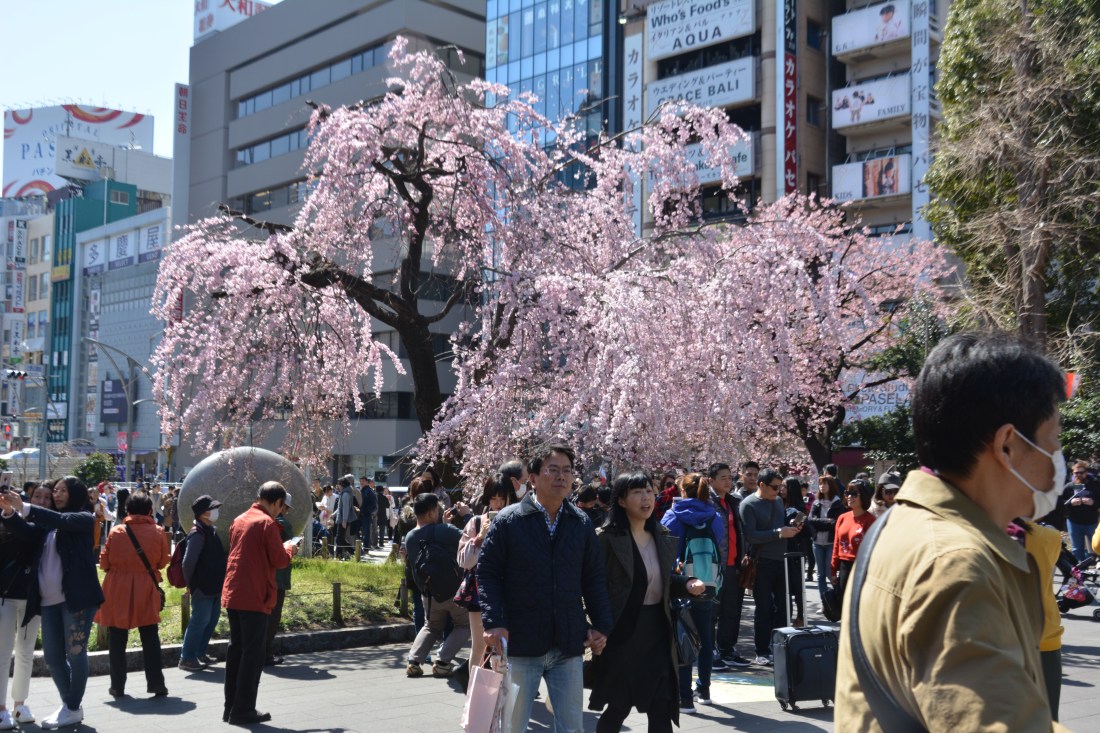
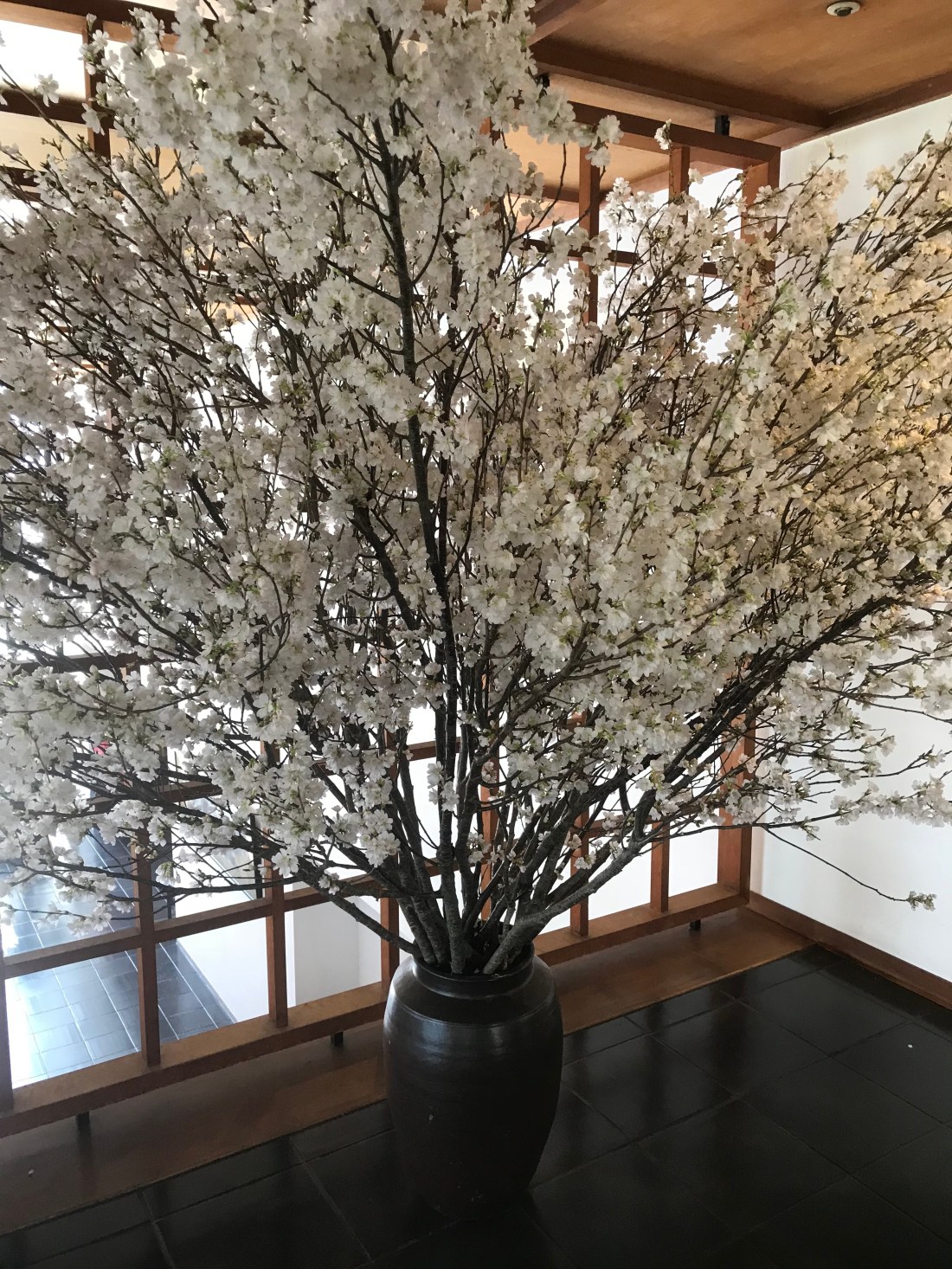
Above: Gratuitous photo of cherry blossoms.
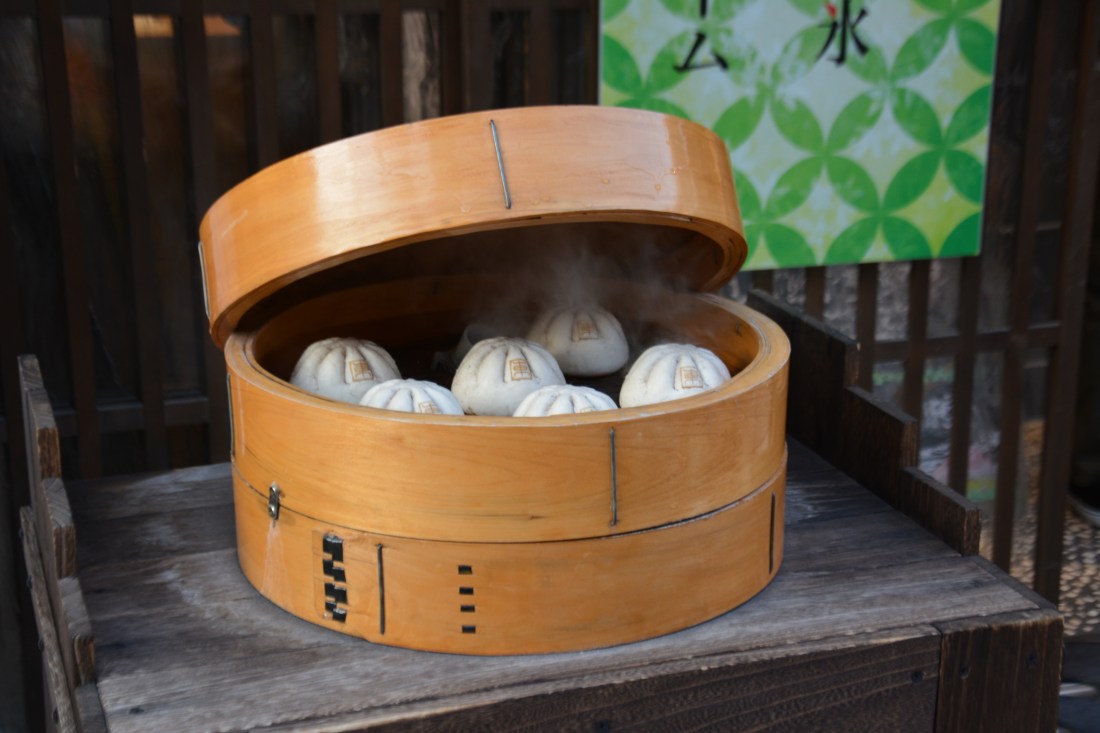
Look. At. Those. Buns. Yet, however, they derive from Chinese cuisine, and arrived into Japan in the past century. While Chinese in origin, Chuka Ryori dishes have morphed in cuisine that is uniquely Japanese. Gyoza- who does not love Gyoza?? Or there is Karaage (唐揚げ), or Japanese fried chicken.
The second genre is Yoshoku, or food from the West. Katsu, curries, spaghettis are examples. I honestly I don’t know much of this- amazingly I did not go to McDonalds in Japan (more on the later). Family restaurants are popular in Japan- trust me I had no idea except from reading Across Tokyo by Patrick Foss. Apparently, you can get pancakes, bacon, a ham-burg- which is a cross between a hamburger and meatloaf. He did note some rather attractive attributes about family restaurants:
- good club sandwiches
- fantastic French fries
- you can stay as long as you want
- the drink bar: tiny cups, but the re-fills are endless, which is fantastic when staying as long as you want
Ok I know nothing about the family restaurants as I have only been to Japan once as a traveler (but I will return dammit! want to live there too…. Sigh….).
So, the third genre: Washoku. This is Japanese cuisine based on cuisine pre-dating the Meiji era. There are a number of types, including Kappa Ryori which is similar to Kaiseki but not as elaborate. There is Shojin ryori, or buddhist temple cuisine which came to Japan from China by the monk Dogen, the founder of Zen Buddhism.
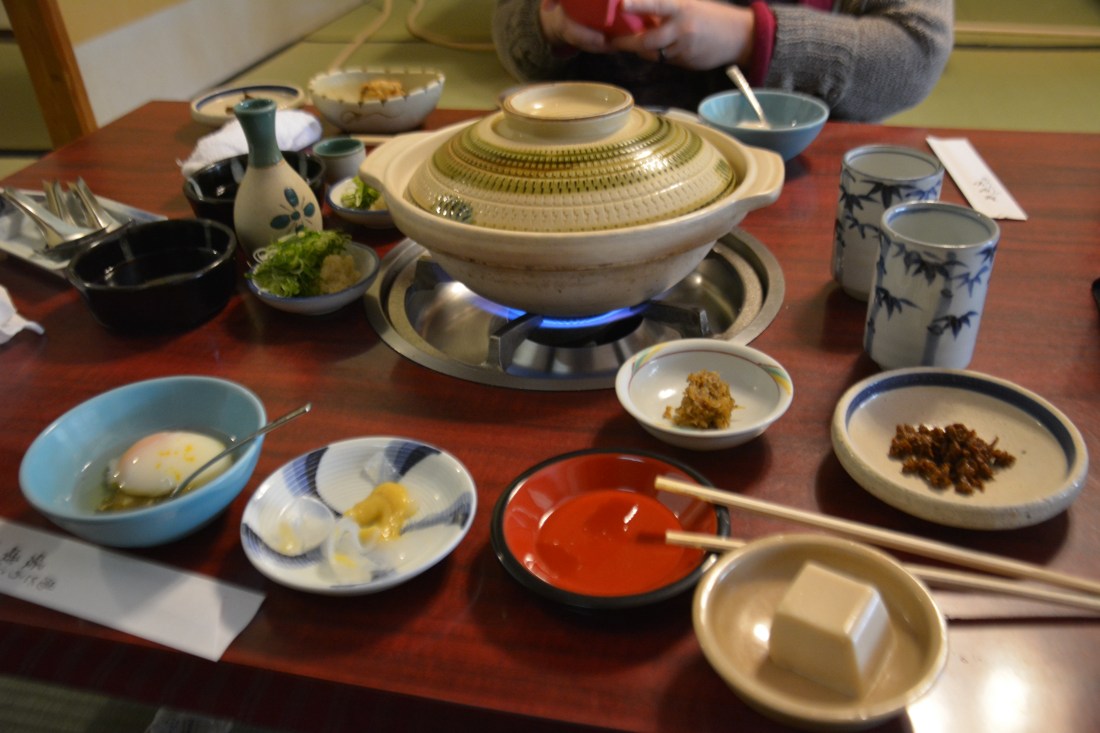
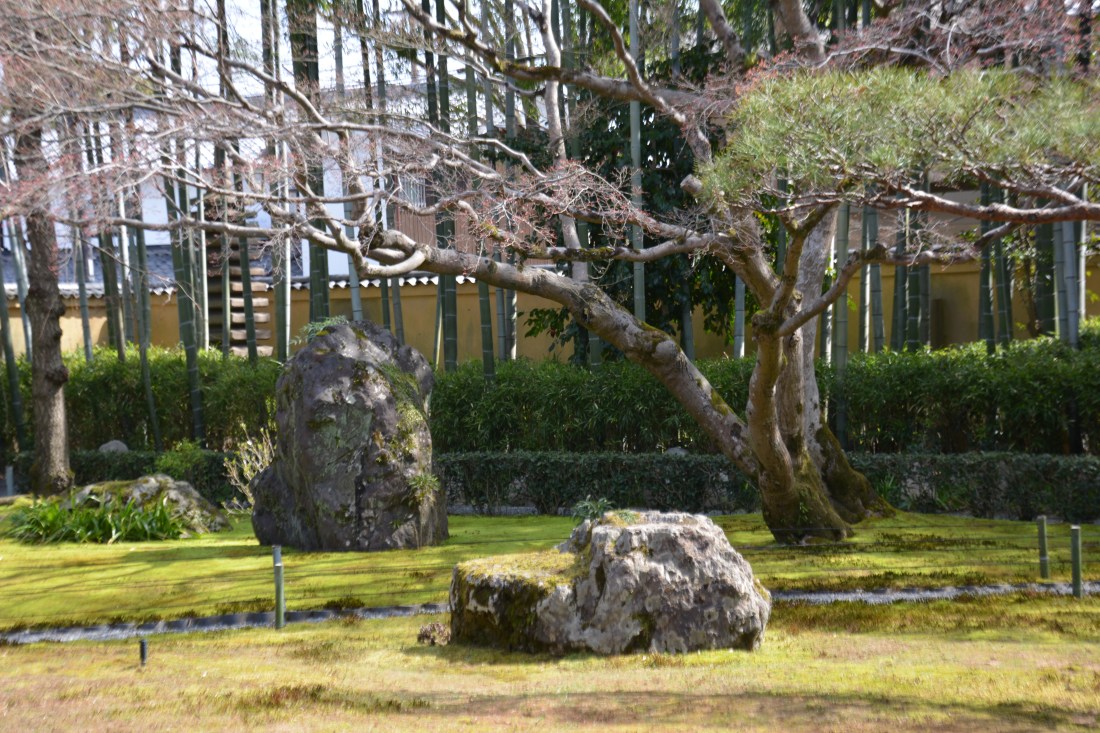
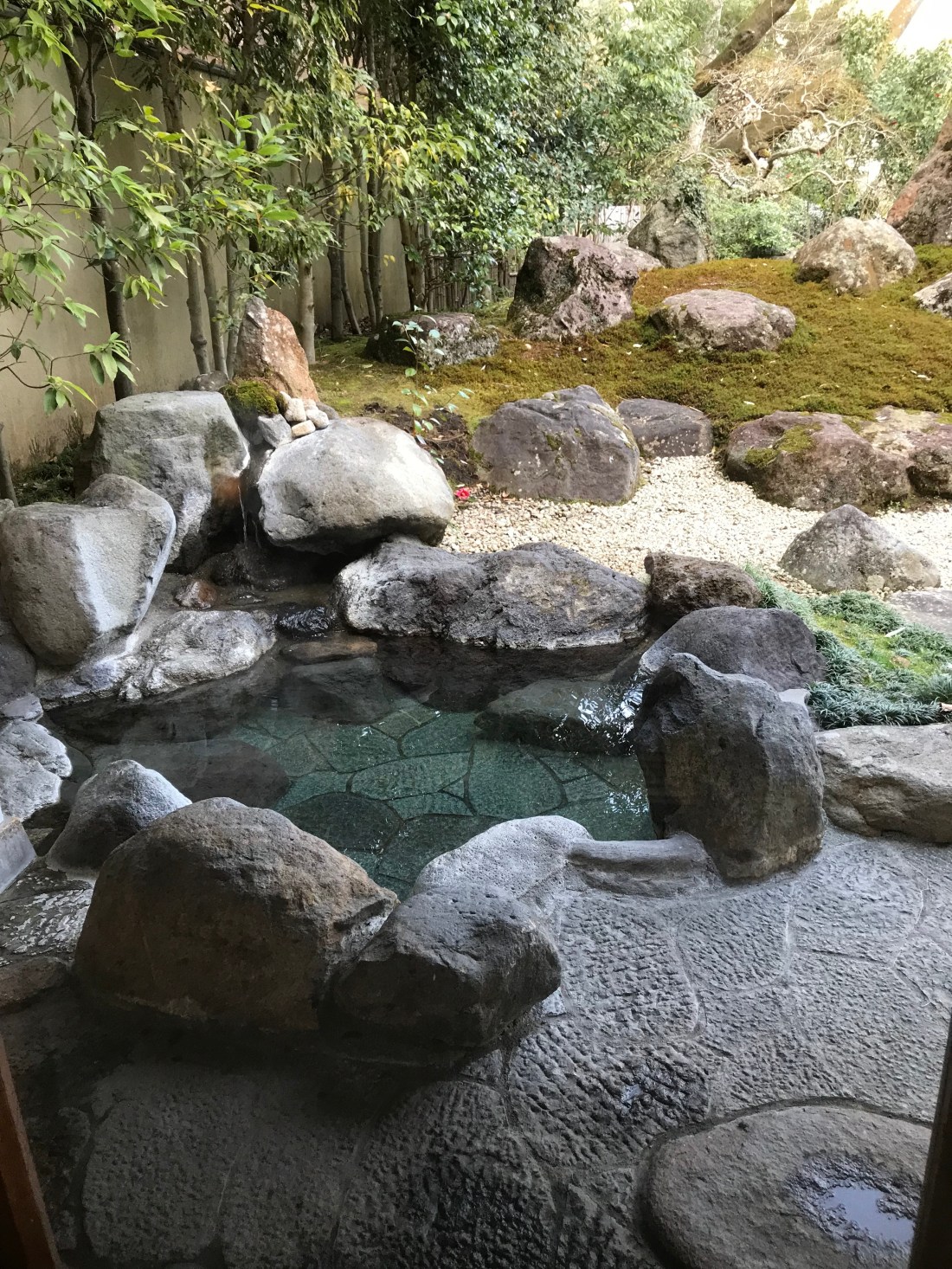
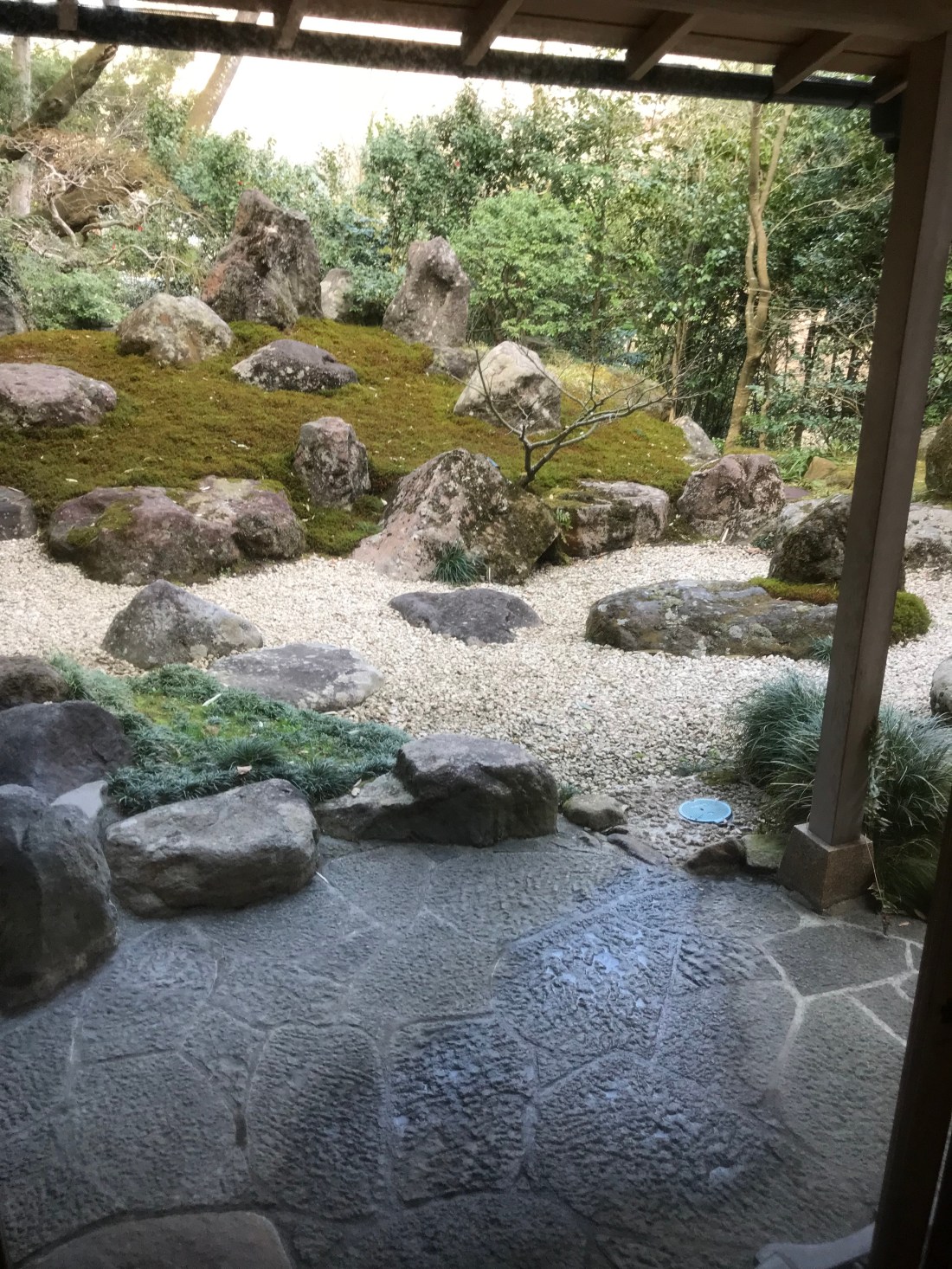
There is also Yodofu, which is also vegetarian. Tofu is the star here. We dined at a superb tofu restaurant Yudofu Sagano in the Arayashima district of Kyoto (near the bamboo forest). The garden was also quite stunning:
The view outside:
Dessert:
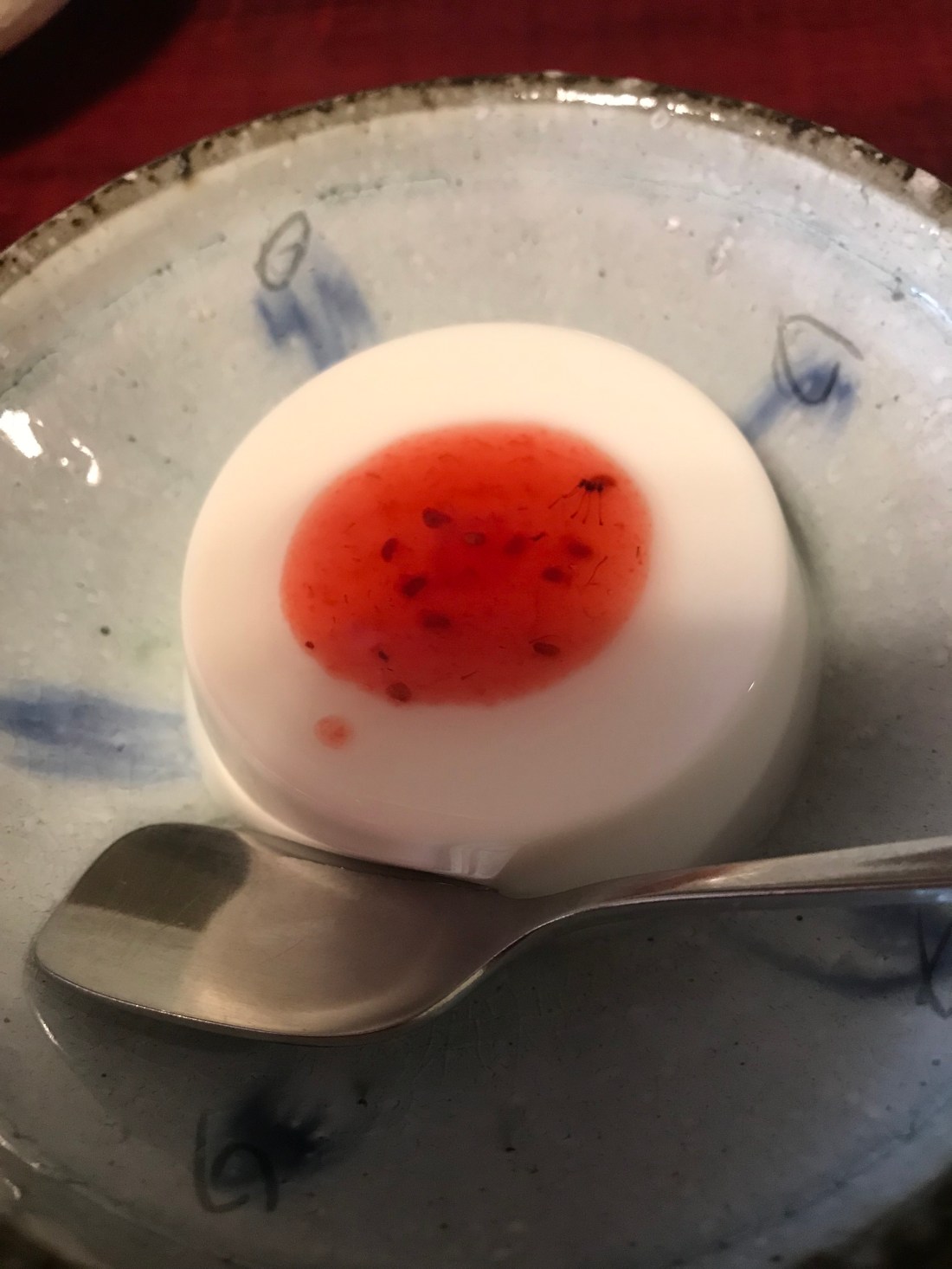
Ok so not the best picture. Tofu can be labeled as ‘silken’ versus ‘regular’. It may be because I live in the U.S. but I can’t say I have ever had silken tofu that deserved the monniker here. But this silken tofu dessert did. So luscious, creamy and light. It was a wonder.
Washoku is traditional Japanese food. ‘Wa’ means Japan, and ‘shoku’ means food or to eat. ‘Wa’, though, also means harmony, so it can also literally mean ‘harmony of food’.
Let me go over the principles of Washoku, as described by Elizabeth Andoh in her book Washoku. This helped me to begin to appreciate, even if only at a slightly deeper level, what is behind Kaiseki cuisine.
I prize well written cookbooks. Classics like Mastering the Art of French cooking (Julia Childs), Indian Cooking (Madhur Jaffrey), Mexico One Plate at a Time (Rick Bayless) and Essentials of Classic Italian Cooking (Marcella Hazan) are utterly much more than a collection of recipes as you likely know. They offer windows into their respective cultures, and in particular, the daily lives of people. Most often, the best of people.
Washoku was like that for me.
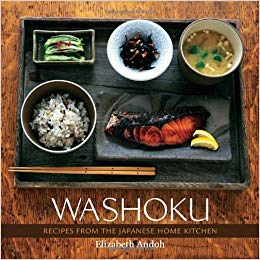
Ms. Andoh is very astute, and cleverly rapidly wraps one up in the desire to learn more about Japanese cooking. Well at least for me. She does not dumb anything down and everything is so well-organized. She helped me create a Japanese pantry in a snap. And my husband, an avid fisherman, is indeed quite grateful.
I shall hopefully paraphrase (not plagiarise) her, albeit I just won’t be as eloquent. I’m just trying to be a decent student.
There are five principles of Washoku. Sounds familiar. Actually the number five plays a role in a variety of cuisines. But what I dimly know now of Japanese cuisine, they are:
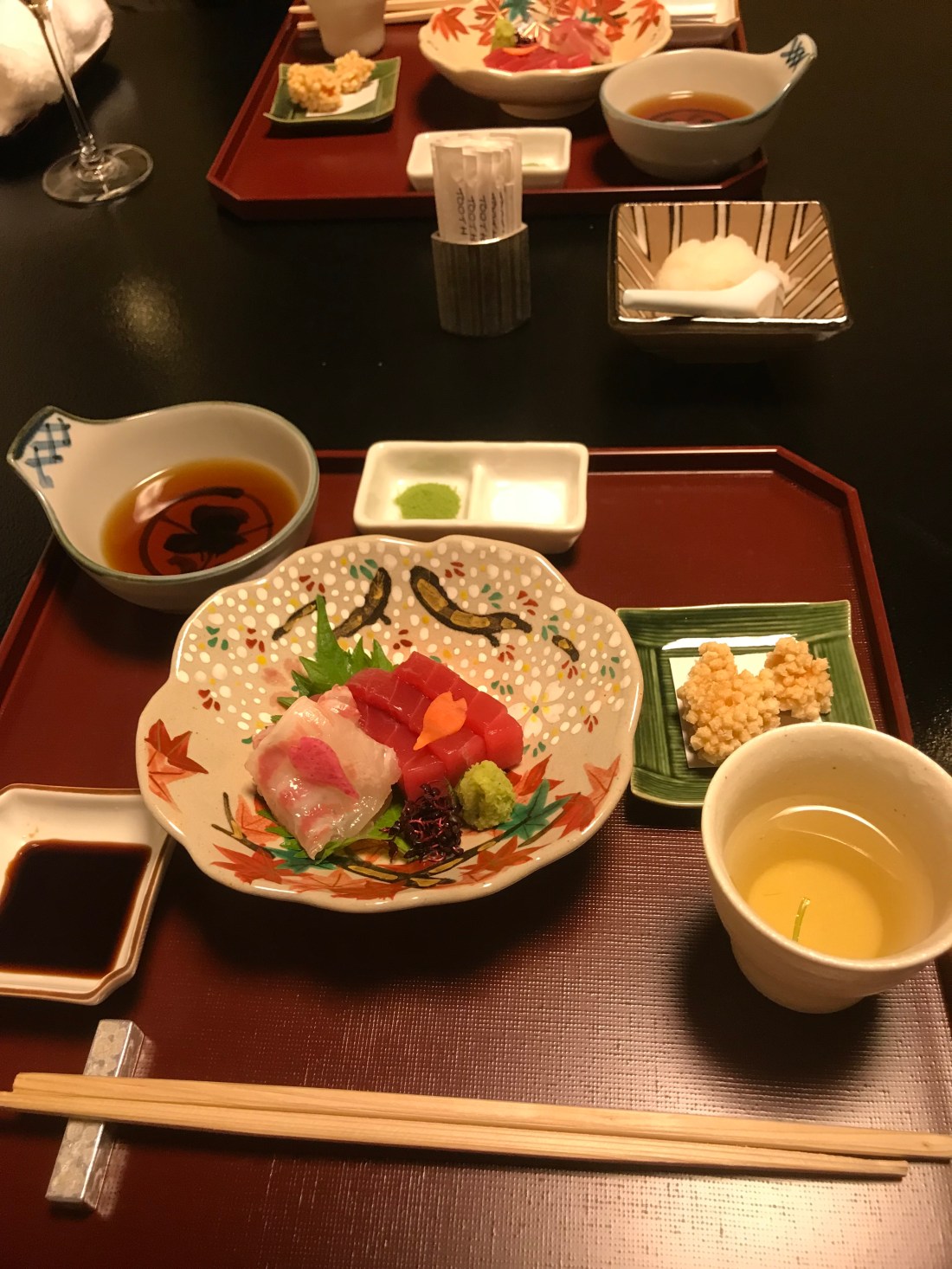
Go shiki: I am trying to learn Japanese. ‘Go’ means five. Go shiki refers to ‘five colors’, that is red, green, yellow, black and white. Regarding black, eggplant or dark mushrooms count. It seems to me that a bit of seaweed in dishes can add the black element as does grilling. Clearly the cover for the Washoku book demonstrates the five colors, but as I go through our pictures, I see this as well:
Go mi or five tastes: salty, sweet, bitter, sour and spicy. Salty would refer to ingredients such as, well, salt, and soy sauce and the myriad varieties of miso. Honey, mirin and of course sugar are sweet ingredients. With sour there is vinegar and citrus. I am particular fond of homemade ponzu, a citrus based sauce used in Japanese cuisine. Hmm, bitter. Well, bitter helps clear the palate and …. Oh! I just discovered that Ms. Andoh has a website while I was typing this up.
How fabulous! I adore Japanese food, and I need all the help I can get with trying to re-create even a weak facsimile in our kitchen. Did I mention my husband likes to fish? We have about 150 pounds of fish in our freezer that needs some Japanese love.
Now, on the website, regarding the tastes and in particular bitter, she points out that “In the mountainous areas of central Japan, a group of (naturally bitter) vegetables (ferns, bracken) known as sansai are foraged early in the spring.” I know here in the U.S. we use a number of bitter greens as well. These greens are good for nutritional content and aid in digestion. I am thinking mainly of kale, endive, and my favorite: dark chocolate.
Regarding spicy: peppers, and then there is wasabi. Much of the wasabi in the U.S. is not true wasabi. It’s green tinted horseradish. The real stuff still packs heat, but is far more subtle. It has much more of an herby taste. This is what wasabi the root looks like:
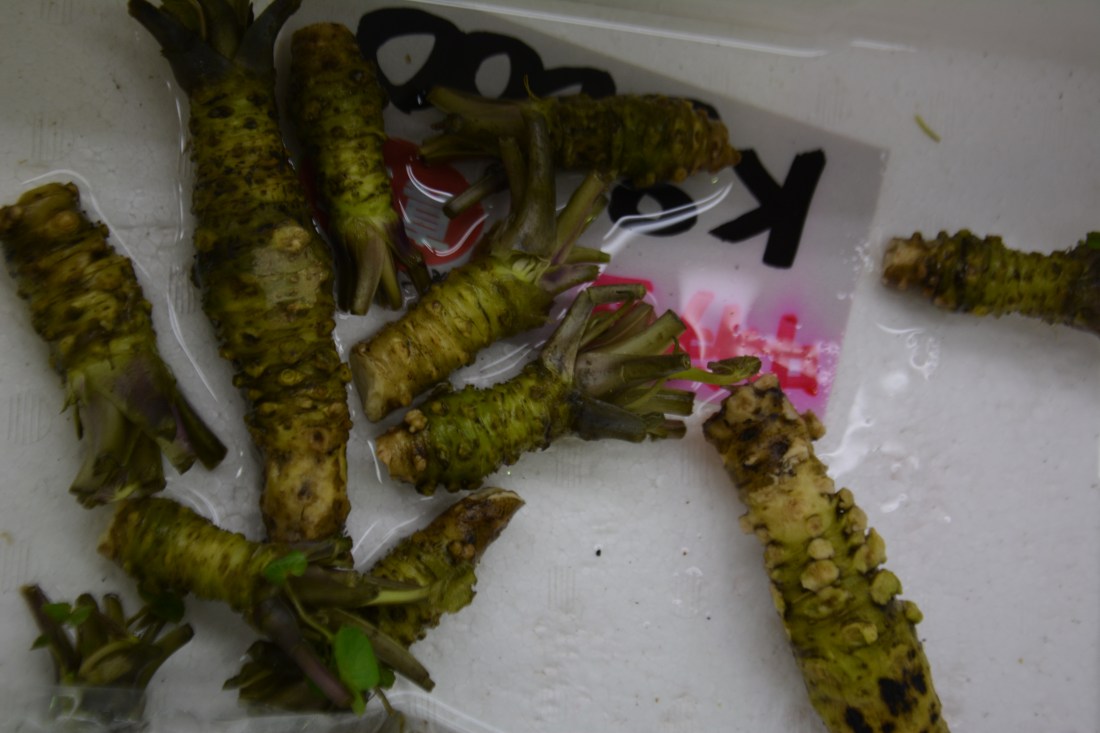
We took this picture at Tsukiji market. Real wasabi and the shark skin grater used to grate it deserve their own post at some point.
Go ho: There are five methods of preparation: grilling, steaming, frying, and simmering. And then simply having food presented raw.
Go kan: Five senses. With food, the focus is not just on taste and smell, but also sight, sound and touch. Again look at the variety of textures here:
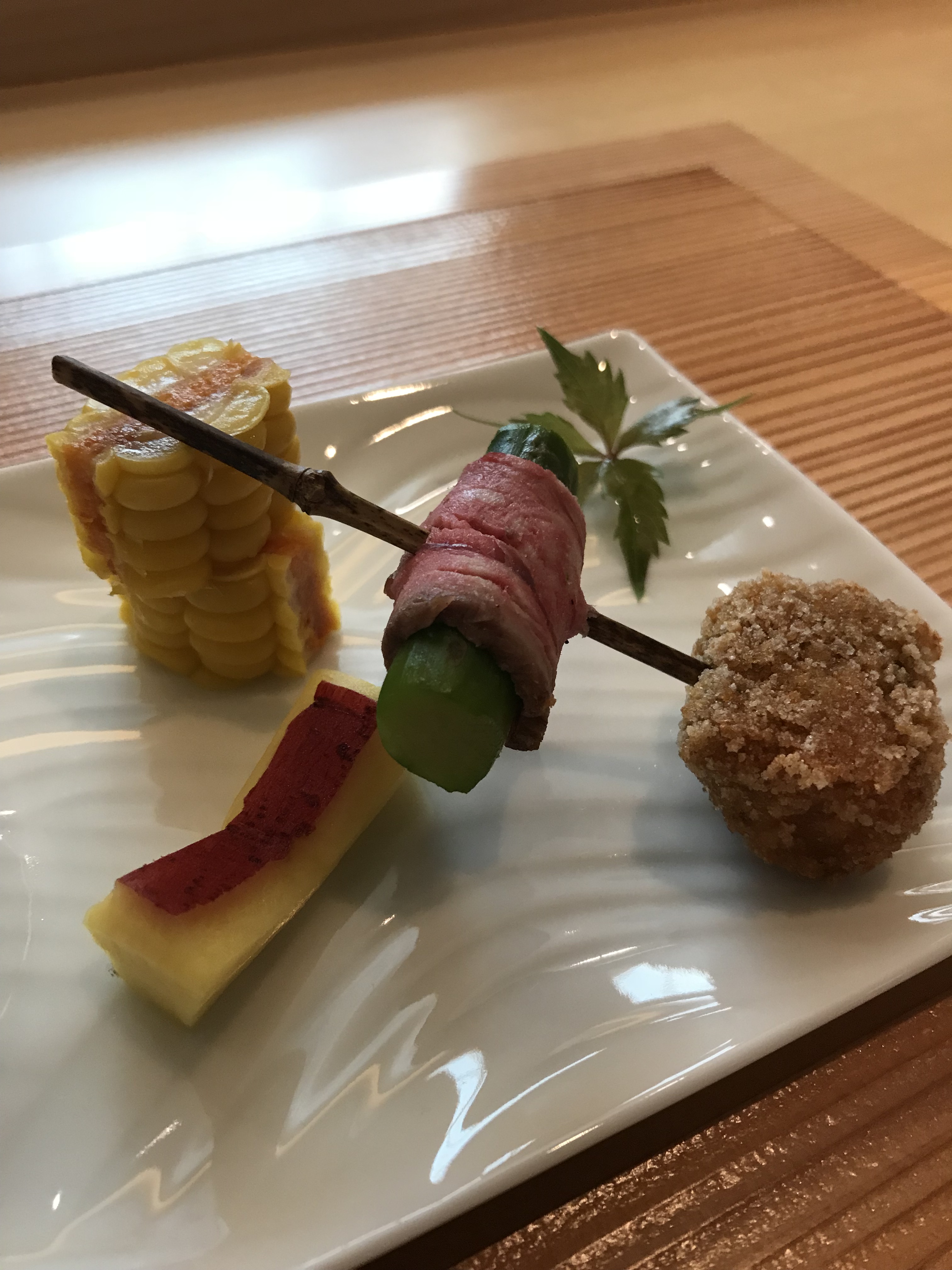
With this dish, we were instructed to eat items in a specific order, which heightened the contrasting textures. We started with the rice cracker encrusted Chiba octopus. We followed with the corn- that is Hokkaido sea urchin in the middle. What an amazing little sandwich!! The corn was slightly chewy and that urchin just melted all over the tongue. Then, we had the snappy fresh crispness of the asparagus followed by a slice of Wagyu heaven.
You may think it odd, but actually my favorite bit of this was the simmered sweet potato. It was not at all mushy as you can clearly see, and while eating it, one could fool oneself easily to thinking one is having a somewhat unripened peach. It might just be, though, I am easily fooled.
I am now much more aware of the contrasting textures in my food. The last time I truly thought about textures to the same degree was the savory mushroom mousse we had in Portugal which involved… pop rocks. That was insane I have to say. Maybe, a little weird?
Go kan mon: These refer to five outlooks. Ok, I’m going to quote Ms. Andoh: “They instruct us, first, to respect the efforts of all those who contributed their toil to cultivating and preparing our food; second, to do good deeds worthy of receiving such nourishment; third, to come to the table without ire; fourth, to eat for spiritual as well as temporal well-being; and fifth, to be serious in our struggle to attain enlightenment.” How beautiful is that?
There, these are the five principles. But did I mention seasonality? The above dish was served in late summer. And here is one of my desserts during Sakura, or the cherry blossom festival in spring:
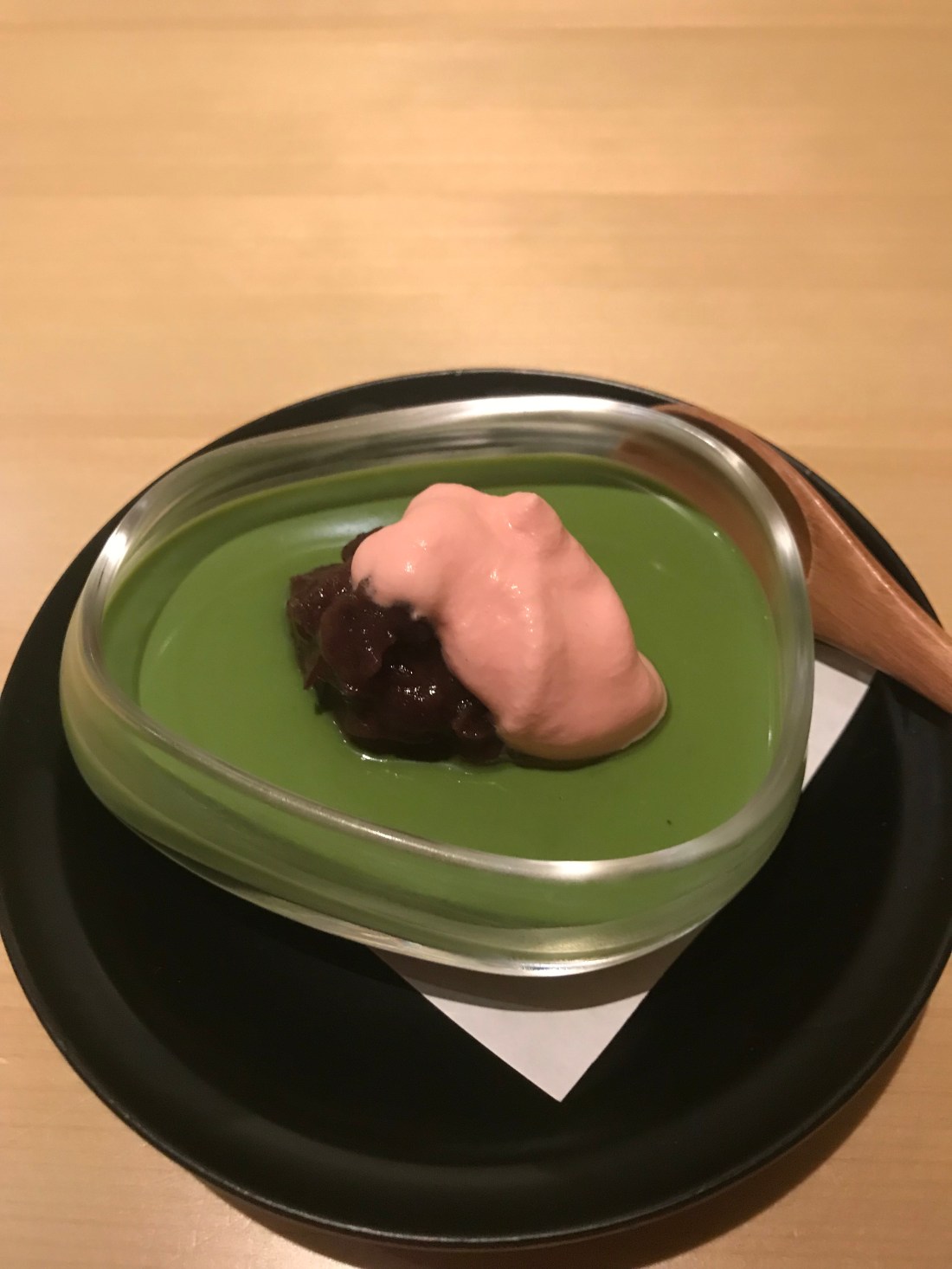
This was a silky matcha mouse topped with cherry jam and cream.
Sigh. I could eat like this every damn day. But of course I cannot. Kaiseki is the haute cuisine of Washoku and was intended for special occasions and banquets. It is a cultural masterpiece for certain. I am studying a little more on Kaiseki. Mrs. O and I will be re-visiting Kenzo soon- will delve more specifically on Kaiseki in the near future…
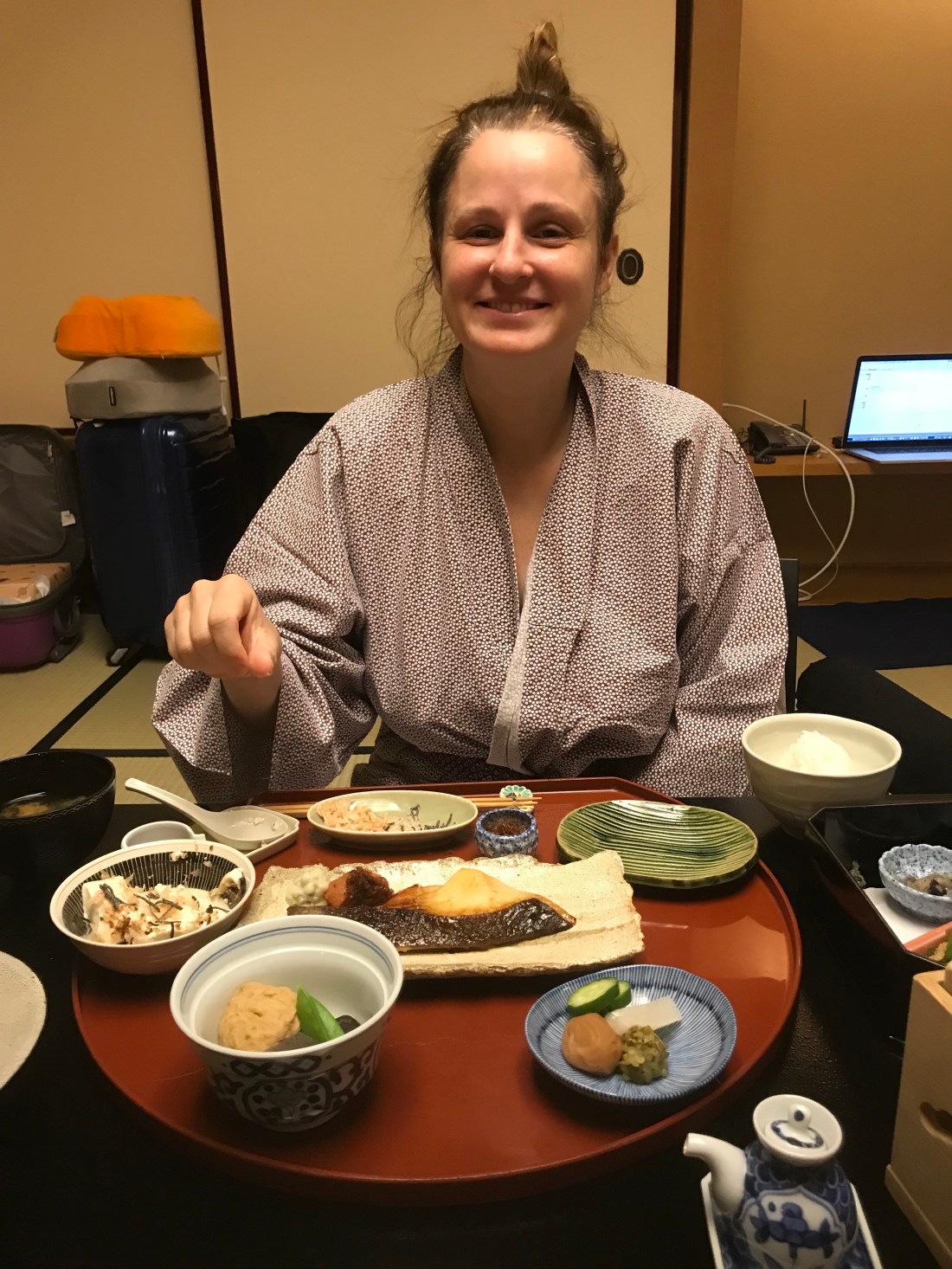
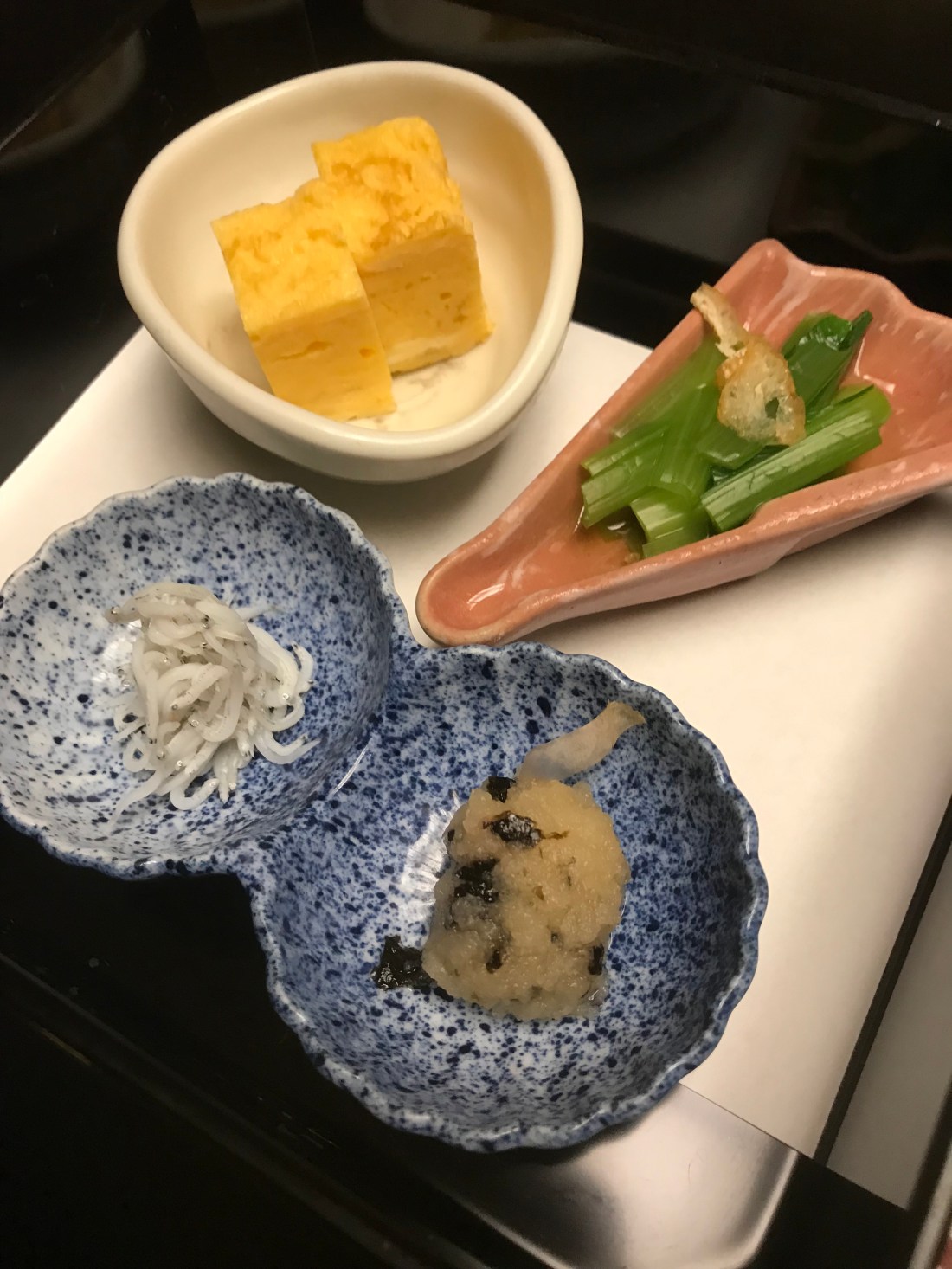
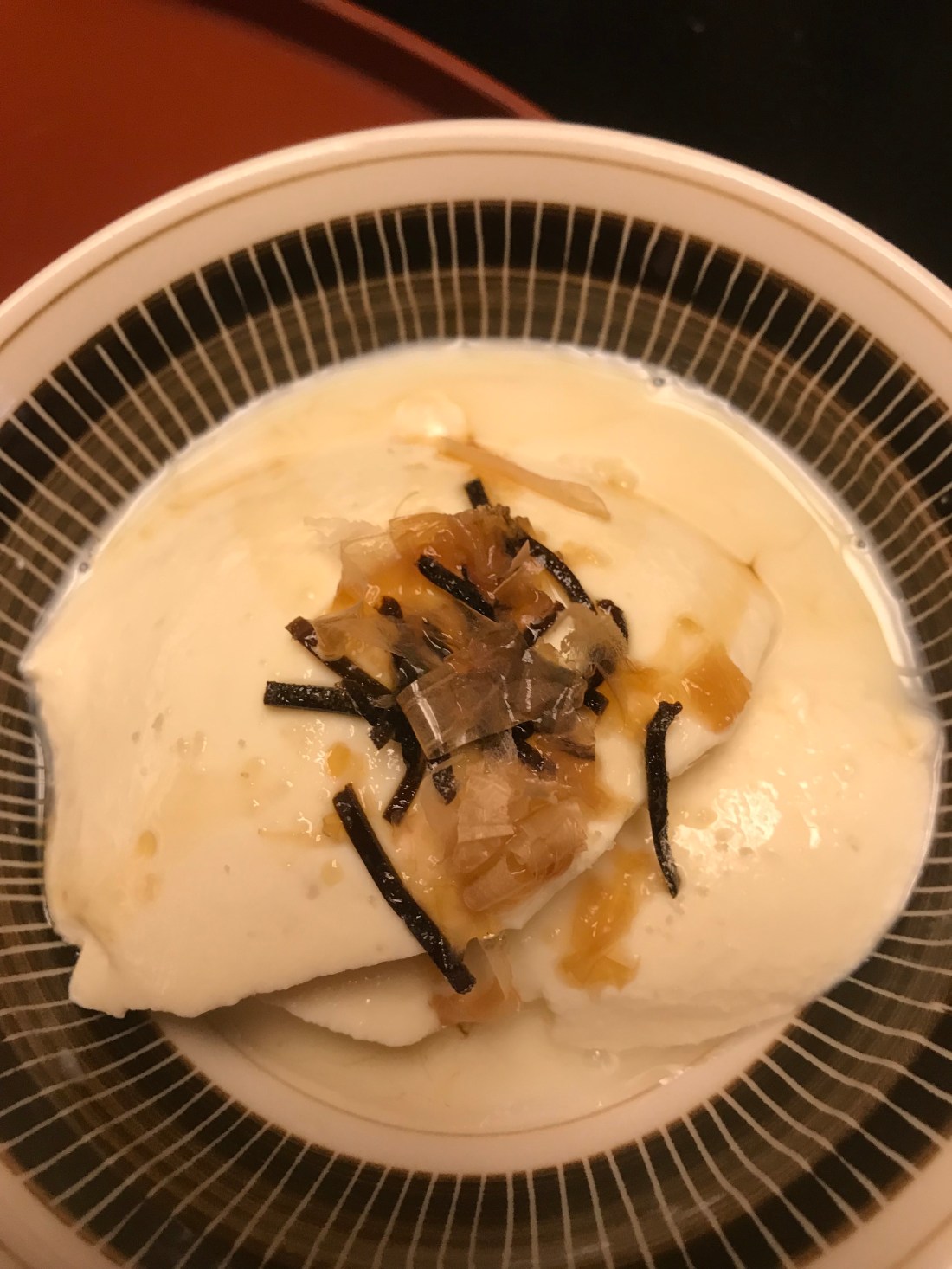
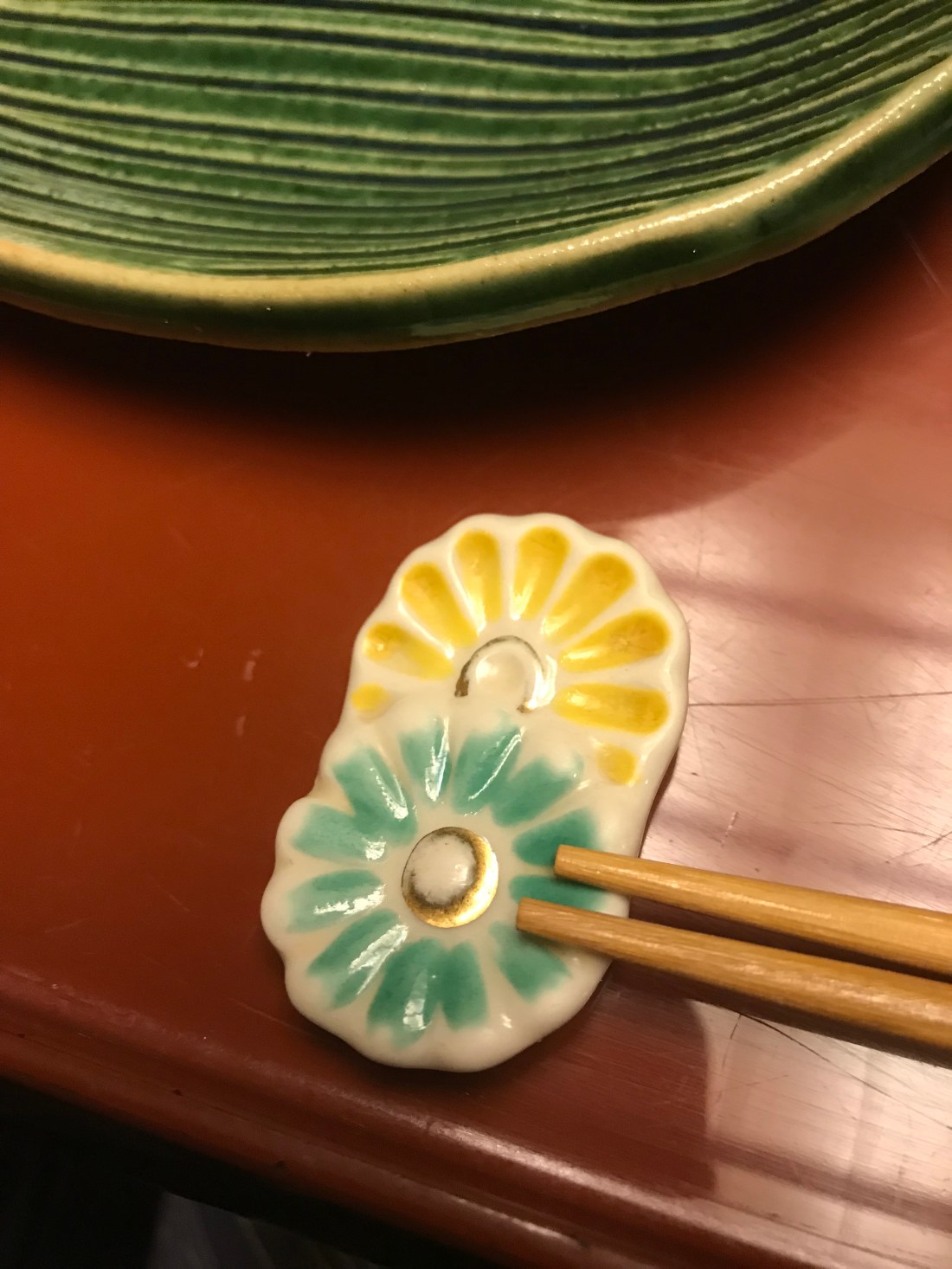
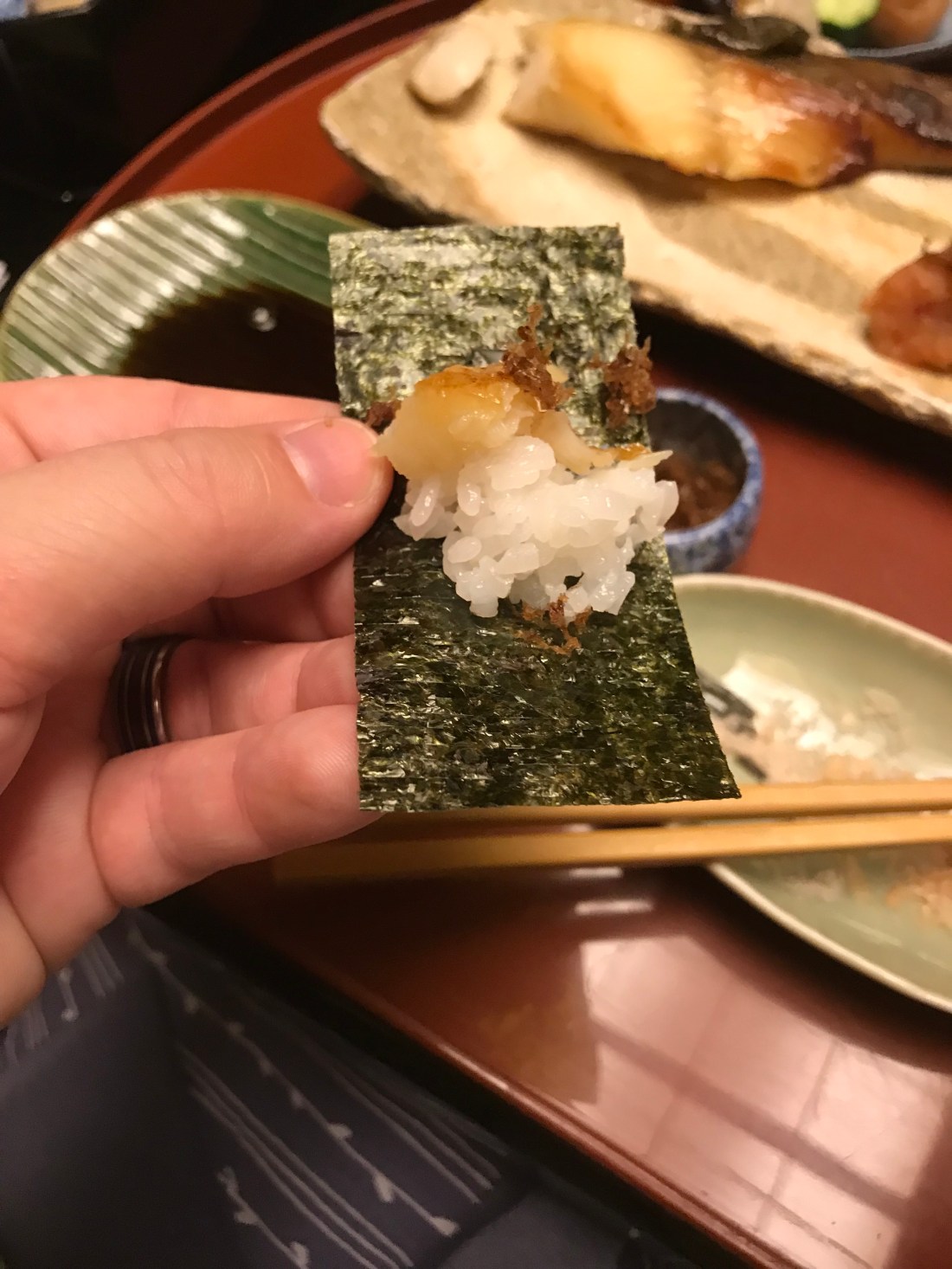



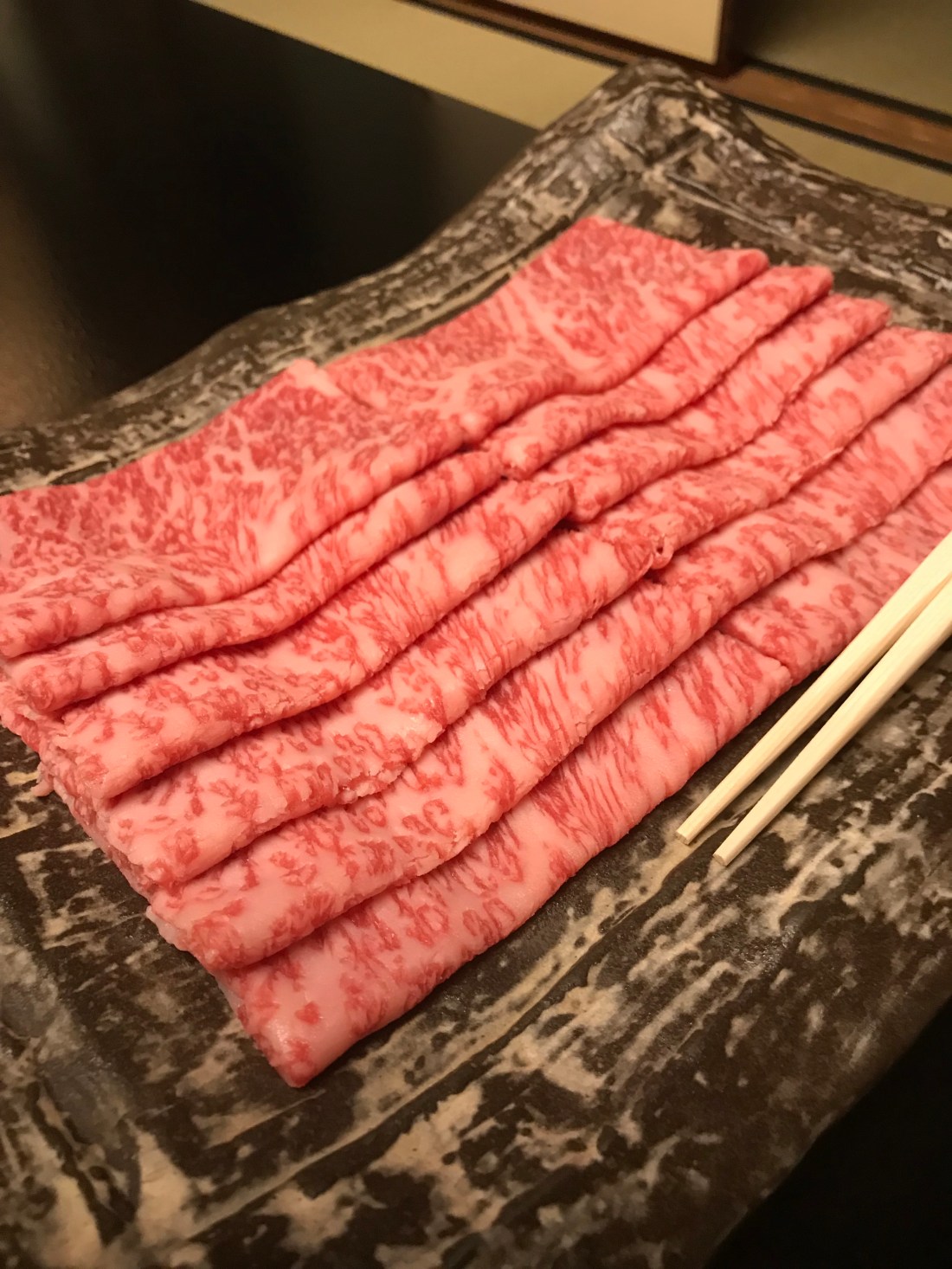
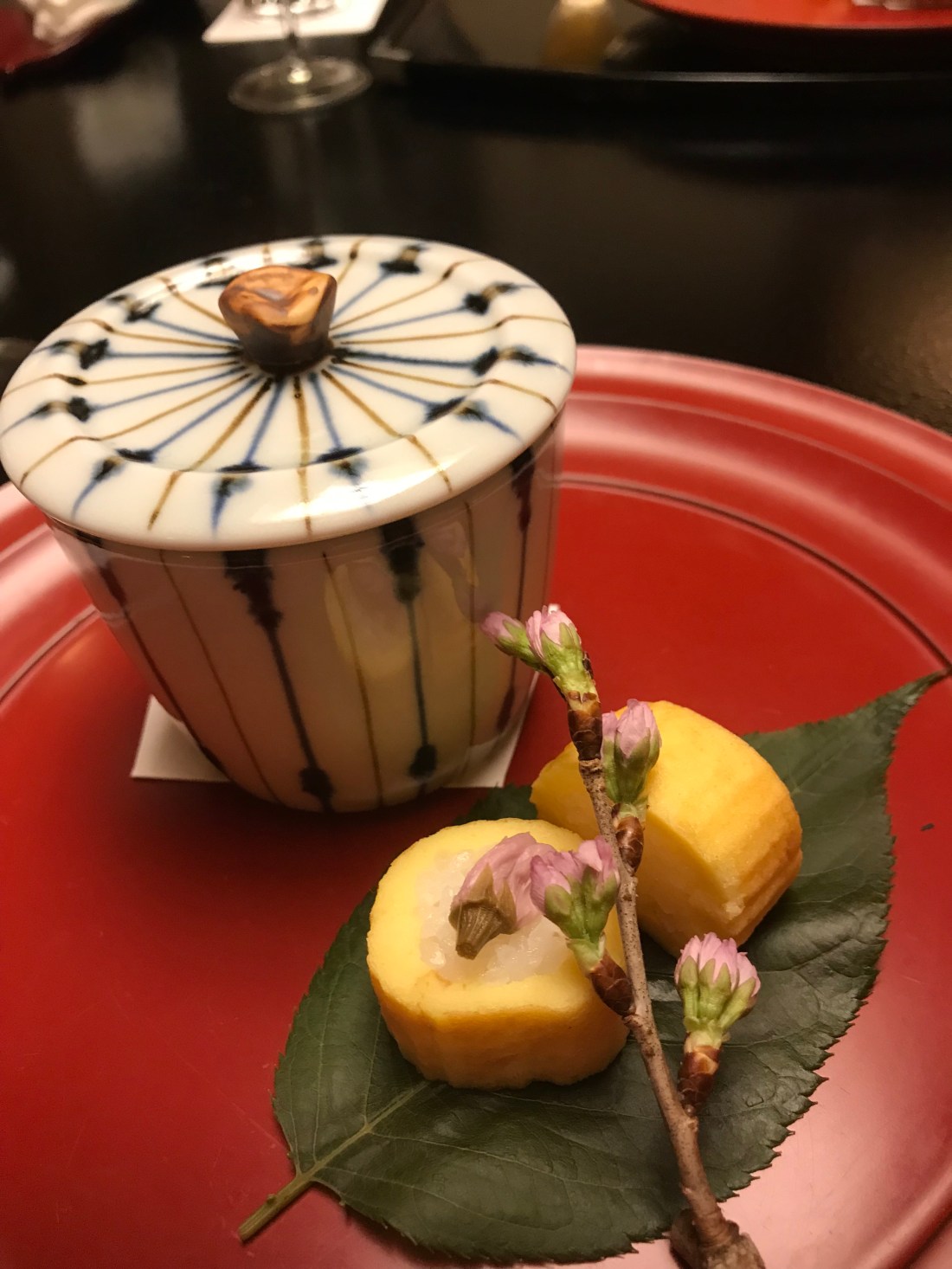
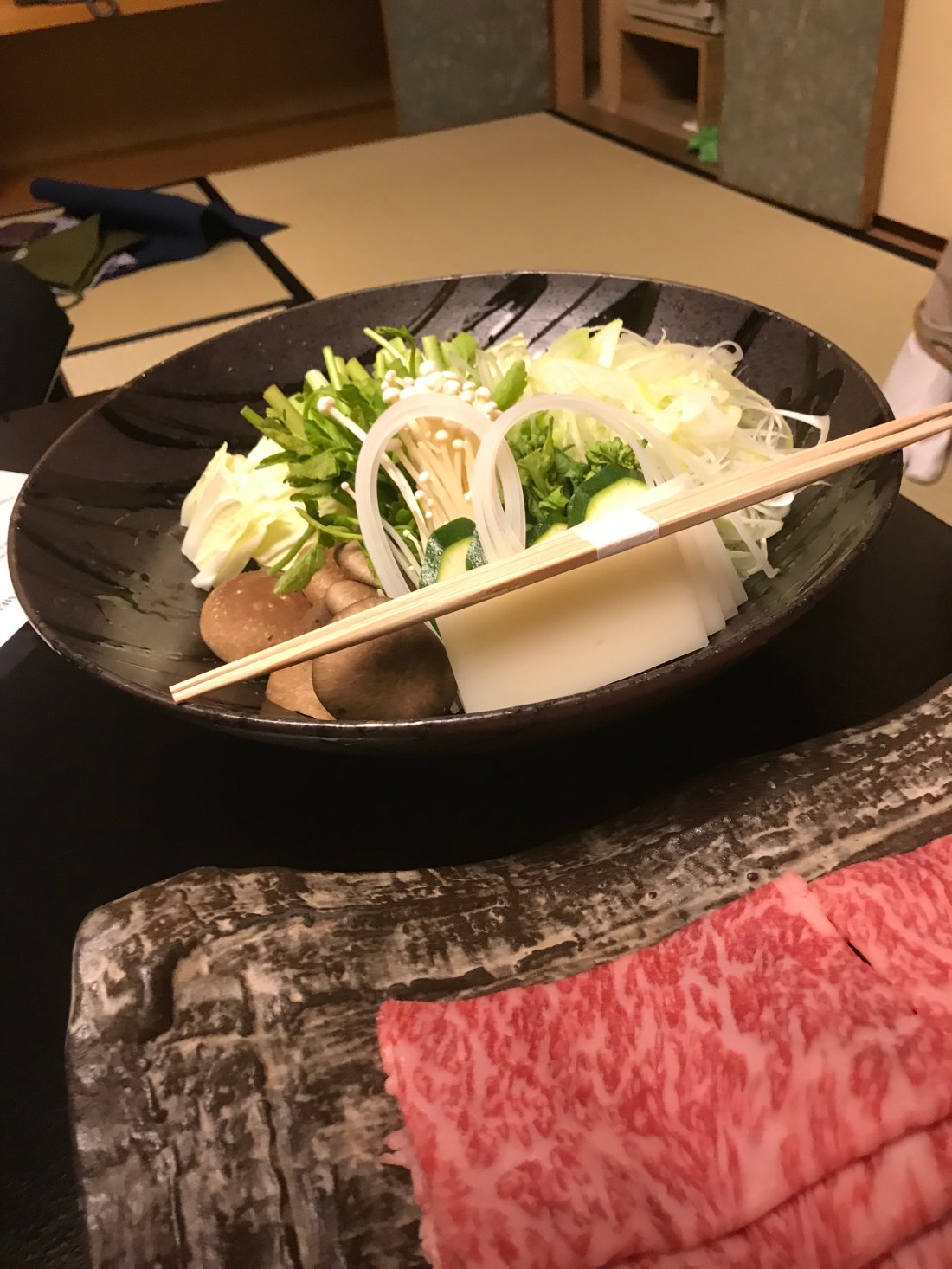
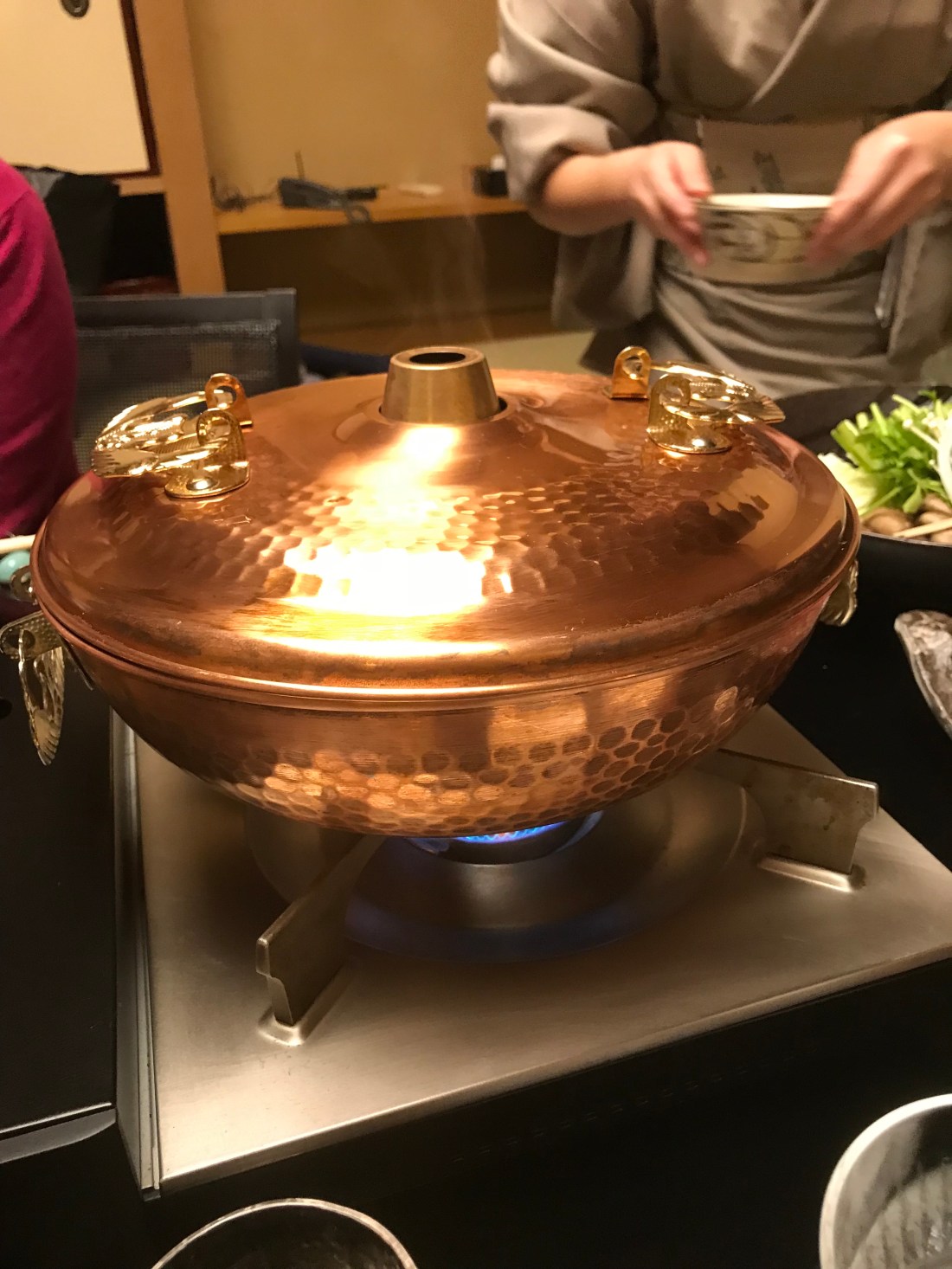
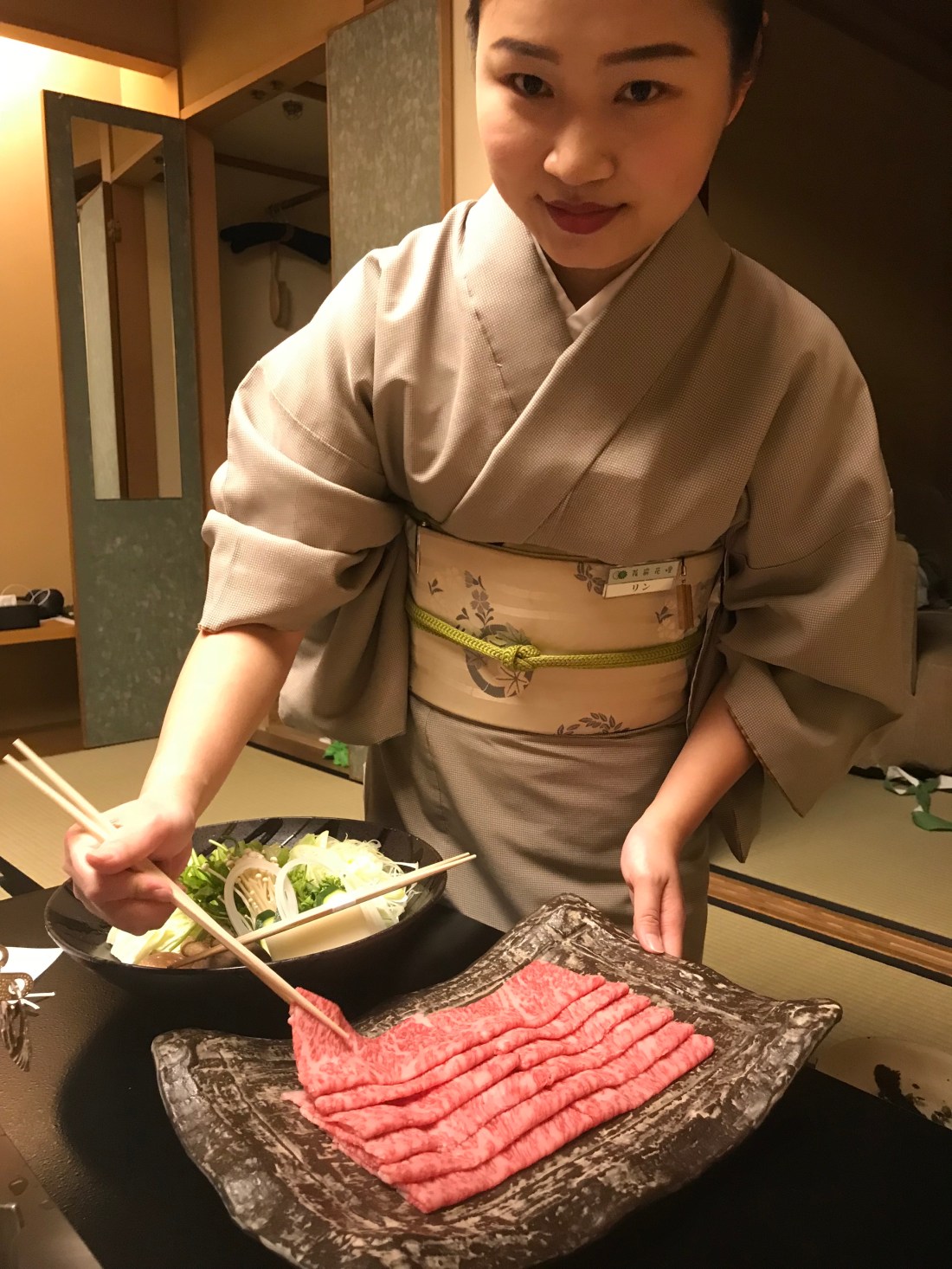
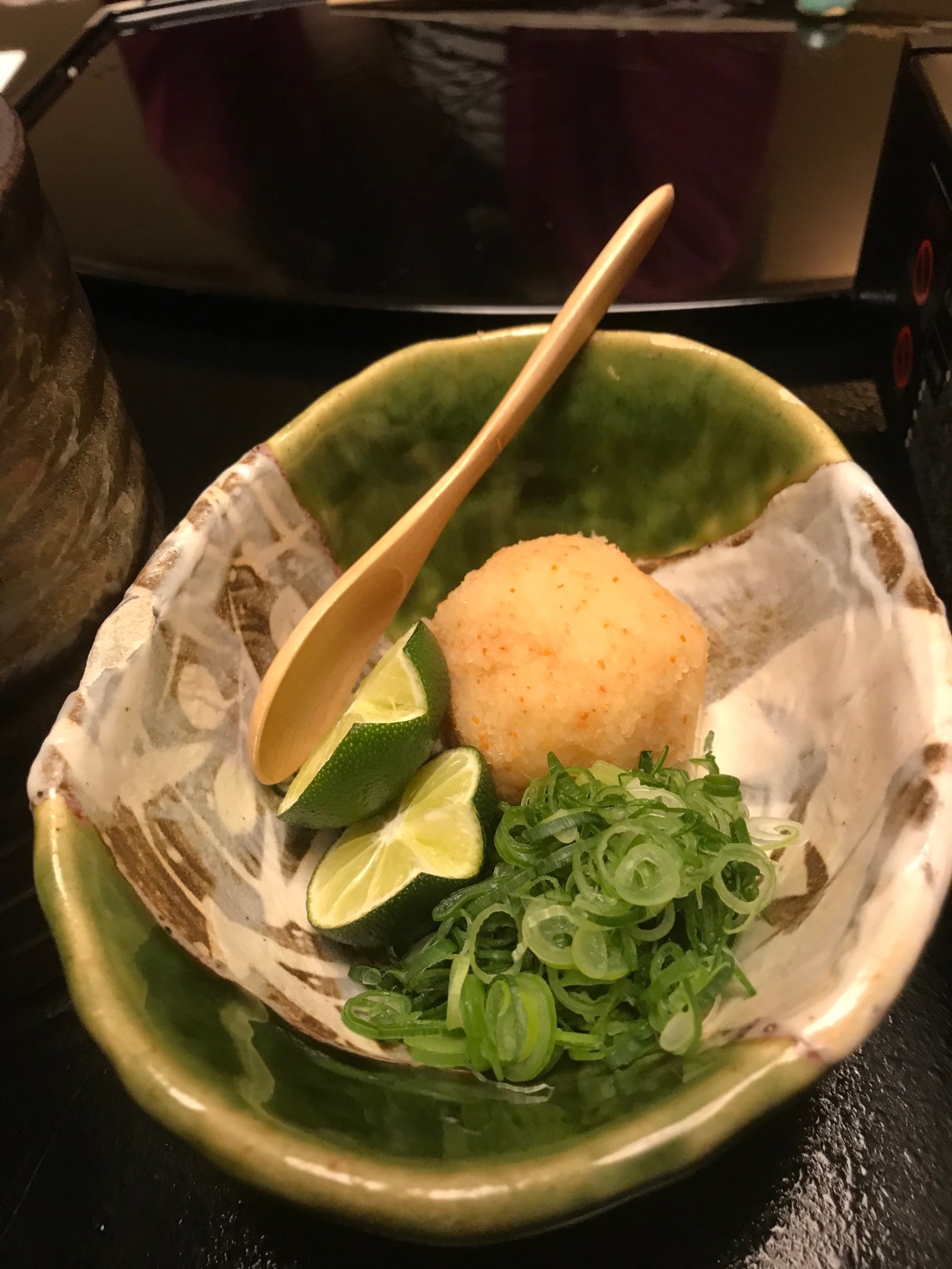
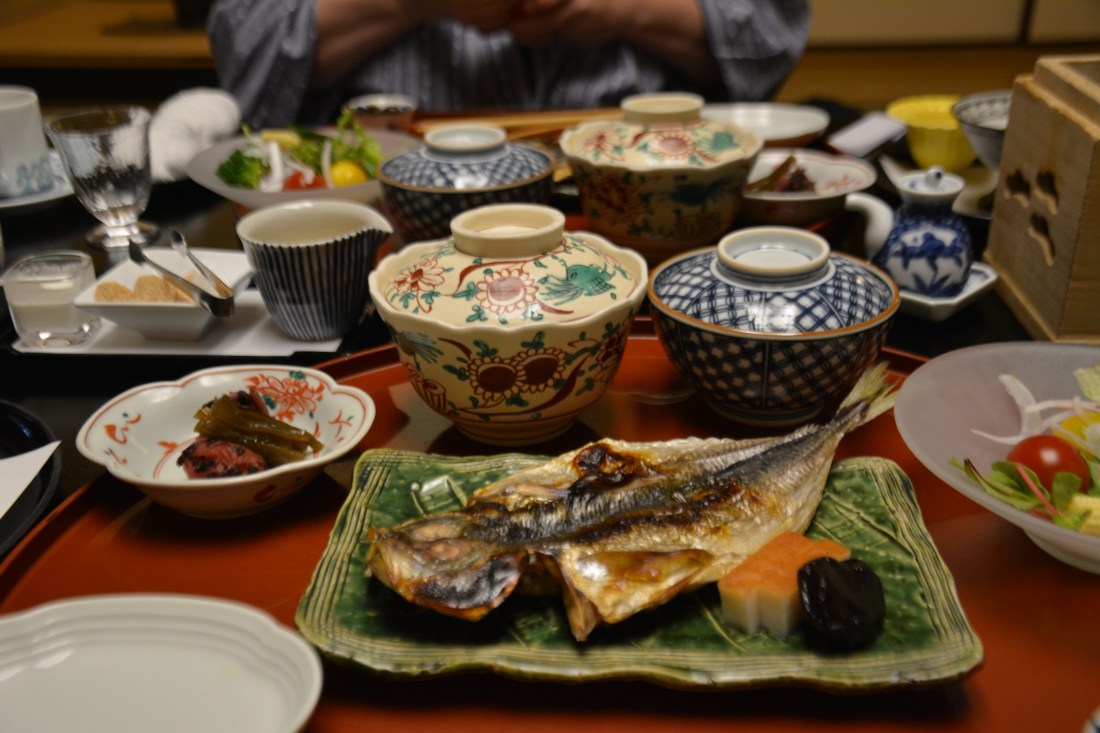
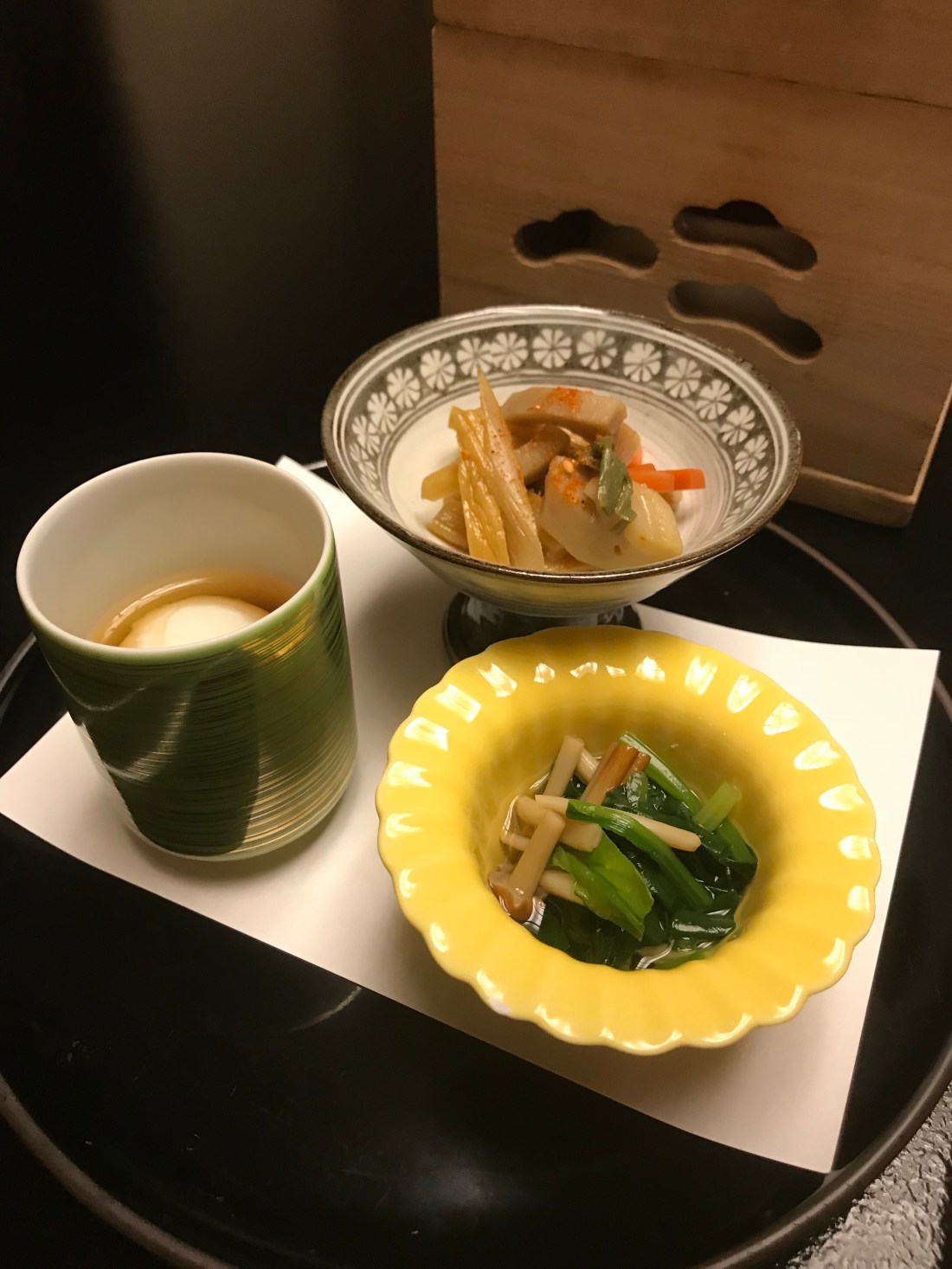





 Ok this is from my phone. Mrs. O has a much finer picture. No idea where that damn drive is.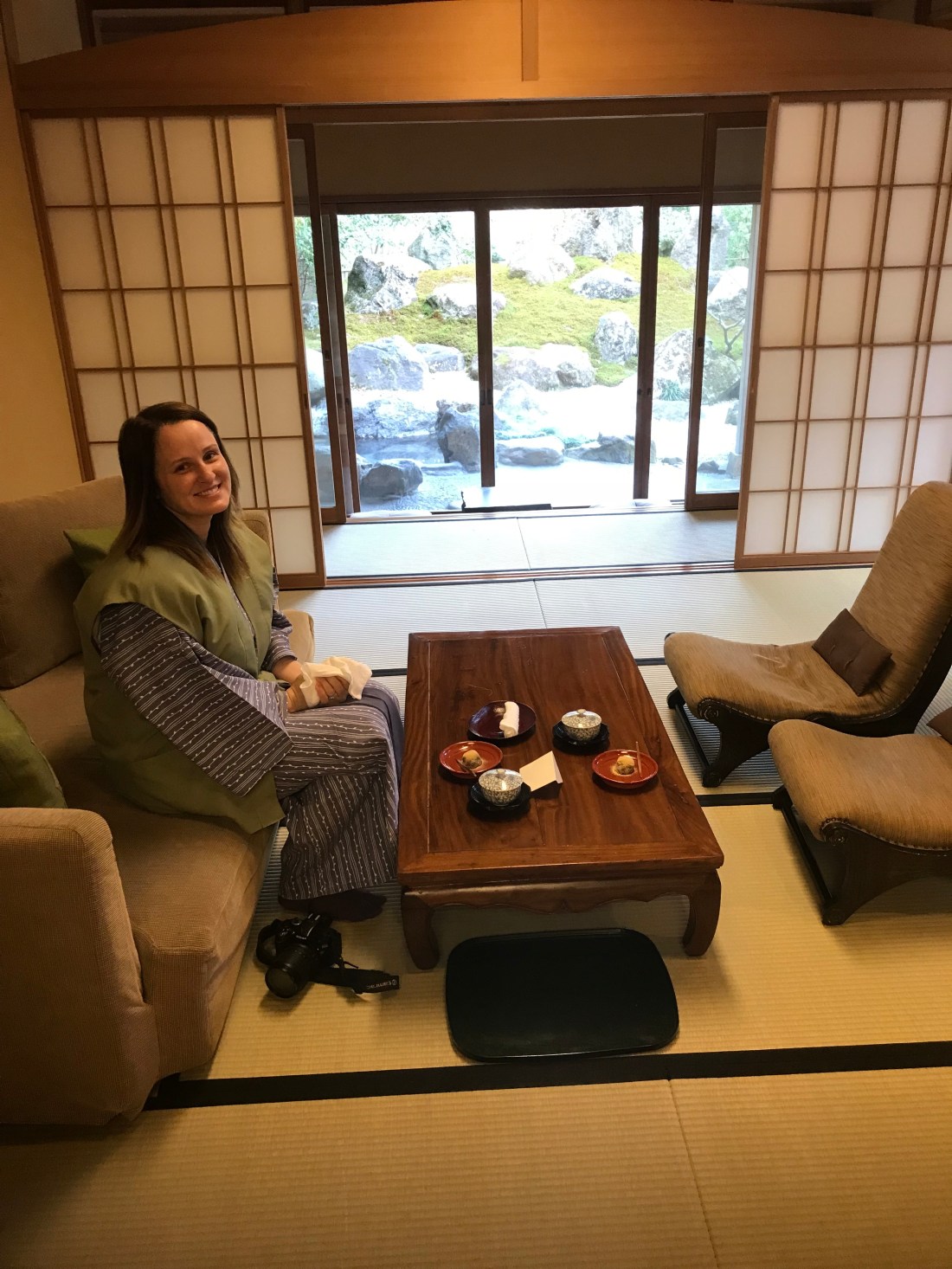
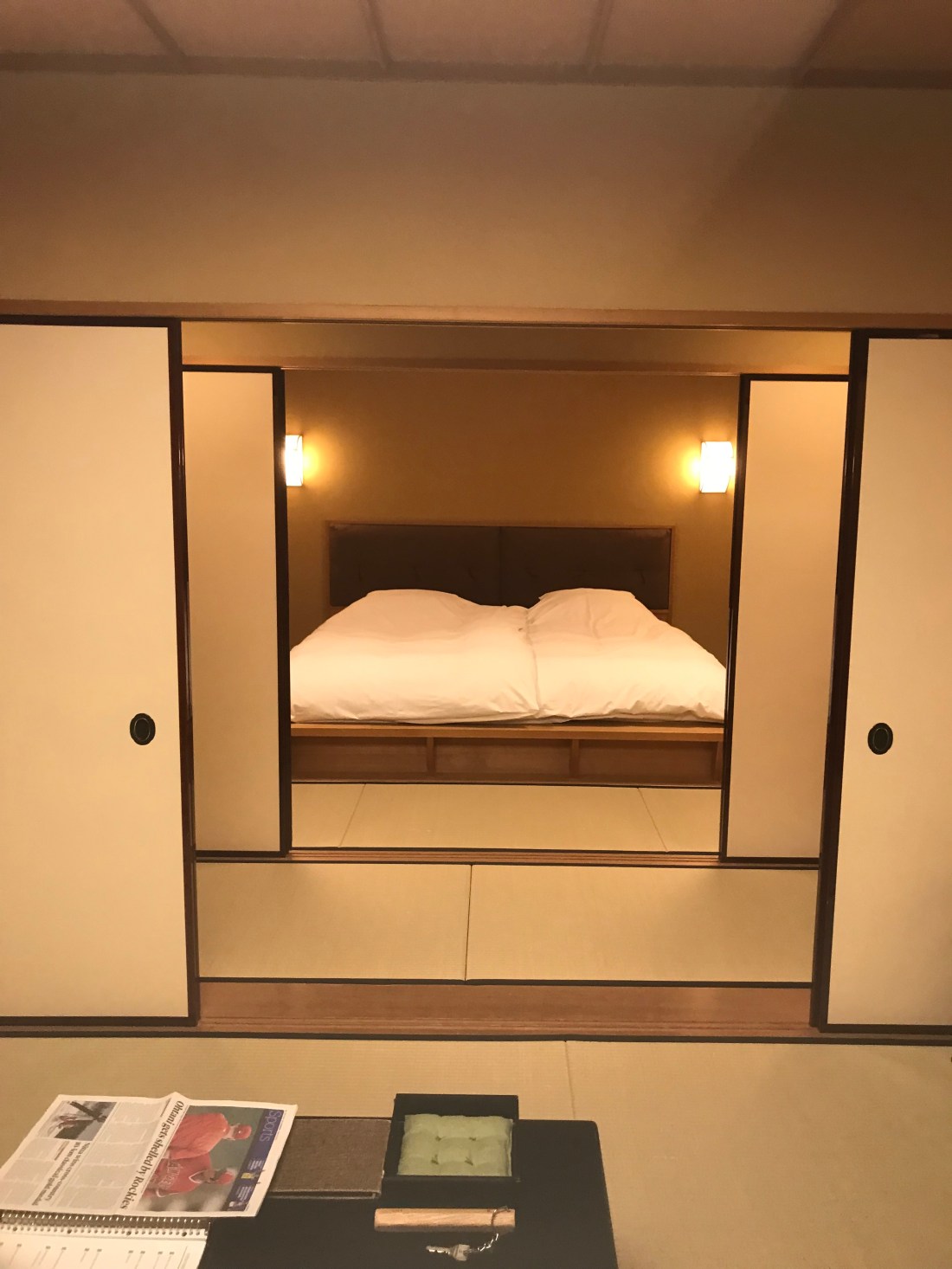
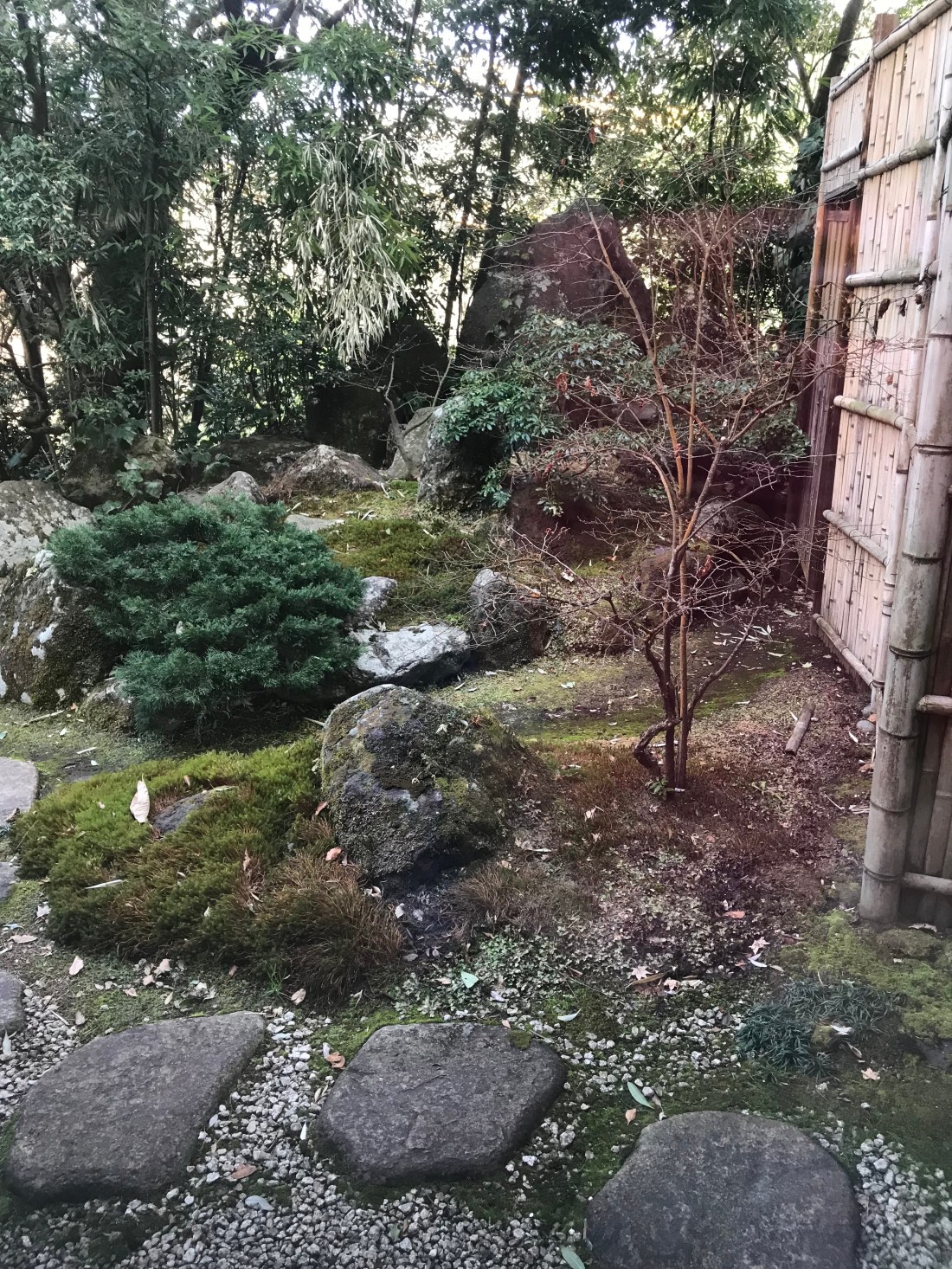 Stunning.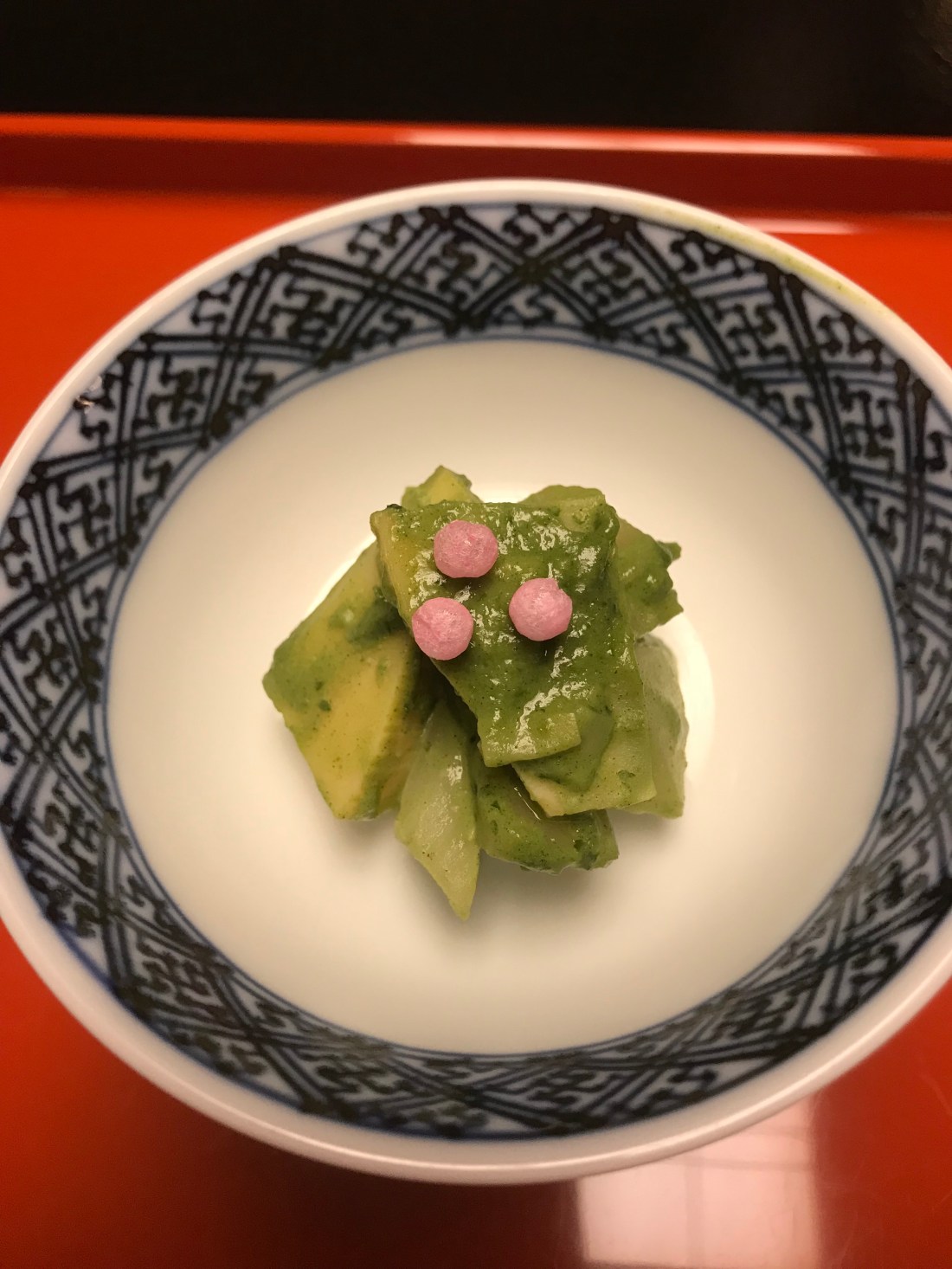
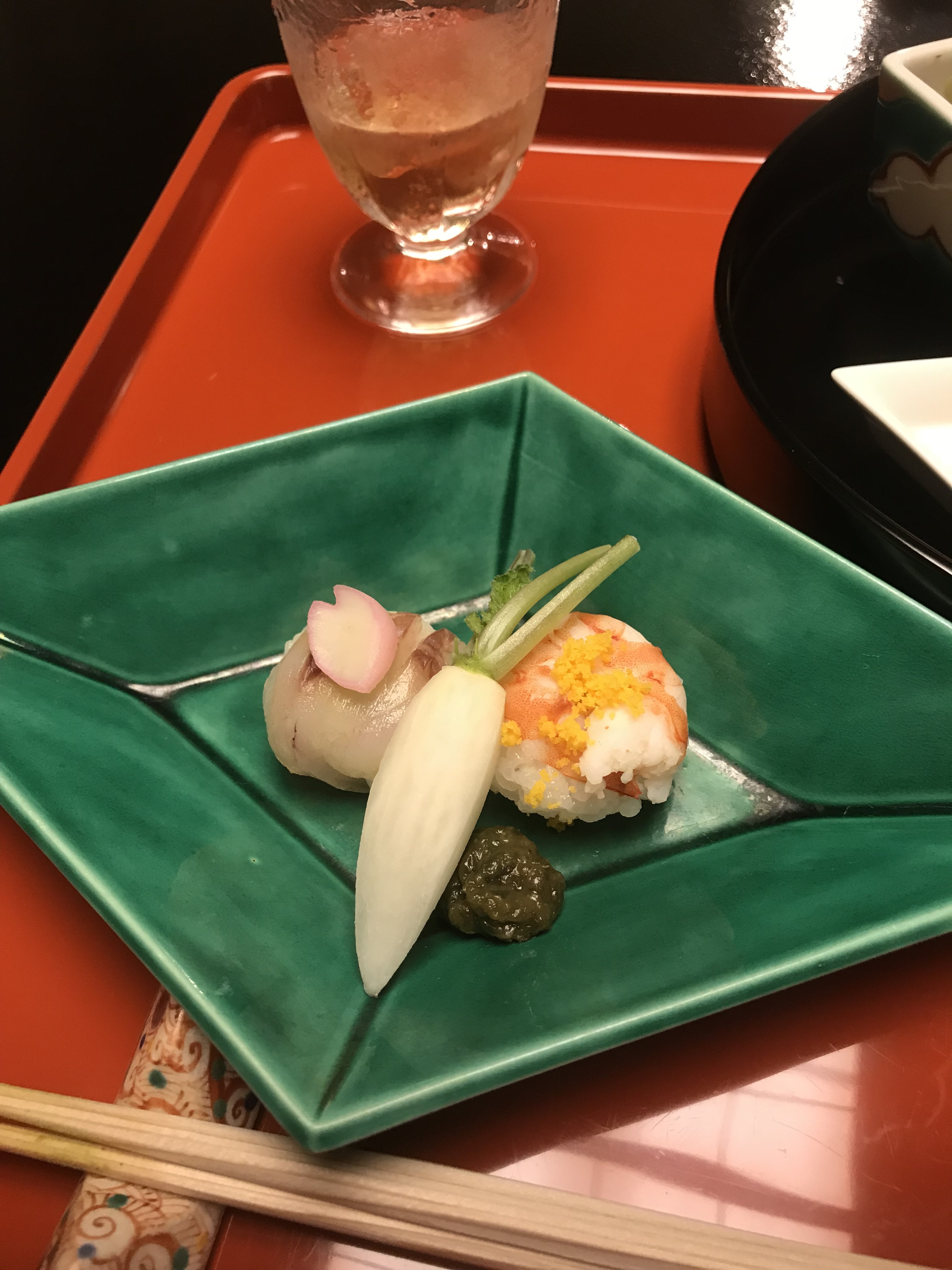
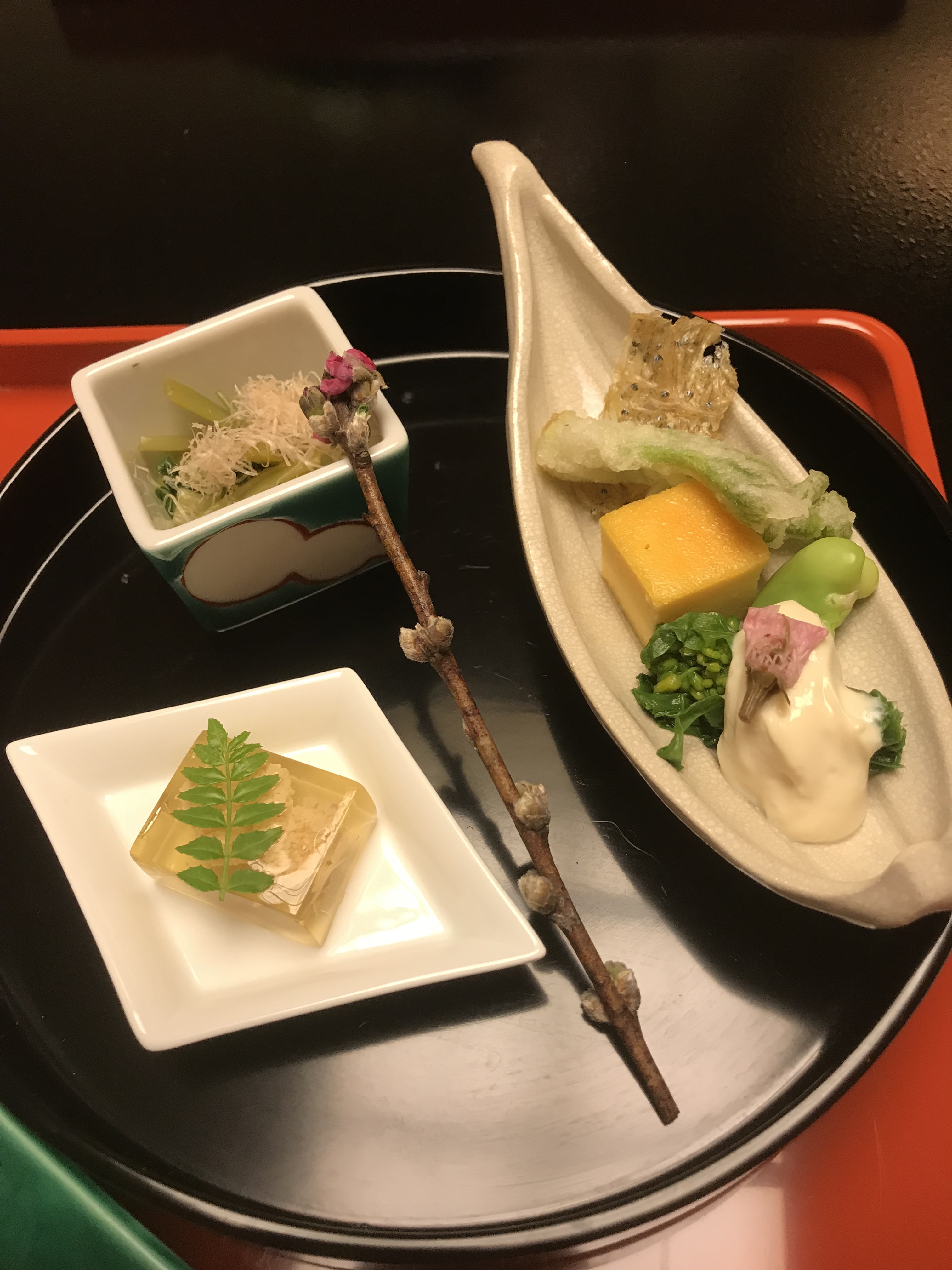
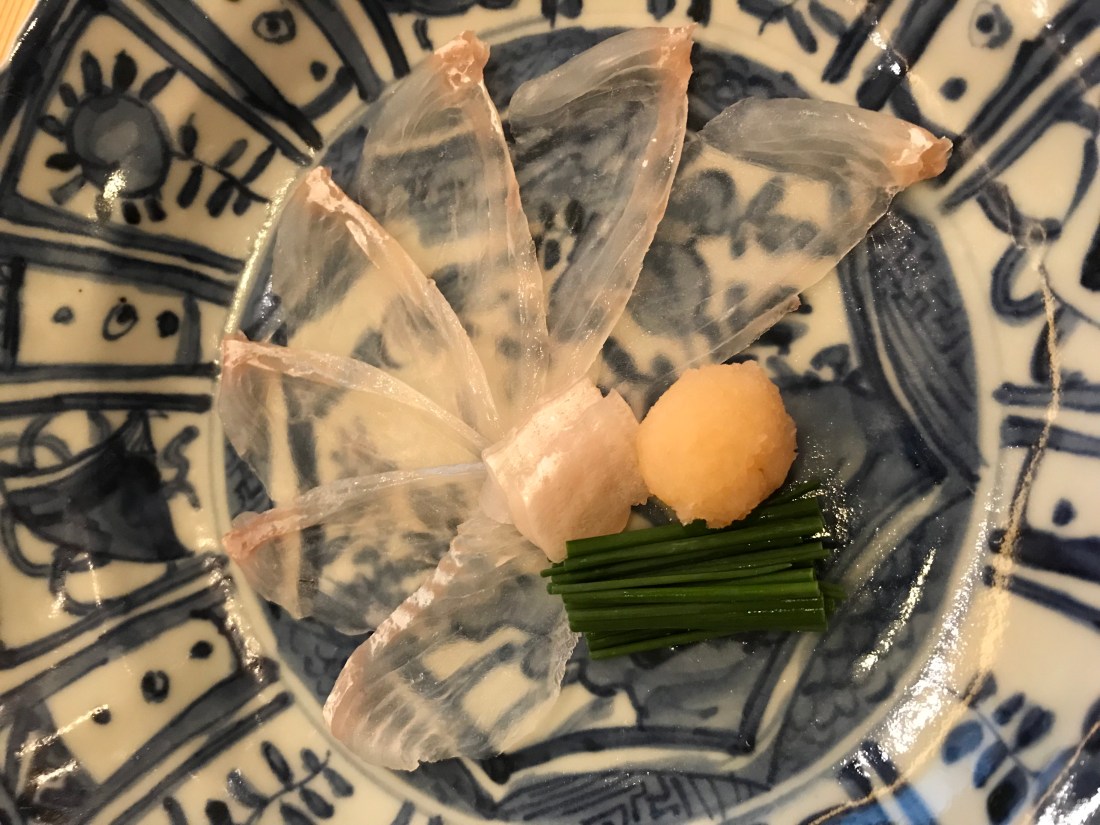
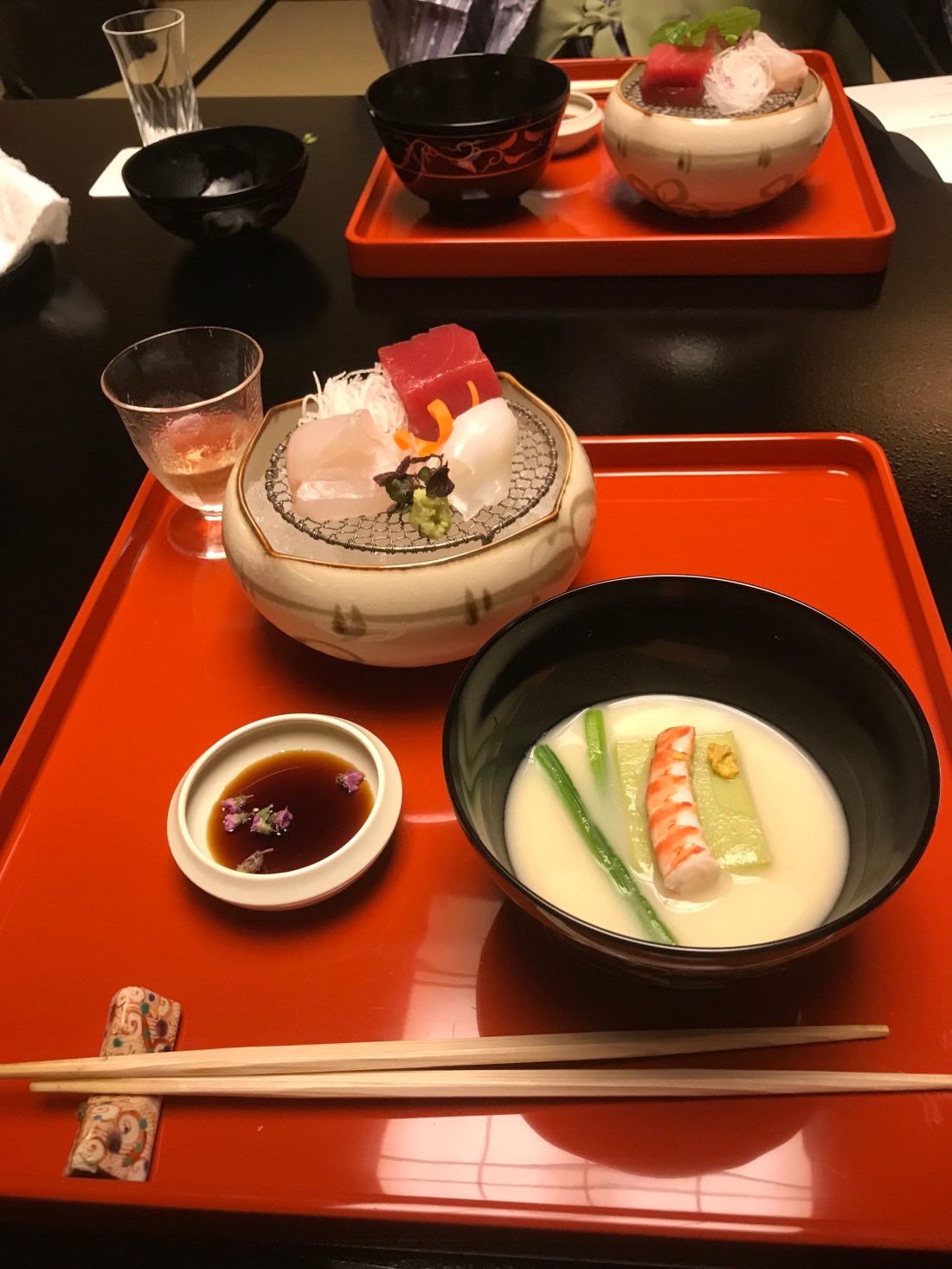 The sashimi- again there are no words. The prawn with that sauce- with what I now suspect is edamame tofu…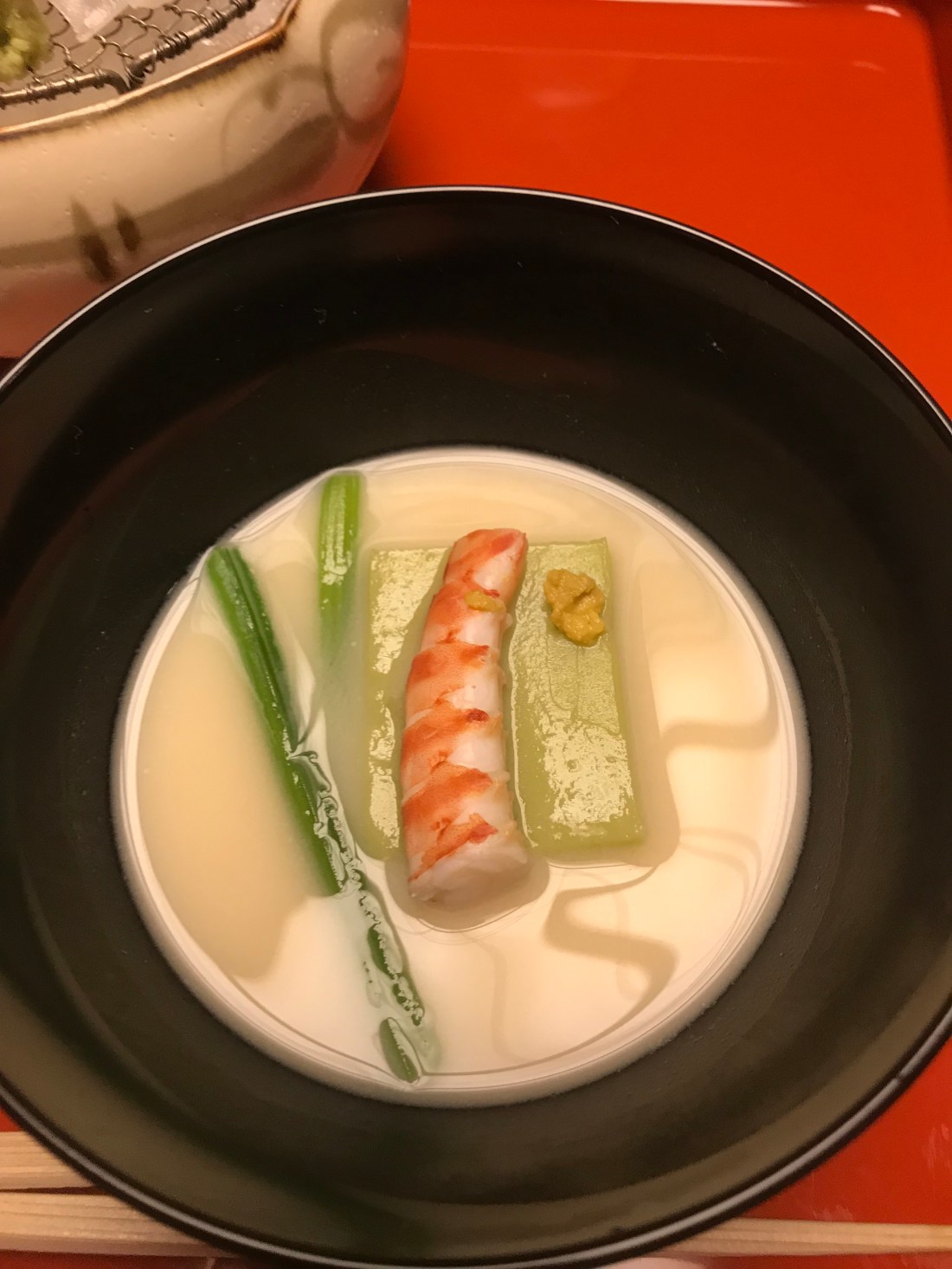
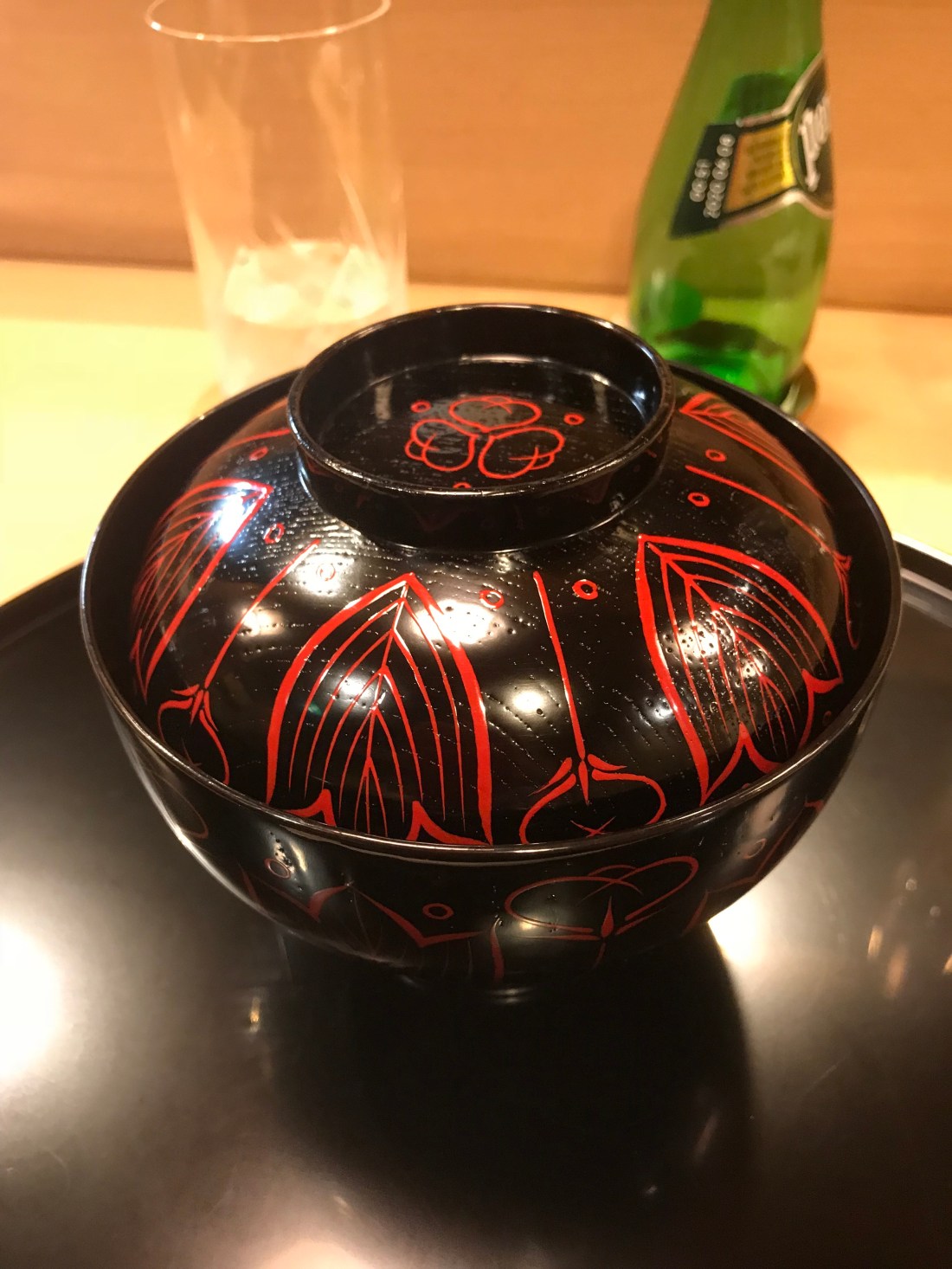
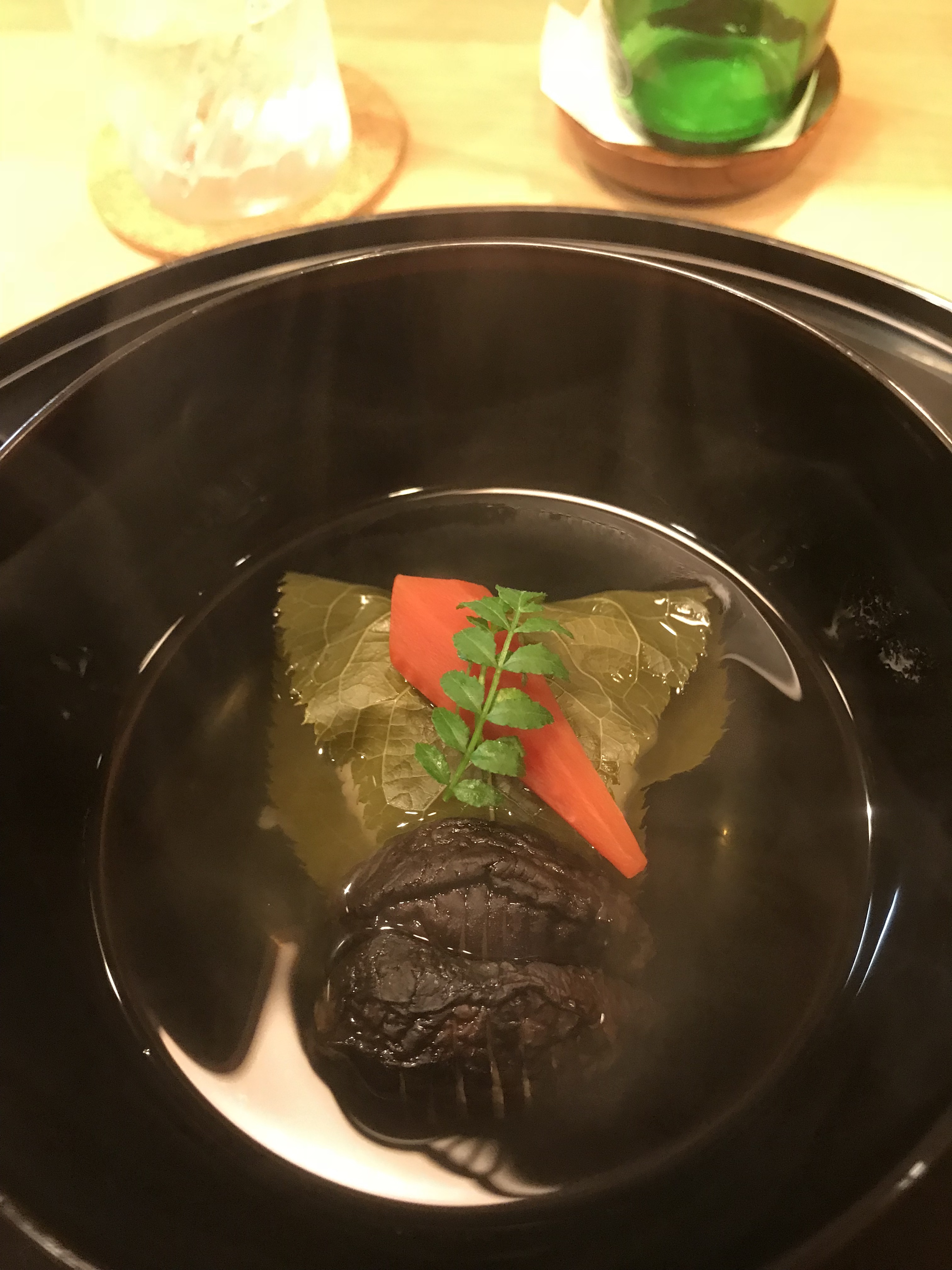

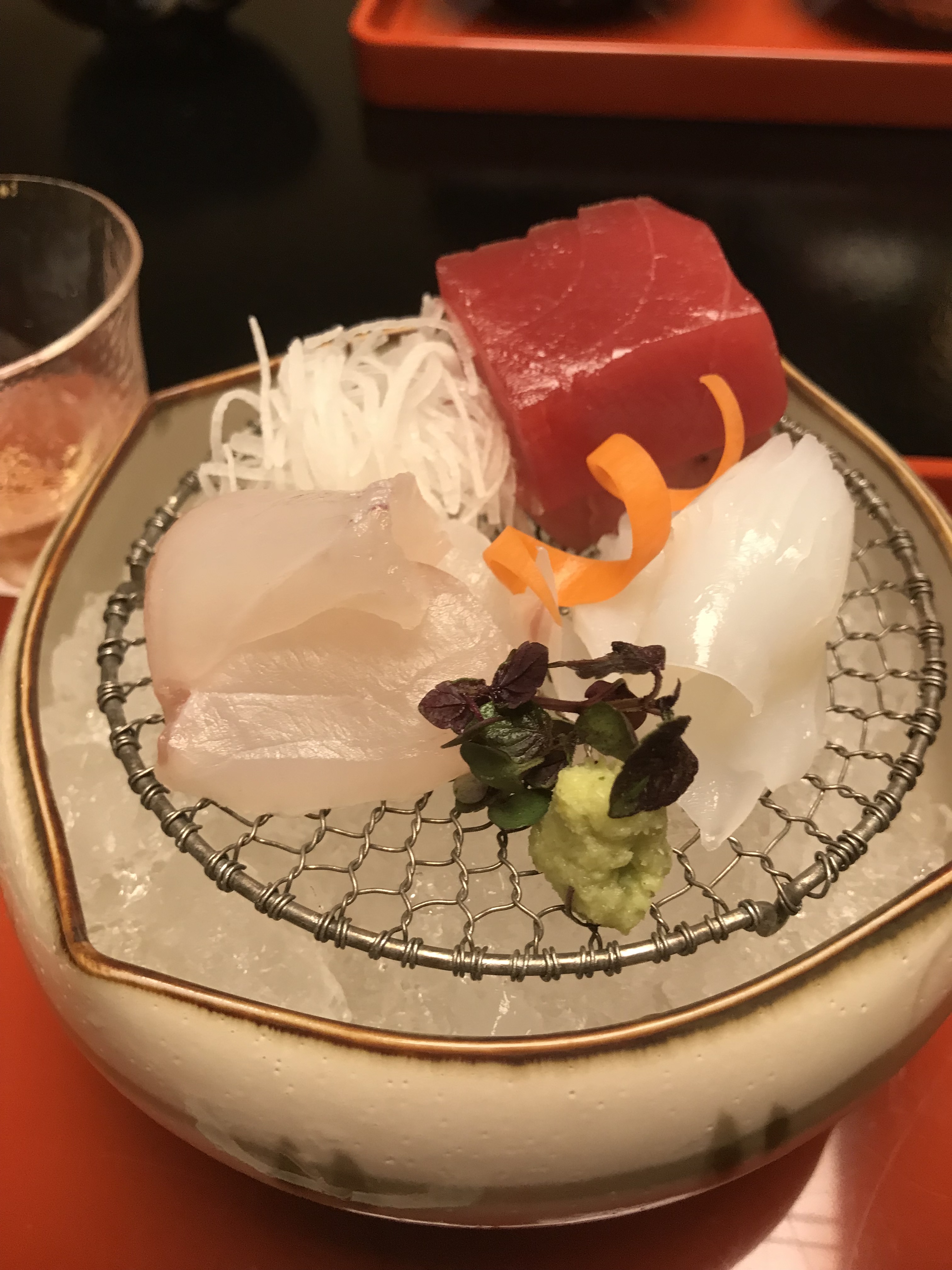
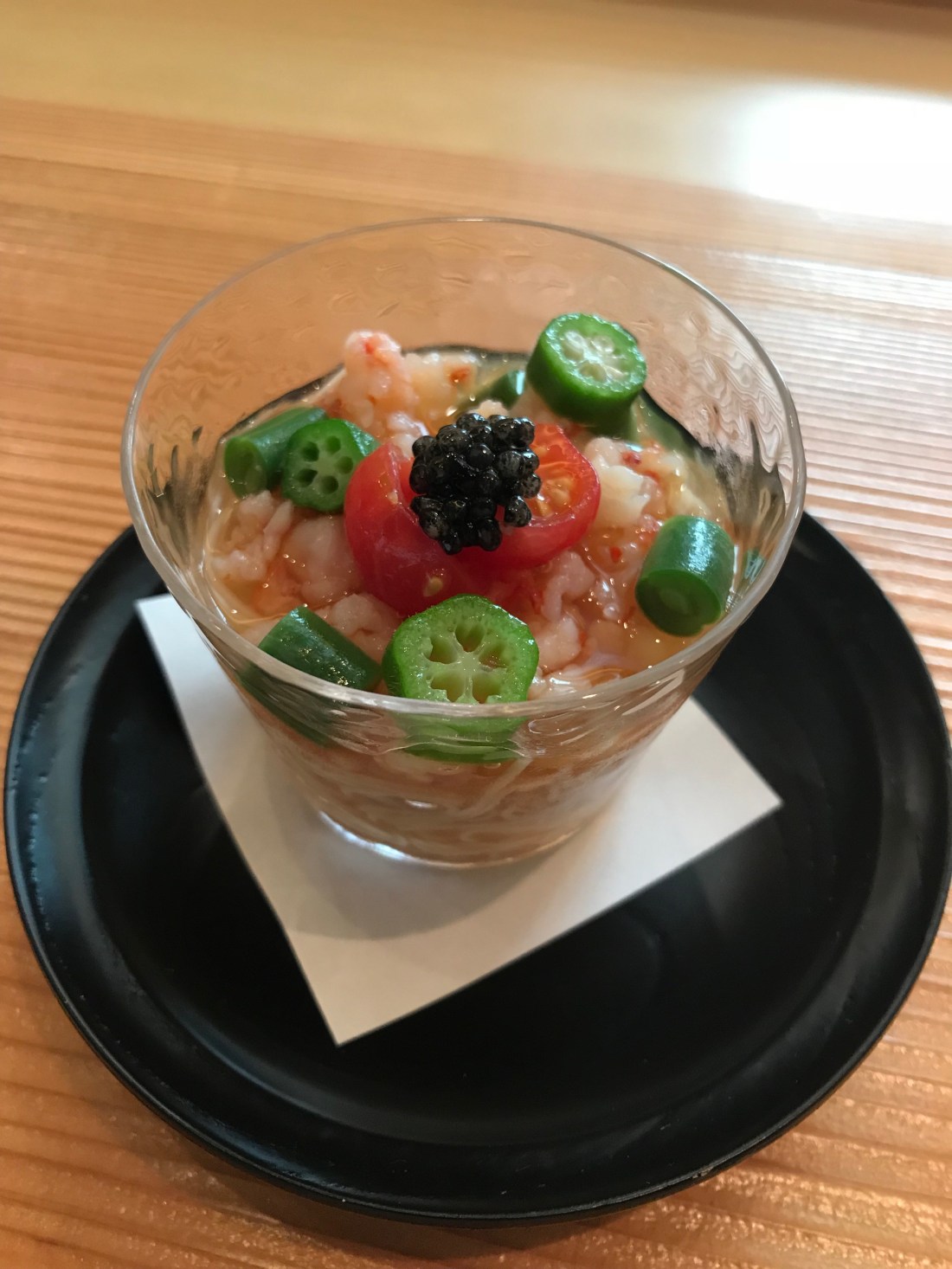
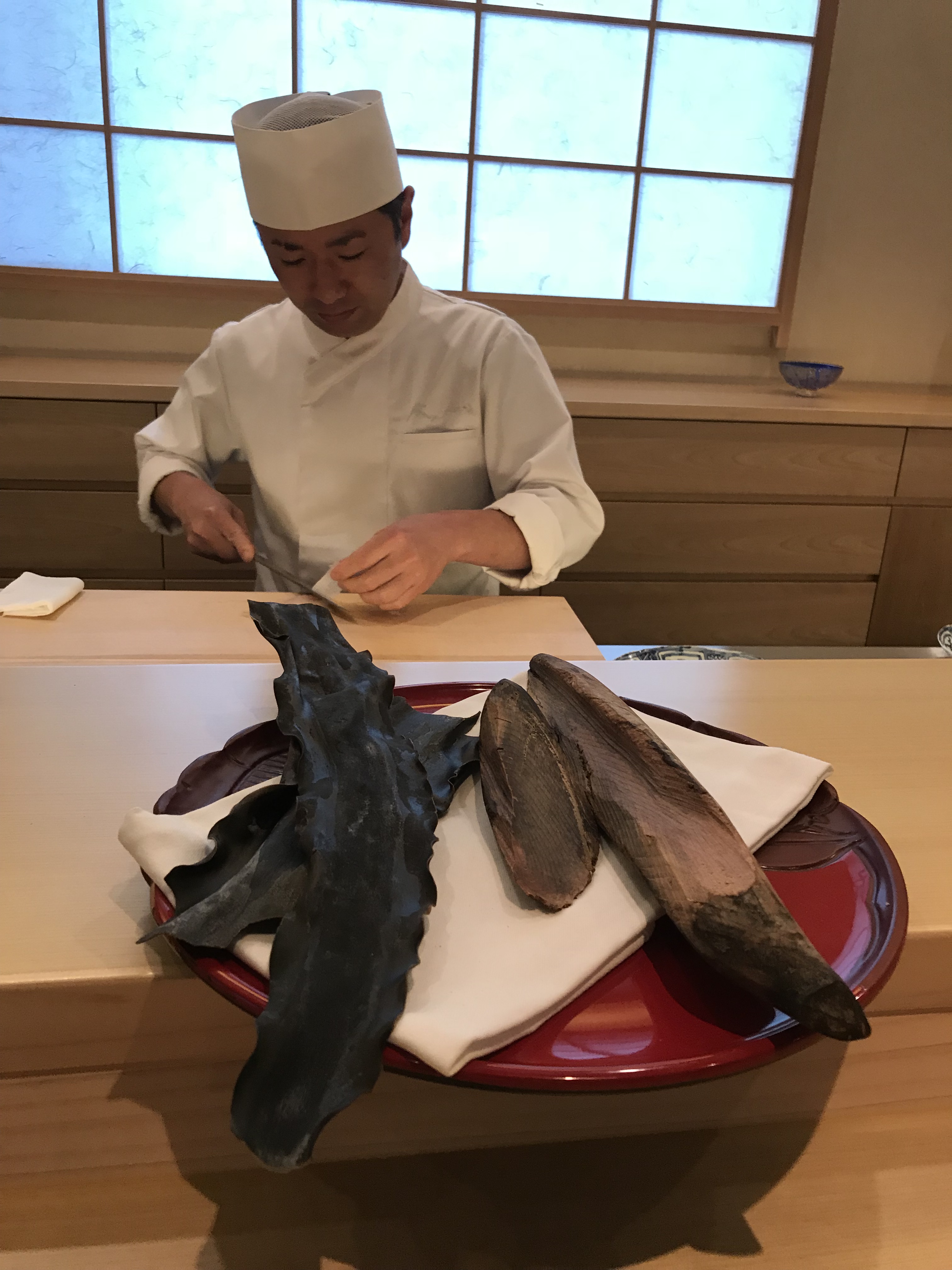


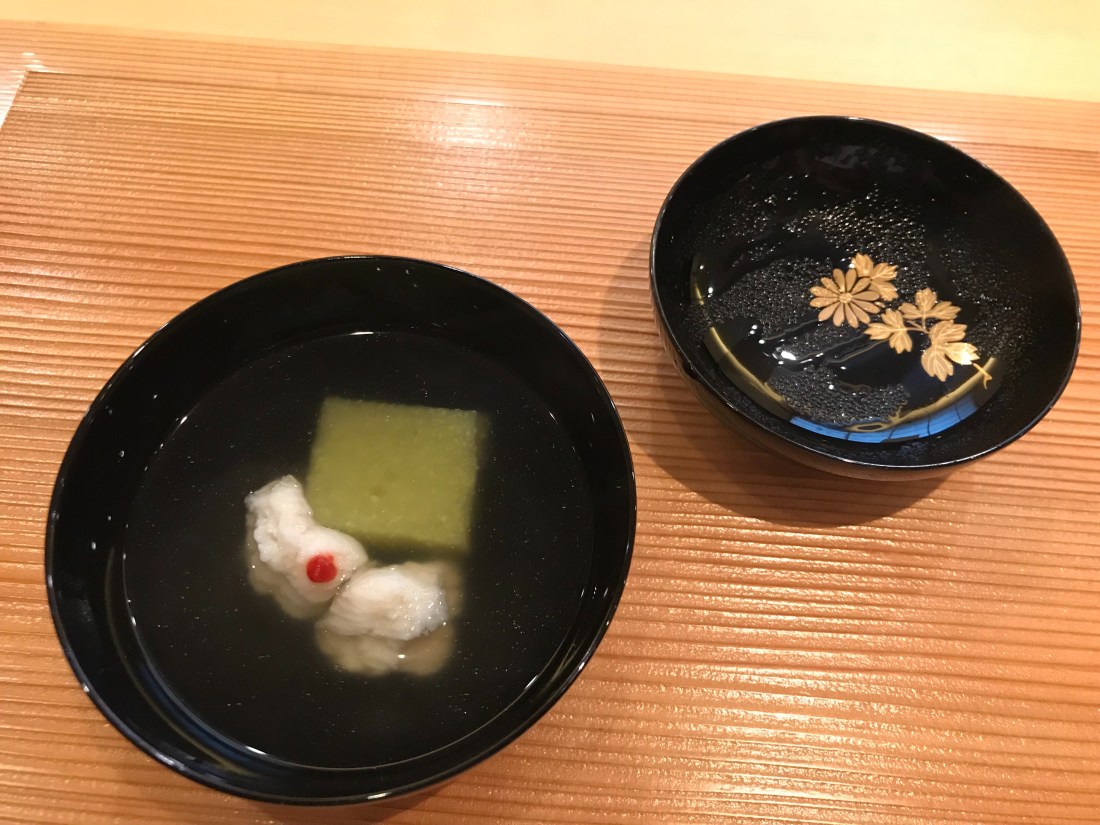
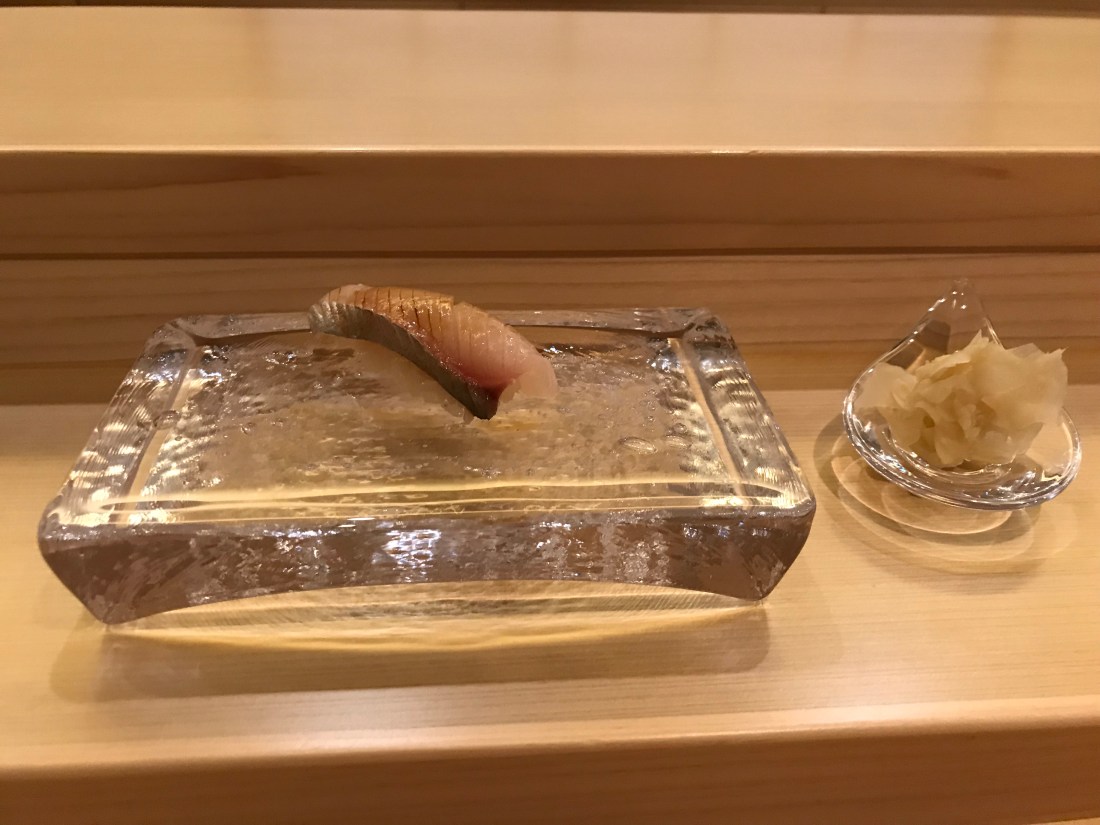
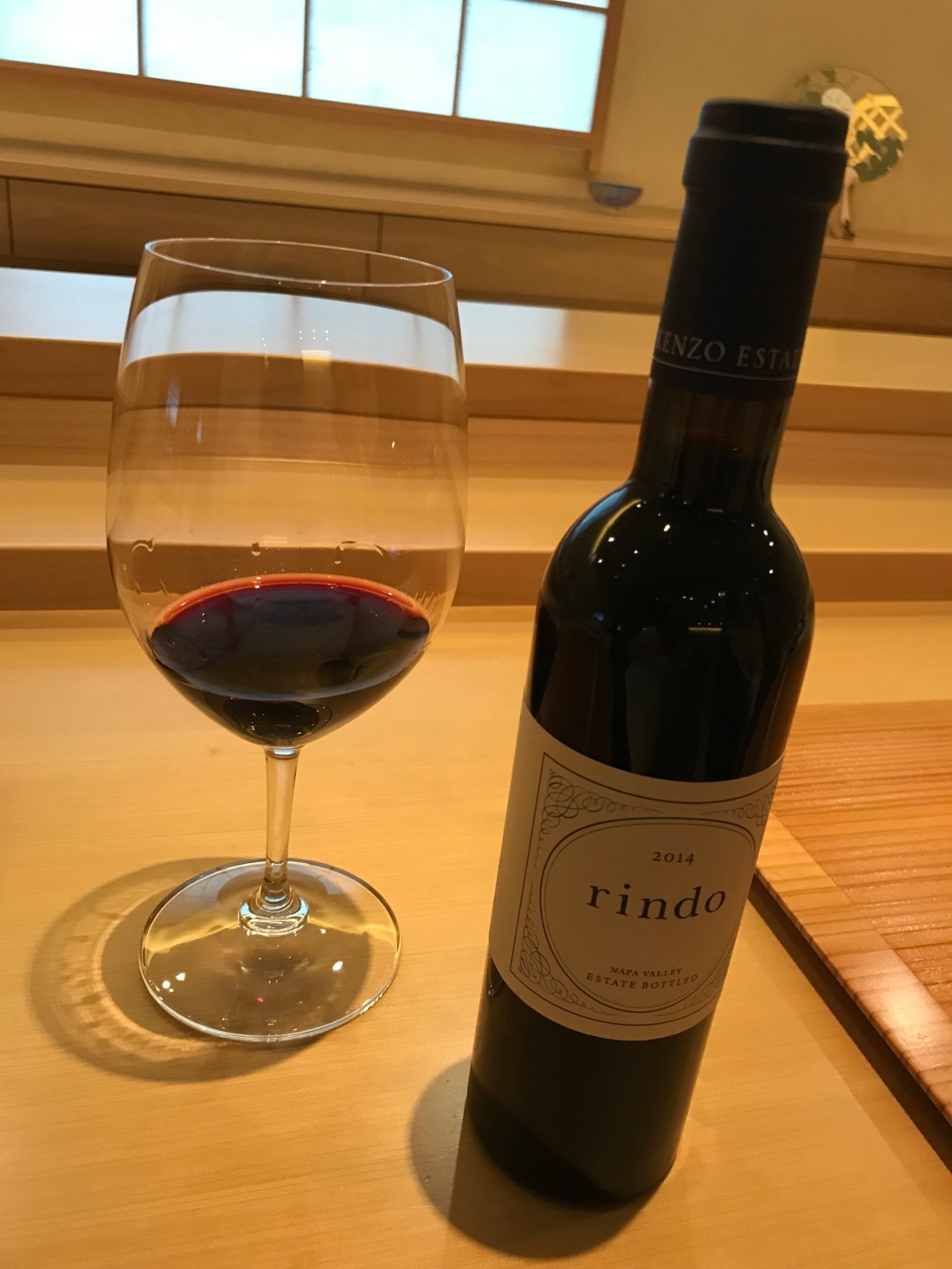
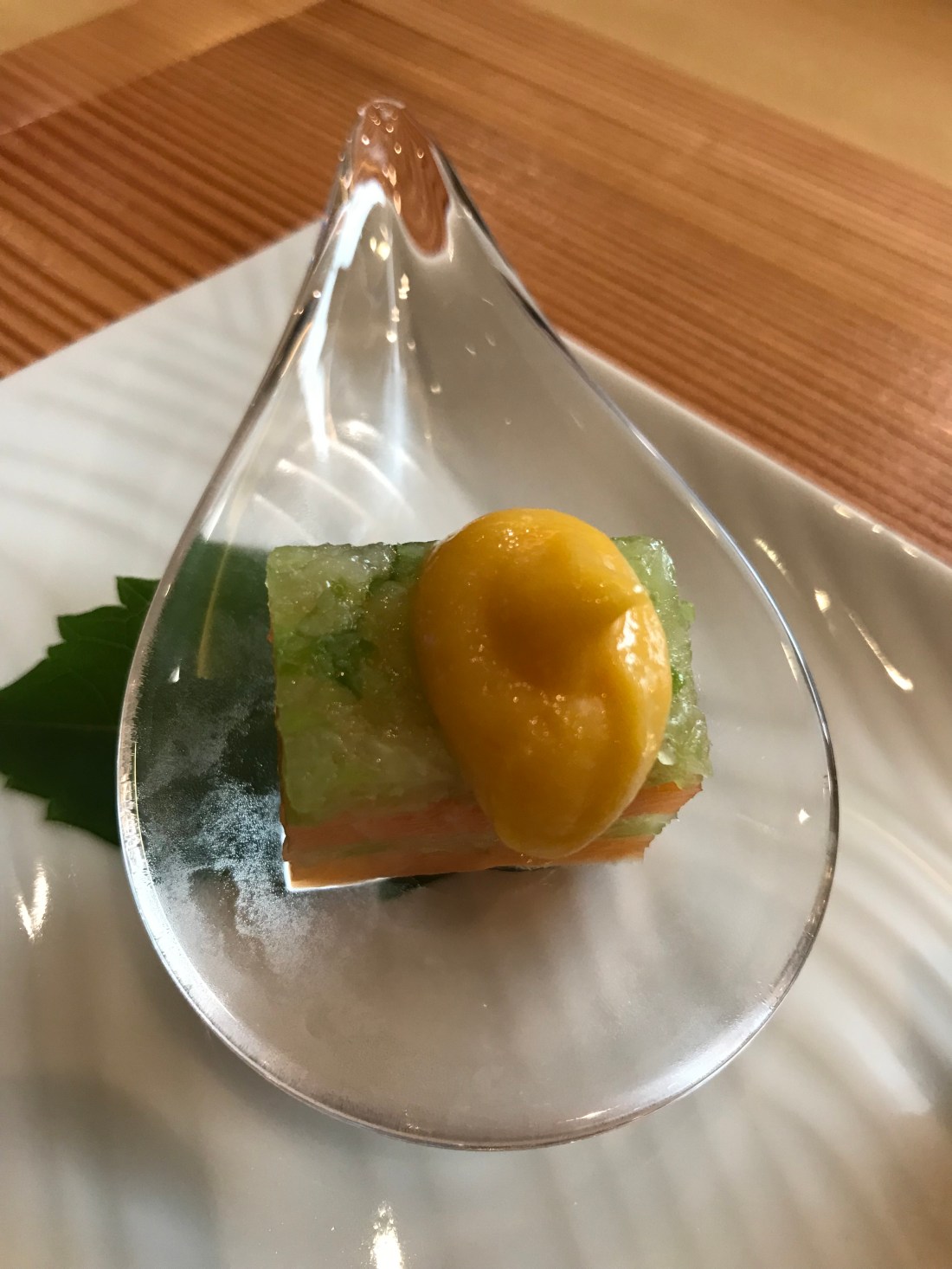 This is one part of a scrumptious whole: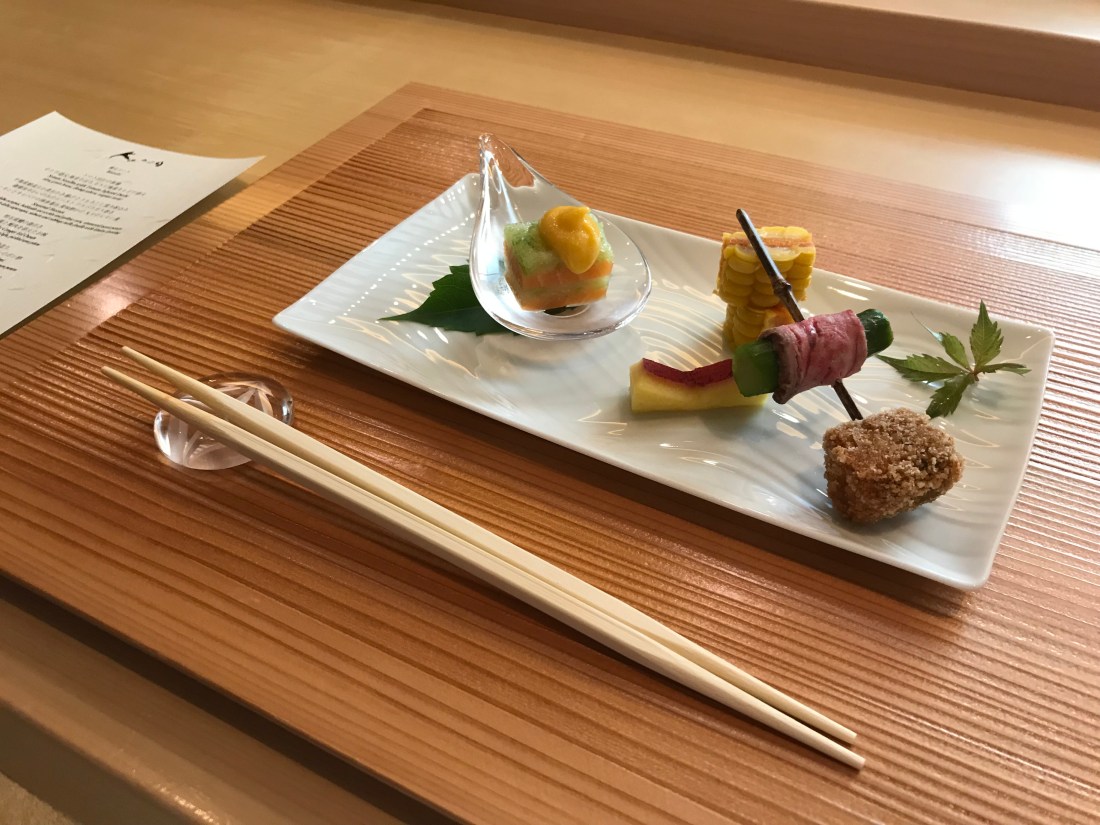





 thisdoesnotsuck